
Last updated: November 2026
Quick answer: Flexographic printing plates are flexible relief plates, today mostly photopolymer on a polyester base, whose raised image areas carry ink from an anilox roller to the substrate. To choose one, match the imaging route (analog or digital), the processing route (solvent, water-wash or thermal), the gauge and the hardness to your press, substrate and ink.
Key takeaways
- Analog plates are imaged through film and digital plates through a laser-ablated mask. The rest of the plate-making process is broadly the same.
- Each plate is made for one processing route, and water-wash plates are not for UV inks.
- Cylinder undercut and mounting tape fix the gauge, while substrate and ink guide the hardness and grade.
- Prepress, plate processing, mounting and press set-up work as one chain. Good plates cannot make up for a failure at another stage.
Snack wrappers, corrugated shippers and pharmaceutical labels often start with a flexographic printing plate. This guide explains what these plates are, how they work on press, how they are made and how to specify them. It gives you the whole picture in one place and links to a detailed article on each topic. We supply analog, digital, water-wash and thermal flexo plates, so we also cover the questions buyers ask us when comparing suppliers.
What are flexographic printing plates?
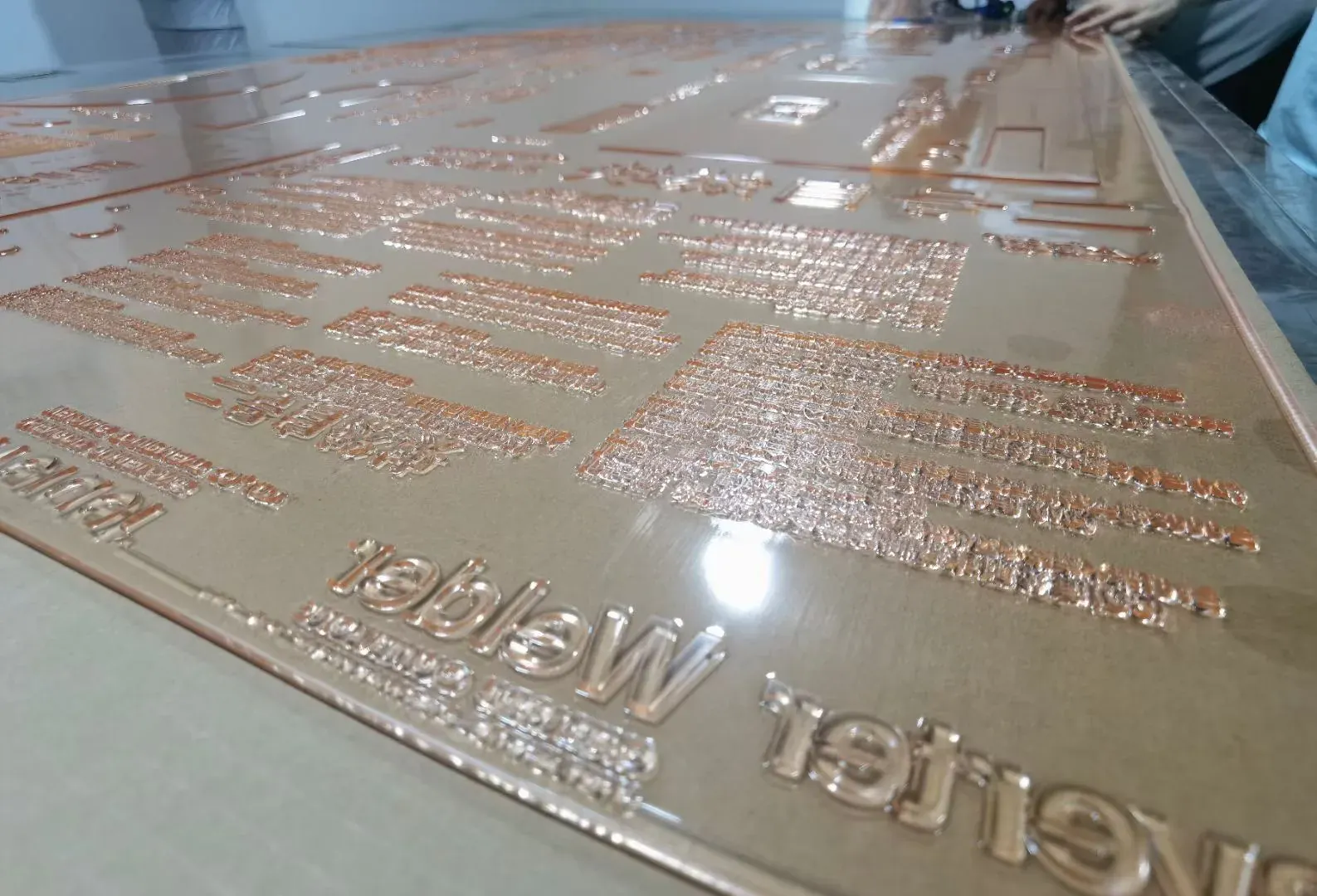
A flexographic printing plate is a flexible plate with a raised image. The raised areas carry ink and transfer it to paper, plastic film, foil or corrugated board, while the recessed floor stays clear of the substrate.
The first flexo plates were rubber. Most are now photopolymer plates: a UV-sensitive resin bonded to a stable polyester backing. UV light hardens the image, and processing removes the unexposed polymer. Standard gauges run from 1.14 mm for labels and film to 6.35 mm for heavy corrugated work.
How flexographic printing works and where the plate fits
Flexo is a direct printing process, usually run on a web press. Ink moves from the ink supply to the substrate in a short chain:
- Ink supply. Ink is fed from a pan through a fountain roller, or from a chambered doctor blade system.
- Metering. The engraved cells of the anilox roller hold a measured volume of ink, and a doctor blade scrapes away the excess. The whole sequence is in the flexographic printing process, step by step.
- Inking the plate. The anilox touches the plate on its cylinder or sleeve, and only the raised image areas take ink.
- Printing. The plate transfers the image to the moving substrate, supported by the impression cylinder.
Each colour needs its own plate, so a six-colour job uses six plates running in tight register. Because the plate is soft and prints with light pressure, flexo handles films, foils and rough board that suit offset plates poorly or not at all.
Types of flexographic printing plates
You are really making two choices: how the plate is imaged and how it is processed. Rubber plates are still used for some corrugated postprint work, but photopolymer has replaced them for most jobs where print quality matters.
By imaging route
| Plate | How it is imaged | Strengths | Typical use |
|---|---|---|---|
| Analog flexo plate | UV exposure through a film negative in a vacuum frame | No imager needed; suits line work and solids | Corrugated postprint, film-based plate rooms |
| Digital flexo plate | A laser ablates a black LAMS mask, then UV cures the polymer | No film or vacuum problems; finer highlight dots and better repeatability | Labels, flexible packaging, fine screens, process colour |
“Digital plates cost too much for our corrugated work” can be a fair objection, and analog remains a sensible choice for coarse line work. Our analog vs digital comparison shows when switching pays off.
By processing route
| Route | How unexposed polymer is removed | Main trade-off |
|---|---|---|
| Solvent | Washed out with a solvent, then dried | Broad ink compatibility, but long drying, solvent handling and recovery |
| Water-wash | Washed out with water and a wash additive | No solvent in the plate room, but not for UV inks |
| Thermal | Softened by heat and lifted away by a blotting web | Fast and free of liquid washout, but needs a dedicated processor and web |
Each grade runs on one route only. If “we cannot change our processor just to change plates” describes your plate room, start from the route you already have. Our processing route comparison covers the decision in more depth.
From file to plate: flexo prepress essentials
Good prepress prevents mistakes before they reach the press. The main tasks are:
- File checks. Confirm embedded fonts, overprint settings and trapping.
- Colour separations. Separate process colours and any spot inks into one plate each.
- Screening. Choose the line screen and dot shape, including flat-top or round-top dots, to suit the plate, anilox and substrate.
- Dot gain compensation. Apply curves for each substrate and ink combination, since a soft plate under pressure spreads ink. Our flexo dot gain guide explains how to measure it.
- Distortion compensation. Shorten the image in the print direction, because the plate stretches when it wraps around a cylinder. Thicker plates need more compensation.
A practical example. A snack bag on BOPP film might need CMYK plates, a white backing plate and an orange spot plate: six separations in total. A converter could specify 1.14 mm digital plates at 150 lpi (about 60 l/cm) with flat-top dots, then confirm the anilox, ink and curves with a press trial.
How flexographic plates are made
A photopolymer flexo plate goes through the same core steps whether it is analog or digital. Only the imaging step changes. Our flexo plate making guide covers the settings and common faults at each step.
- Prepare the image. Output a film negative for analog, or ablate the LAMS mask with a flexo imager for digital.
- Back exposure. UV light through the polyester base builds the floor and sets the relief depth.
- Main exposure. UV light through the film or mask forms and anchors the printing dots.
- Remove unexposed polymer. Use the solvent, water-wash or thermal route the plate was made for.
- Dry. Solvent-washed plates swell and can need hours in the dryer to return to gauge.
- Post-expose. UVA light over the whole plate completes the cure.
- Light finish. UVC light removes surface tack.
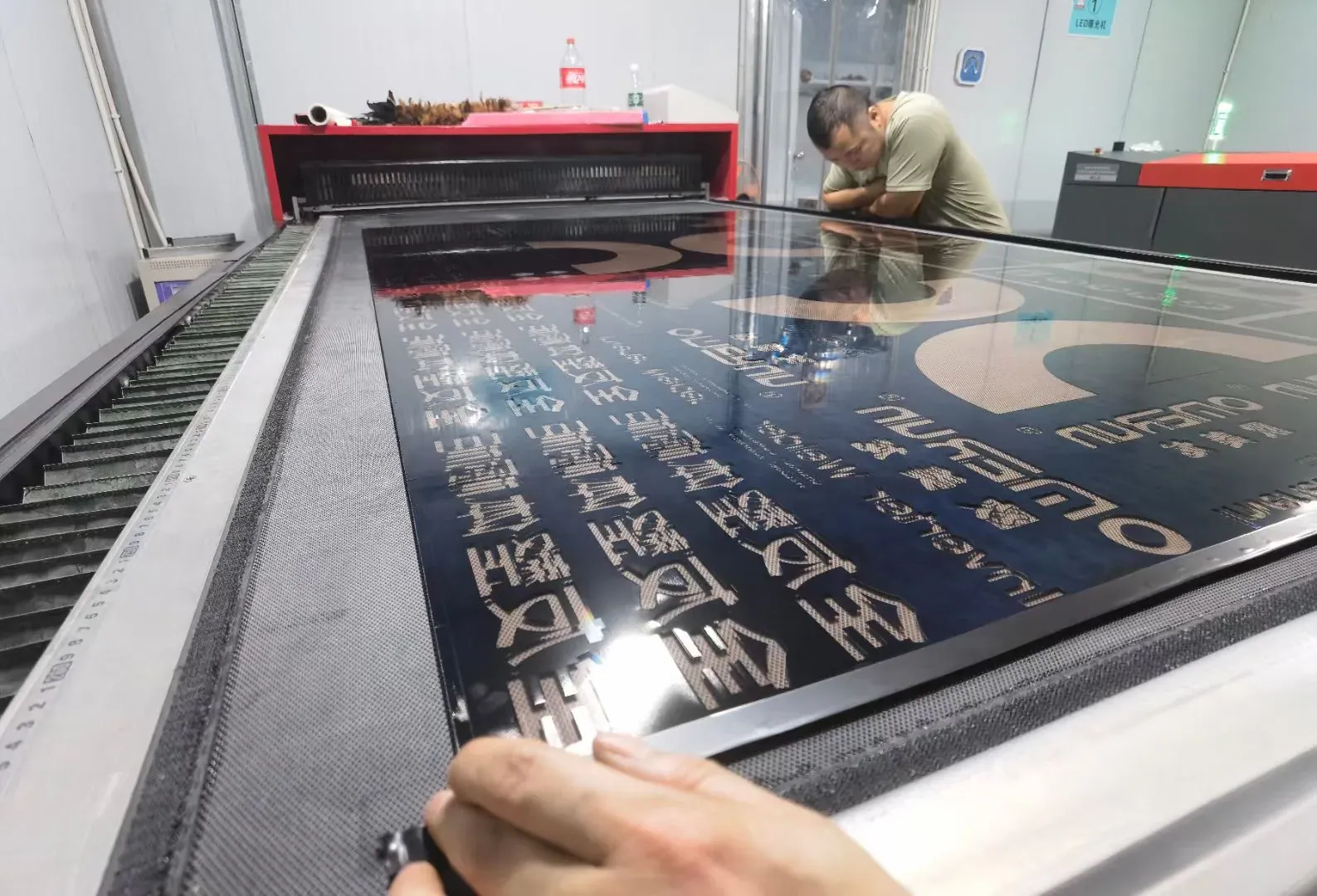
Before a plate leaves the plate room, measure its thickness and relief depth against the targets in the grade’s technical data sheet (TDS), check for surface tack, and inspect fine dots and reverse type. We supply the plates, and flexo imagers and flexo plate processors come from our partner factories.
Choosing plates for different substrates
The substrate affects the gauge, hardness, screening and ink. These are typical starting points. Your cylinder undercut still decides the gauge, as our flexo plate thickness guide explains.
| Substrate | Typical gauge | Plate hardness | Common inks | Watch for |
|---|---|---|---|---|
| Self-adhesive labels | 1.14 mm | Firmer | UV, water-based | Fine dots and small type |
| Plastic film (PE, BOPP, PET) | 1.14–2.54 mm | Firmer | Solvent-based, some water-based or UV | Clean ink release on a non-absorbent surface |
| Foil and laminates | 1.14–1.70 mm | Firmer | Solvent-based, UV | Dot gain on reflective surfaces |
| Paper bags and folding carton | 1.70–2.84 mm | Medium | Water-based, UV | Balancing solids with fine type |
| Corrugated board | 2.84–6.35 mm | Softer | Water-based | Fluting; lower screens on rough board |
Before you fix a grade, check flexo ink and plate compatibility, because the wrong pairing can make a plate swell. For box work, our corrugated flexo plate page explains gauges and fluting control. The TDS states the exact Shore A hardness for each grade.
Plate mounting, register and press set-up
Many faults blamed on plates start here. The plate is fixed to a cylinder or sleeve with double-sided tape, and the tape affects the print: softer foam tape suits fine halftones, while firmer tape suits solids. Our flexo plate mounting guide gives the full method, and our article on sleeves and mounting tape compares the options.
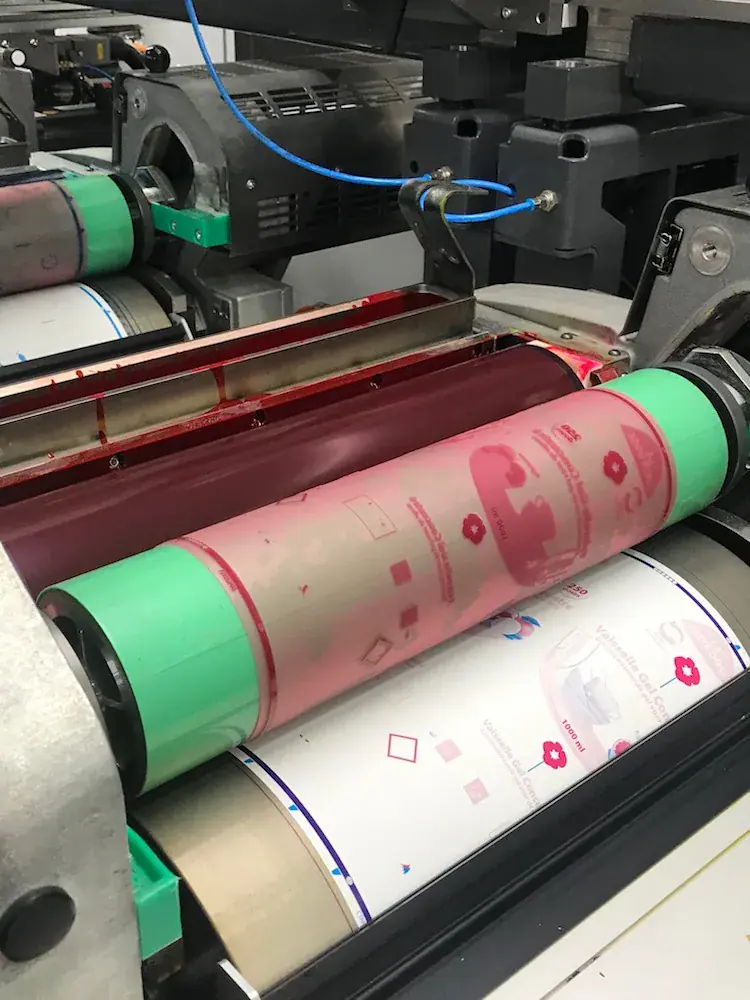
Before the run, inspect the mounted plate for dust, damage or lifted edges. Then set the impression against the anilox and substrate, and check register with test targets.
| Fault | Likely cause |
|---|---|
| Plate lift | Poor tape adhesion, unsealed edges or plate curl |
| Bubbles under the plate | Air trapped during mounting |
| Misregister | Shifted plate or incorrect reference marks |
| Gear marks | Worn press gears, excess impression or bounce |
For other print defects and their causes, see our flexo printing problems table.
Plate life, cleaning and storage
A well-processed photopolymer plate typically lasts for hundreds of thousands of impressions and can be reused on repeat orders. Actual life depends on the ink, anilox pressure, substrate and handling.
To keep plates ready for the rerun:
- Clean straight after the run. Dried ink is a main reason plates are scrapped. Use a soft brush with a cleaner that suits both the ink and the plate.
- Avoid aggressive solvents. The wrong cleaner can swell or crack photopolymer.
- Store flat, cool and dark. Keep plates away from UV light, daylight, ozone sources and heat, and follow the conditions in the TDS.
- Label them. A clear plate library makes reruns faster and avoids remaking plates you already have.
Our flexo plate cleaning and storage guide sets out a routine your operators can follow.
Sustainability and technology trends
- Less solvent in the plate room. Water-wash and thermal routes reduce or remove solvent handling, and thermal processing leaves used blotting web to dispose of rather than liquid washout.
- UV LED exposure. LED units are replacing fluorescent tubes in many plate rooms, offering more consistent light output, and they are often used to form flat-top dots.
- Less waste on press. Consistent plates and faster colour set-up reduce substrate, ink and solvent use during makeready.
- Press automation. Sleeve systems and presetting from prepress data shorten changeovers on modern lines.
- Extended colour gamut. Printing spot colours from a fixed ink set can reduce wash-ups and the number of plates and inks a plant needs to manage.
Brand owners may also write print standards into their specifications. ISO 12647-6 is the part of the ISO 12647 series for flexographic printing, and ISO 12647-7 covers proofing.
Checking the run against the approved proof
During the run, printers compare sheets or reel samples with the customer’s approved proof or standard sample at regular intervals. The pass mark for each item is that sample or the customer’s specification. A typical packaging press check covers:
- Print quality: small and reversed type, solids, dot shape, overprint sequence, spelling, missing elements, all colours present
- Colour, colour strength and opacity (white), measured with a spectrophotometer and viewed under the agreed light
- Register
- Ink adhesion (tape test on film, at the start of every reel), scratch and rub resistance, gloss
- For laminated and filled packs: bond strength after lamination, coefficient of friction, water resistance
- Any test the end use calls for, such as freezer or heat resistance
Three faults have a clear order of checks:
| Fault | Check first | Then |
|---|---|---|
| Colour too weak or too strong | The ink’s own strength against its standard | Only then adjust the press or anilox. Adding another colour to the ink makes it harder to control and can cause metamerism |
| Poor adhesion on film | The film: which side is printed, the film type, the surface treatment | Dryer temperature, then the ink |
| Misregister | Where it is out: stretch or dryer shrinkage can be corrected on press | If register is right at the lead edge on one side and out at the trailing edge on the other, the plate is mounted out of square: remount it. If heat is distorting the film, fix the drying; press adjustment will not help |
Our flexo printing problems guide covers the other press-side faults.
What to specify when you buy flexo plates
Wrong deliveries usually come from an incomplete order. “Plates arrive in the wrong gauge for our cylinders” is avoidable if you state:
- Imaging route (analog or digital LAMS) and processing route (solvent, water-wash or thermal)
- Gauge in both millimetres and inches, plus sheet size
- Substrate, ink system and typical screen ruling
- Target hardness or the current grade you want to match
- Monthly volume and destination port
Then ask for the TDS and test the plates. Any new plate supplier must prove itself on your own press, and that includes us. Compare fine dots, solids, wear and consistency across more than one batch before you move volume. Our flexo plate price guide explains what drives the cost per square metre.
When a job goes wrong, it is natural to assume print quality problems in flexo are caused by a bad plate. Sometimes they are. But flexo print quality depends on prepress, plate processing, mounting and press set-up working together, and no single stage can compensate for failures in another. Check the whole chain before you change the plate.
FAQ
What are flexographic printing plates made of?
Most are made of UV-sensitive photopolymer bonded to a polyester backing. Rubber plates are still used for some corrugated postprint work, but photopolymer is now the main material.
What is the difference between analog and digital flexo plates?
Analog plates are exposed through a film negative. Digital plates carry a LAMS mask that a laser ablates, so they need no film and hold finer highlight dots. Back exposure, washout, drying and finishing are broadly the same.
How are flexographic printing plates made?
The image is prepared on film or a LAMS mask. The plate then goes through back exposure, main exposure, removal of unexposed polymer, drying, post-exposure and light finishing.
What thickness of flexo plate do I need?
Your press decides first: plate thickness plus mounting tape must match the cylinder undercut. Typically, 1.14–1.70 mm suits labels and flexible packaging, while 3.94–6.35 mm suits corrugated postprint.
How long do flexo plates last?
A well-processed photopolymer plate typically lasts for hundreds of thousands of impressions. Actual life depends on the ink system, anilox pressure, substrate and handling.
Can flexo plates be reused?
Yes. Most packaging and label printers reuse plates for repeat orders. Clean them straight after the run, then store them flat, cool and dark, away from UV light and ozone.
Need flexo plates for a trial? Request a quote with your imaging and processing route, gauge, substrate, ink system and destination port, and we will recommend a grade. You can also ask for trial plates or contact us.
Disclaimer: values on this page are typical industry figures for reference only. Final specifications, MOQ, price and lead time are subject to the grade TDS and the quotation.


