
Aluminium Plate for CTP Plates — Uncoated Lithographic Substrate in Coil and Sheet
Last updated: October 2026
Quick answer: Aluminium plate for CTP plates is a high-purity lithographic aluminium strip, typically from the 1050 or 1060 alloy series in a hard temper, rolled to gauges such as 0.15–0.30 mm with tight flatness and a very clean surface. Plate makers grain and anodise it before coating. We manufacture uncoated aluminium plate substrate in coil and sheet for plate makers and dealers.
Key takeaways
- Plate substrate is not ordinary aluminium: flatness, surface cleanliness and grain response matter as much as the alloy grade.
- 1050 and 1060 series alloys in hard tempers are typical in the industry; the exact alloy and temper are confirmed per order.
- Graining and anodising create the water-holding, hard surface that decides water balance and coating adhesion.
- We supply the substrate as rolled aluminium in coil and sheet — not grained and not anodised — so graining, anodising and coating are carried out on your own plate production line; width and gauge are confirmed in the quotation.
This page is written for plate makers with their own coating line and for dealers who supply them. The pains we hear most: substrate flatness varies from coil to coil, surface defects show up only after coating, and graining is uneven so plates scum on press. Buyers also note that general aluminium mills do not understand plate making, and small orders get low priority at big mills. Because we also manufacture coated CTP plates, we look at aluminium the way a plate maker does.
What makes aluminium plate suitable for CTP plates
It is tempting to believe that any 1050 aluminium coil is good enough for printing plates. In practice, lithographic substrate needs controlled flatness, surface cleanliness and grain response beyond the alloy grade. A printing plate substrate must:
- Respond evenly to electrochemical graining, without streaks or pits.
- Stay flat after slitting and cutting, so plates lie flat on the platesetter drum and press cylinder.
- Be free of rolling oil residue, inclusions, scratches and roll marks that print through the coating.
- Hold its gauge tightly across the width and length of the coil.
- Have enough strength to resist cracking at the press bend, yet bend cleanly.
Alloy and temper typical in the industry
Lithographic plates are commonly made from high-purity aluminium of the 1xxx series. The table summarises general industry practice — it is not our specification sheet.
| Property | Typical in the industry | Why it matters |
|---|---|---|
| Alloy | 1050 and 1060 series; some makers use modified 1xxx or 3xxx alloys for higher strength | Purity and trace elements control graining response |
| Temper | Hard tempers such as H18 or H19 | Stiffness for handling and resistance to cracking at the bend |
| Gauge | 0.15 / 0.20 / 0.25 / 0.30 mm | Matches press clamp and platesetter requirements |
| Surface | Bright, clean, defect-free litho finish | Defects print through after coating |
| Supply | Coil slit to line width, or cut sheet | Coil for continuous coating lines, sheet for batch work |
The alloy, temper and tolerances for an order are fixed in the specification attached to the quotation.
Graining, anodising and post-treatment
Plate quality is often thought to be decided by the coating alone. In fact the aluminium substrate and its graining and anodising decide water balance, adhesion and run behaviour. The typical pre-treatment sequence on a plate line is:
- Degreasing — alkaline cleaning removes rolling oil and the natural oxide.
- Graining — electrochemical graining in an acid electrolyte (sometimes combined with brush graining) roughens the surface into a fine, uniform micro-texture that holds fountain solution and anchors the coating.
- Desmutting — removes graining residues.
- Anodising — an electrolytic process grows a hard aluminium oxide layer that resists wear on press.
- Post-treatment — a hydrophilic sealing layer keeps non-image areas clean and controls coating adhesion.
The substrate’s job is to grain evenly. Uneven grain response is the root of many press problems, from scumming to poor water balance, which is why substrate should be judged by a graining and coating trial, not by the alloy certificate alone; see our quality control process.
Coil or sheet: supply formats
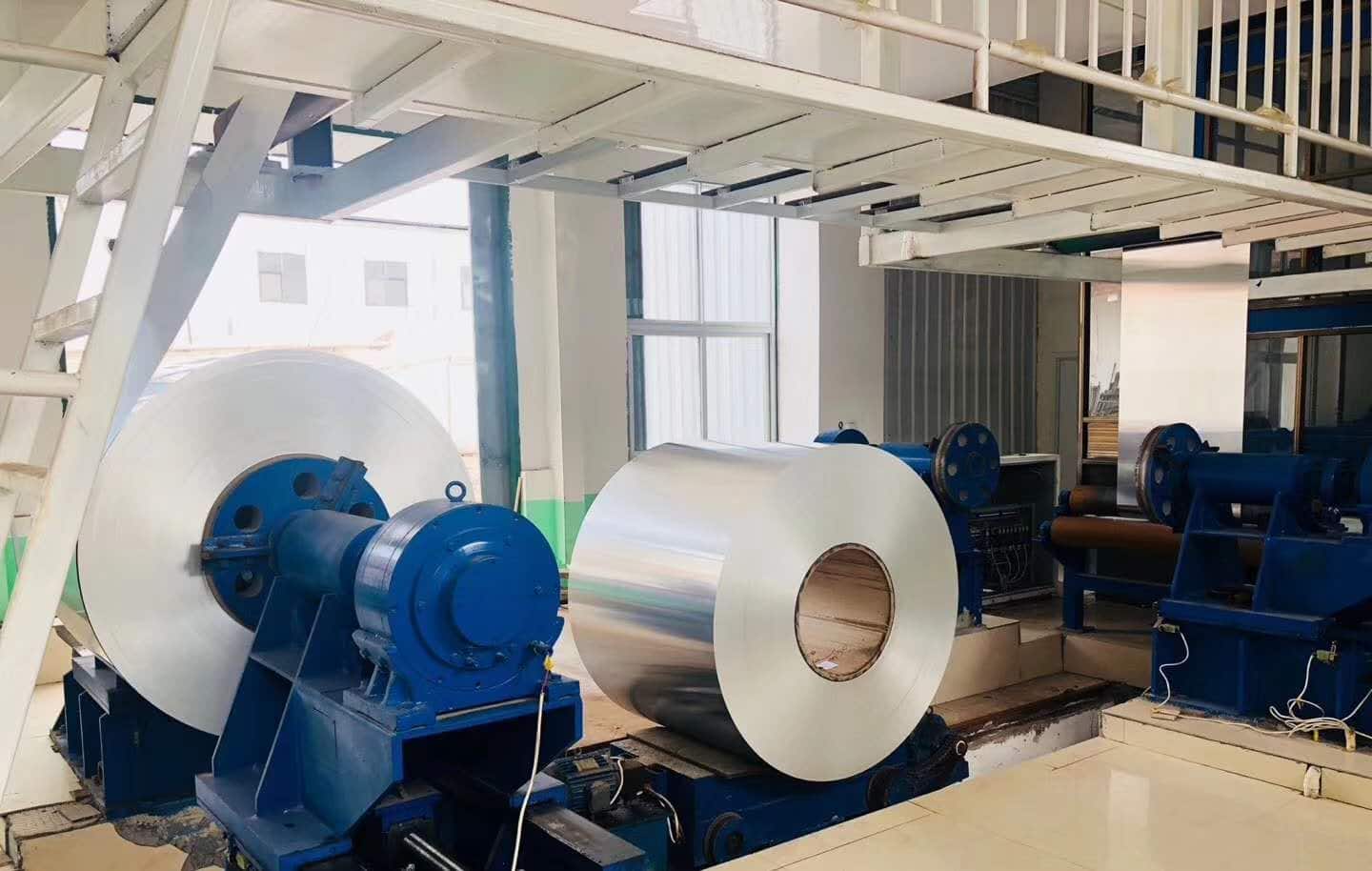
Continuous coating lines run from coil, slit to the line width with controlled inner diameter and coil weight. Smaller plate makers and PS or CTcP plate converters may prefer cut sheet. We can supply coil width and gauge cut to your line, or sheet to your plate format; standard plate formats are listed in our plate size chart. Packaging for export — wooden cases or eye-to-sky coil packing with moisture protection — is described on our shipping and packaging page.
What to check when buying plate substrate
How do we verify surface quality before shipping? Ask any supplier for the following, and check it against your own incoming inspection:
- Alloy certificate of composition and temper for each coil (mill test report).
- Gauge and width tolerances, and flatness measured after slitting.
- Surface inspection standard: what defects are rejected and how they are detected.
- Oil residue and cleanliness level suitable for your degreasing line.
- A trial coil or sheets run through your own graining and coating, judged on your printed results.
Ordering aluminium substrate from our factory
We manufacture uncoated aluminium plate substrate in our own plate factory, alongside our coated thermal, CTcP and PS plates. That gives you one supplier for substrate and finished plates, and consistent litho-grade aluminium for your coating line. Dealers can combine substrate with OEM finished plates in the same shipment.
To quote, send the alloy and temper you use, gauge, coil width or sheet size, coil inner diameter and weight limits, supply condition required, and monthly tonnage. MOQ, lead time and price are confirmed in the quotation.
FAQ
Which aluminium alloy is used for CTP plates?
High-purity 1xxx series alloys are typical in the industry, most commonly 1050 and 1060, sometimes modified alloys for higher strength. The alloy for an order is confirmed in the specification with the quotation.
What thickness of aluminium is used for printing plates?
Common offset plate gauges are 0.15, 0.20, 0.25 and 0.30 mm. The right thickness depends on the press clamp and platesetter.
What is graining and anodising of printing plate aluminium?
Graining roughens the aluminium surface, usually electrochemically, so it holds water and anchors the coating. Anodising then grows a hard oxide layer that resists wear on press.
Is your aluminium substrate supplied grained and anodised?
No. We ship the substrate as rolled aluminium, without graining or anodising. Graining, anodising and coating are completed on the plate maker’s own production line, which keeps the surface treatment matched to your coating chemistry.
What is the difference between aluminium coil and sheet for plate making?
Coil, slit to line width, feeds continuous graining and coating lines. Cut sheet suits batch converters and smaller plate makers working to fixed plate formats.
What should I check when buying lithographic aluminium substrate?
Check the alloy and temper certificate, gauge and width tolerance, flatness after slitting, surface defect standard, oil residue, and results from a trial on your own graining and coating line.
Sourcing aluminium substrate for your plate line? Request a quote — send alloy, temper, gauge, coil width or sheet size and monthly tonnage. Or request trial material / contact us.
Disclaimer: values on this page are typical and for reference only; final specifications, MOQ, price and lead time are subject to the grade TDS and the quotation.

