
Thermal CTP Machines: 4-Up, 8-Up and Fully Automatic Platesetters
Last updated: October 2026
Quick answer: A thermal CTP machine is a platesetter that images 830 nm thermal offset plates directly from digital files. We offer 4-up, 8-up and fully automatic thermal platesetters supplied with our partner factories, and pair them with thermal plates, processors and developer made in our own plant. Choose the format by your largest press and the automation level by daily plate volume.
Key takeaways
- Thermal platesetters image at 830 nm and give sharp, stable dots on thermal CTP plates.
- 4-up suits B2 presses, 8-up suits B1 presses; fully automatic loaders suit high plate counts.
- Machines are supplied with our partner factories; plates, processors and developer are our own make.
- Installation, calibration and operator training are scoped in the quotation.
A thermal CTP machine is the workhorse of most offset prepress rooms today. If you print commercial work, books or packaging on sheet-fed presses and want sharp, stable plates without darkroom chemistry for film, a thermal platesetter is usually the first system to look at. This page explains the configurations we offer, how to choose between them, and how to match the machine with the right plates and processing line. Thermal platesetters are supplied with our partner factories; the thermal plates, plate processors and developer that run on them are made in our own plant.
What is a thermal CTP machine?
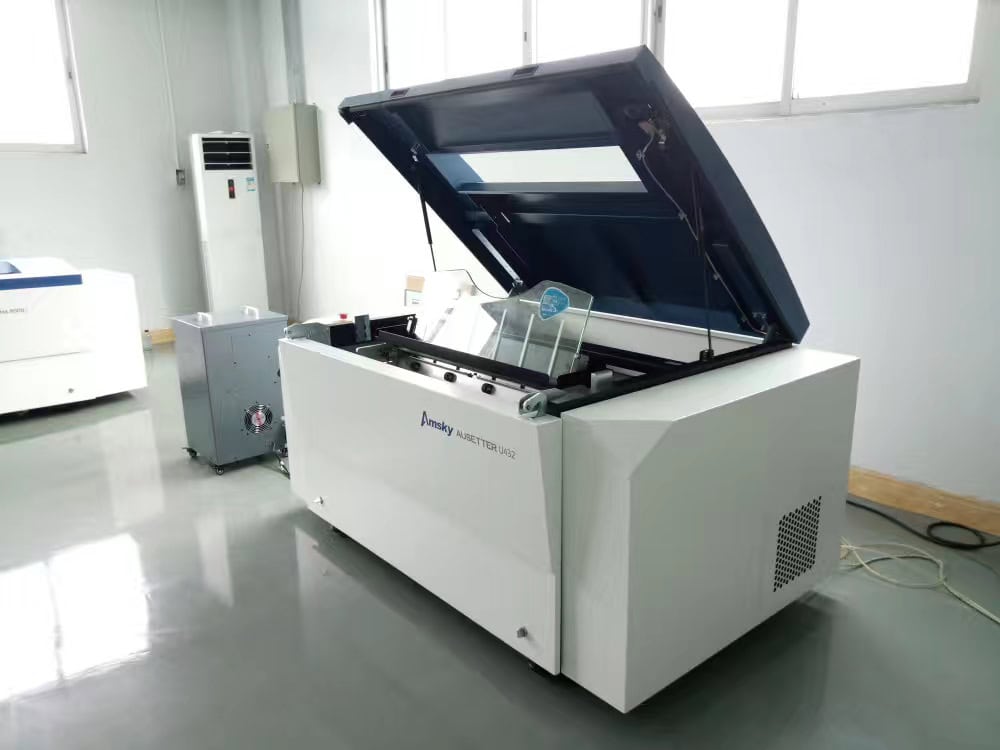
A thermal CTP machine (also called a thermal CTP platesetter or thermal computer to plate system) images offset plates directly from the RIP output, with no film in between. An array of infrared laser diodes at 830 nm writes the image onto a heat-sensitive coating. Heat, not light, changes the coating, so the plate can be handled in normal daylight or yellow-safe light and the imaging threshold is very sharp. That threshold behaviour is the main reason thermal is known for clean dots and stable results from plate to plate.
Compared with a UV machine, the main difference is the plate it images. A UV CTcP platesetter exposes lower-cost conventional-style plates with UV light, while a thermal machine needs thermal CTP plates. Thermal plates cost a little more per square metre, but give a wider working window and suit longer runs and baking. For a deeper look at the technology itself, see what CTP printing is and how it works.
4-up, 8-up and fully automatic thermal platesetters
Thermal CTP equipment is grouped first by plate format, then by how much of the plate handling is automated. The table below shows the configurations we quote; exact plate size range, imaging speed and resolution depend on the model and are listed on the machine specification sheet with its test conditions.
| Configuration | Typical press it serves | Plate handling | Good fit for |
|---|---|---|---|
| 4-up thermal platesetter | B2 / half-size sheet-fed presses | Manual or semi-automatic loading | Small commercial printers, first-time CTP users |
| 8-up thermal platesetter | B1 / full-size sheet-fed presses | Manual or semi-automatic loading | Mid-size commercial, book and packaging printers |
| Fully automatic thermal platesetter | 4-up or 8-up presses with high plate counts | Cassette or pallet loader, automatic slip-sheet removal, inline to processor | Printers running many plate changes per shift |
| Large-format thermal platesetter | VLF presses, large packaging formats | Usually semi- or fully automatic | See our large format CTP machine page |
All of these image at 830 nm and accept the plate gauges common in offset printing: 0.15 mm, 0.20 mm, 0.25 mm and 0.30 mm, depending on the machine. Check the plate size chart to match your press plate size before you ask for a quotation.
How to choose format and automation level
Start from the press, not the machine. The largest plate you need today, and the press you may add in the next few years, decide the format. A printer with only B2 presses rarely needs an 8-up platesetter; a printer adding a B1 press should not buy a 4-up machine that cannot grow with it.
Then look at the daily plate count and staffing. Questions we ask every buyer:
- How many plates do you make per shift, and at what peak? Low and steady volumes are well served by manual or semi-automatic loading.
- How many operators are in prepress? If operators waste time loading plates by hand and removing slip sheets, a fully automatic loader pays back in labour and fewer handling scratches.
- Do you need several plate sizes ready at once? Multi-cassette loaders keep different sizes online without manual changeover.
- What is your power and room situation? Thermal platesetters need stable power, controlled temperature and humidity, and a clean, dust-free room.
- Which RIP and workflow do you use? We confirm the interface and file workflow before shipment.
If you are still deciding between technologies, compare this page with our full range of CTP machines, including UV and violet CTP machines.
Which plates and processors work with a thermal platesetter?
Any good thermal platesetter will image any properly specified 830 nm plate, but the result depends on matching exposure energy, developer and processor settings. The plates and processing line we supply for thermal machines:
- Single-layer and double-layer thermal CTP plates from our own coating lines, for commercial and packaging work.
- Processless thermal plates for printers who want to remove the developing step altogether.
- CTP plate processors sized to the platesetter format, which can be linked inline with an automatic machine.
- Thermal CTP developer and replenisher matched to our plates.
- A plate baking oven for long runs, plus plate punches and plate benders for press registration.
Many buyers worry that their current plates will not work on a new machine. In most cases they will, after a short linearisation and exposure test. Our CTP plate compatibility guide explains the checks, and you can request trial plates before a full order.
Installation, training and after-sales support
A thermal CTP machine is shipped in a wooden crate with its RIP workstation or interface, documentation and the agreed spare parts kit. Packing and freight terms are described on our shipping and packaging page. Installation is normally carried out by an engineer, on site or with remote guidance depending on the location and the quotation. It usually covers:
- Site check before delivery: room size, power supply, grounding, temperature and humidity, compressed air if needed.
- Unpacking, levelling and connection to the RIP and the plate processor.
- Focus and exposure calibration with your chosen plate, followed by linearisation curves.
- Operator training on daily use, plate loading, cleaning and basic fault finding.
- Hand-over of maintenance schedule and remote support contact.
A common objection is that Chinese platesetters may lack service support. We answer that with remote diagnostics, stocked wear parts and a clear warranty scope, all written into the quotation. See technical support and warranty and service for how support works after installation.
Why buy the machine and plates from one supplier
Choosing a thermal CTP machine supplier is as much about the plates and support as the hardware. Many buyers treat the platesetter and the plates as separate purchasing decisions. When problems appear, the plate supplier and the machine supplier blame each other, and the printer loses press time. When the platesetter, plate and processor are specified together, exposure, developer and processing speed are set up as one system from day one.
A used brand-name machine often looks cheaper at first. Before choosing one, check the age of the laser head, the availability of spare parts and whether anyone will calibrate it to your plates. A new machine with a matched plate and processor and documented support is often the lower-risk choice over its working life. Our guide to CTP machine price factors explains what drives the quotation.
FAQ
What is a thermal CTP machine?
A thermal CTP machine is a platesetter that images offset plates directly from digital files using infrared lasers at 830 nm. The heat changes a thermal plate coating, giving sharp dots and stable results without film.
What is the difference between thermal and UV CTP?
Thermal CTP uses 830 nm infrared lasers and thermal plates, which can be handled in daylight and offer a wide working window. UV CTP (CTcP) exposes lower-cost conventional-type plates with UV light. Thermal suits longer runs and consistent quality; UV suits cost-sensitive printers.
Should I choose a 4-up or 8-up thermal platesetter?
Choose based on your largest press. A 4-up thermal platesetter serves B2 presses, while an 8-up machine serves B1 presses. If you plan to add a B1 press soon, the 8-up format avoids buying a second machine later.
Does a thermal CTP machine need a plate processor?
Yes for conventional thermal plates, which are developed in a plate processor with thermal developer. Processless thermal plates skip the processor and clean up on press. We supply processors and developer matched to our plates.
How much does a thermal CTP machine cost?
The price depends on format (4-up or 8-up), automation level, RIP, processor and installation scope. We do not publish fixed prices; the cost is confirmed in the quotation once we know your press sizes and plate volume.
Is installation and operator training included?
Installation, calibration with your plates and operator training are normally part of the machine quotation. Whether the engineer attends on site or supports remotely depends on your location and is stated in the quotation.
Planning a thermal platesetter? Request a quote — send your press models, largest plate size, daily plate count and the plates you use now. Or request trial plates / contact us.
Disclaimer: values on this page are typical and for reference only; final specifications, MOQ, price and lead time are subject to the grade TDS and the quotation.

