
Commercial Offset Printing Plates
Last updated: October 2026
Quick answer: Most commercial offset printers run positive thermal CTP plates on sheetfed presses: a single-layer grade for daily jobs and a double-layer grade that can be baked for long or UV-ink work. Processless thermal plates suit shops that want to drop the processor; CTcP plates suit shops with a UV platesetter. We manufacture all of these grades.
Key takeaways
- Commercial work means many short jobs a day, so makeready speed and clean plates matter more than maximum run length.
- A two-grade setup (standard thermal + bakeable double-layer) covers most job mixes.
- Your platesetter decides the plate family: 830 nm thermal, UV (CTcP) or analog film (PS).
- Remakes and press stops, not price per square metre, decide real plate cost.
A commercial print shop prints brochures, flyers, leaflets, posters, business stationery, annual reports and short-run packaging inserts, often many different jobs per shift on one or two sheetfed presses. The plate has to image cleanly, develop the same way every time and get to colour quickly. This page explains which commercial offset printing plates we recommend, why, and which equipment goes with them. For publications printed on web presses, see our magazine and catalog printing page instead.
What commercial offset printing asks of a plate
Sheetfed offset in a commercial shop is a game of changeovers. The press is stopped for plate changes many times a day, and every minute of makeready is unpaid time. That puts these demands on the plate:
- Fast roll-up: the plate should accept ink and clear the non-image area within a few sheets.
- Wide water window: different papers, from uncoated bond to gloss art paper, change how much fountain solution the plate sees.
- Fine dot reproduction: commercial jobs often use high screen rulings or FM screening, so highlight dots must hold.
- Flexible run length: one job is a few hundred sheets, the next is a long reprint; some jobs use UV or hybrid inks.
Plate pain points in a commercial print shop
When printers describe their problems to us, the same complaints come back. There are too many plate changes every shift, so any plate that needs extra washing or scums on start-up costs real time. On fine screens, dots lost in highlights show up as flat skin tones and broken vignettes. On UV jobs, a standard plate can soften and plates wear out early. And when switching plate supplier, buyers worry that new developer settings will be needed and that imported plates arrive scratched.
These are fair worries. A change of plate does usually mean checking developer conductivity, temperature and speed on the plate processor; we send the processing window with the grade TDS so your operator can set up from a known point. Scratches are mostly a packing and handling issue, covered in our shipping and packaging page.
Recommended commercial offset printing plates
All of the following are made in our own factory on grained, anodised aluminium in standard offset gauges of 0.15 mm, 0.20 mm, 0.25 mm and 0.30 mm, cut to your press size.
- Single-layer thermal CTP plates: the everyday plate for conventional inks; images at 830 nm and develops in standard positive CTP developer.
- Double-layer thermal CTP plates: better chemical resistance and can be baked in a baking oven for long runs and UV inks.
- Processless thermal plates: develop on press, so no processor and no developer; best for short and medium runs with conventional inks.
- CTcP plates (single-layer): for shops with a UV platesetter. We do not supply double-layer CTcP plates.
- Positive PS plates: for shops still on film and a vacuum frame. We do not supply negative PS plates.
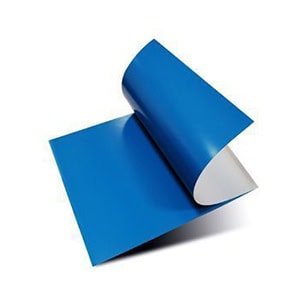
Job need, plate type and why
| Job need | Recommended plate type | Why |
|---|---|---|
| Daily mix of short brochures and flyers, conventional inks | Single-layer thermal | Clean roll-up, stable dots, economical for high plate counts |
| Long reprints or UV / hybrid inks | Double-layer thermal, baked | Baking raises chemical and wear resistance; see the TDS for run-length test conditions |
| Short runs, want to remove processor and chemistry | Processless thermal | Develops on press; no developer, no waste water from processing |
| Shop already owns a UV platesetter | Single-layer CTcP | Images with UV exposure; no need to change the platesetter |
| Small shop on film and vacuum frame | Positive PS | Works with existing film workflow at low plate cost |
A common belief is that one plate grade must cover every job. Many commercial printers do better with two grades: a standard thermal plate for daily work and a baked or UV-resistant grade for long or UV jobs. Likewise, the cheapest plate per square metre rarely gives the lowest cost per job; remakes, makeready time and press stops decide the real plate cost in a commercial shop.
Matching prepress equipment
Commercial shops usually run a 4-up or 8-up thermal platesetter. We supply thermal CTP platesetters and UV CTcP platesetters with our partner factories. The finishing equipment is our own:
- Plate processor: sized to your maximum plate width and set to the developer window in the grade TDS.
- Baking oven: needed only if you bake double-layer plates for UV or long runs; see plate baking ovens.
- Plate punch: pneumatic register punching for faster plate mounting on sheetfed presses.
- CTP developer: made by us and matched to our thermal and CTcP plates.
Shops wanting the same dot from plate to plate should keep developer fresh and log processor settings; our technical support team can review your set-up remotely.
What to send for a quote
- Press model(s) and plate size, gauge and punch layout.
- Platesetter type (thermal, UV or film) and its maker and model.
- Ink type: conventional, UV, hybrid or LED-UV.
- Typical run lengths and monthly plate volume.
- Your current developer and processor, if any.
MOQ, price and lead time are confirmed in the quotation. If you want consistent dots before you commit, ask for trial plates and test them on one press first.
FAQ
What plates are used in commercial offset printing?
Mostly positive thermal CTP plates imaged at 830 nm, in single-layer or double-layer grades. Processless thermal, CTcP and positive PS plates are also used depending on the shop’s platesetter and workflow.
Thermal or CTcP plates for a commercial print shop?
Your platesetter decides. A thermal platesetter needs thermal plates; a UV platesetter needs CTcP plates. Both can give good commercial quality when processing is kept in its window.
Are processless plates good for commercial printing?
Yes, for short and medium runs with conventional inks. They remove the processor and developer, but image contrast before press is lower, so plate checking relies on good imaging control.
Do commercial printers need to bake plates?
Only for long runs or UV and some hybrid inks. A double-layer thermal plate baked in a baking oven gives higher chemical and wear resistance; daily conventional-ink jobs usually do not need baking.
What plate thickness do sheetfed offset presses use?
Sheetfed presses typically use 0.15, 0.20, 0.25 or 0.30 mm offset plates, depending on press size. Check your press manual or our plate size chart and send the gauge with your inquiry.
Ready to compare plates for your commercial shop? Request a quote — send press model, plate size and gauge, platesetter type, inks and monthly volume. Or request trial plates / contact us.
Disclaimer: values on this page are typical and for reference only; final specifications, MOQ, price and lead time are subject to the grade TDS and the quotation.

