
Water Washable Flexo Plate
Last updated: October 2026
Quick answer: A water washable flexo plate is a photopolymer flexo plate whose unexposed resin is removed with water (usually with a small dose of wash additive) instead of solvent. It removes solvent handling and recovery, typically shortens drying, and suits plate rooms with strict ventilation or waste rules. Ink compatibility must be checked per grade before switching.
Key takeaways
- Water-wash plates develop in a water-based washout, so the plate room needs no solvent storage, distillation or solvent ventilation.
- Drying is usually shorter than with solvent plates because water swells the polymer less.
- Ink resistance differs by formulation — confirm the grade against your solvent, UV or water-based ink before a full switch.
- You need a water-wash processor; solvent processors are not interchangeable with this workflow.
- CTPPress manufactures water-wash grades in analog and digital (LAMS) versions; MOQ, price and lead time are confirmed in the quotation.
Many converters tell us the same three things: the solvent smell in the plate room is a problem for staff, drying takes too long before the plate can go to press, and solvent recovery and disposal cost too much. A water washable flexo plate addresses all three. It sits alongside our analog flexo plates exposed through film and digital LAMS flexo plates in the photopolymer flexo plate range, and differs from them only in how the unexposed polymer is washed away.
What is a water washable flexo plate?
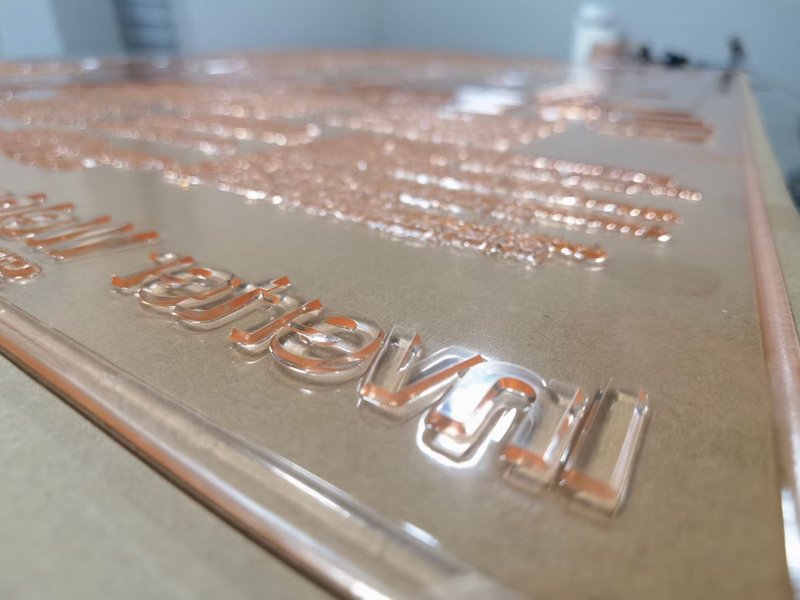
Like every photopolymer plate, a water-wash plate is a UV-sensitive resin layer on a polyester backing. Back exposure builds the floor, main exposure (through film or through a laser-ablated mask) hardens the image, and washout removes the resin that was not exposed. The difference is the chemistry of the resin: it is formulated to disperse in warm water with a mild wash additive, so the washout unit uses water rather than a hydrocarbon or alcohol-based solvent.
After washout the plate is dried, then detacked and post-exposed (light finishing) like any other flexo plate. The finished relief, shoulders and dots are built the same way; what changes is the plate room around them.
Water wash vs solvent vs thermal processing
There are three established ways to process a photopolymer flexo plate. We manufacture grades for each, so the choice is about your plate room and press, not about what we happen to stock.
| Factor | Solvent flexo plate | Water-wash flexo plate | Thermal flexo plate |
|---|---|---|---|
| Washout medium | Solvent washout solution | Water with wash additive | Heat and absorbent blotting web, no liquid |
| Drying | Longest — commonly 1–3 hours in the dryer (typical in the industry) | Usually shorter, as water swells the polymer less | No solvent drying stage |
| Plate room needs | Solvent storage, ventilation, recovery or distillation | Water supply, filtration of polymer-laden wash water | Thermal processor and web consumable |
| Installed base | Largest | Growing where environmental rules are strict | Growing in high-throughput plate rooms |
| Processor | Solvent processor | Water-wash processor | Thermal processor |
For a side-by-side of the solventless heat route, see our thermal flexo plate page. For the full plate-making sequence, read how flexo plates are made step by step.
Benefits for the plate room
- No solvent handling. No solvent drums, no distillation unit and far less odour — a cleaner plate room without solvent is often the main reason buyers ask for water-wash plates.
- Faster turnaround. Shorter drying means plates ready for press the same shift in many plate rooms, which matters for short-run label and packaging jobs.
- Simpler compliance. Fewer volatile organic compounds to manage; check local rules for wash water discharge, which still contains dispersed polymer and must be filtered or treated.
- Staff and building. Smaller ventilation requirements and lower fire-risk classification for the plate room compared with solvent processing.
The common belief is that water wash plates are an eco compromise that prints worse than solvent plates. In practice, a water-wash grade matched to the ink system prints comparable quality — same screens, same solids — while removing solvent handling. The quality question is not “water or solvent” but whether the grade, the processor settings and the ink system fit together.
Ink compatibility and limitations
This is where a switch can go wrong, so we cover it before you order. A frequent objection is: “water wash plates may not resist our ink.” It is a fair concern. Water-washable resins are designed to disperse in water before curing, and after full post-exposure they must resist the ink on press. Resistance differs by formulation:
- Solvent-based inks (alcohol/acetate systems on film): check the grade’s solvent-ink resistance in the TDS; some water-wash grades are formulated for these.
- UV-curable inks: not suitable — our water-wash plates are not for UV inks. For UV-ink label work, ask us for a different plate type from our flexo range.
- Water-based inks on paper and board: confirm specifically — not every water-wash resin is rated for long contact with water-based ink.
Other limits to weigh: a water-wash plate needs a water-wash processor (your solvent processor cannot be reused as is), and dot and relief behaviour depend on water temperature, additive dose and brush settings. Buyers also ask “will the dots hold on long runs?” — run length depends on ink, substrate, impression and anilox, so we give no single figure; see the grade TDS and run a trial on your press. Our flexo plate cleaning and storage guide covers how to keep plates in condition between runs.
Thickness and applications
Water-wash grades follow the standard flexo gauges. Gauge availability differs by grade, so confirm before ordering.
| Gauge | Typical application (industry practice) |
|---|---|
| 1.14 mm | Narrow-web labels, flexible packaging, fine screens |
| 1.70 mm | Flexible packaging, labels, folding carton |
| 2.28 mm / 2.84 mm | Paper bags, sacks, corrugated preprint |
| 3.94 mm and above | Corrugated postprint (see our corrugated flexo plate grades) |
For how gauge relates to mounting tape and cylinder undercut, see the flexo plate thickness guide.
How to order water-wash flexo plates
Switching to water wash only means buying a different plate — that is the assumption we hear most often, and it is the one that causes trouble. Water wash is a workflow: plate grade, washout processor, wash water treatment and ink system must match. Before quoting we ask for:
- Imaging route: film (analog) or LAMS imager — see the flexo CTP imager if you plan to go digital.
- Your processor: an existing water-wash processor, or whether you need one. Washout, drying and finishing units are available from our flexo plate processors range, supplied with our partner factories.
- Ink system, substrate, press type and print repeat.
- Gauge, sheet size and monthly volume.
Converters want the same print quality as our solvent plates when they switch, so we recommend a trial on your own press before any volume order. MOQ, lead time and sample terms are confirmed in the quotation. Packing for export is covered on our shipping and packaging page.
FAQ
What is a water washable flexo plate?
It is a photopolymer flexo plate whose unexposed resin is washed out with water and a mild wash additive instead of solvent. Exposure, drying, detack and post-exposure follow the normal flexo plate-making sequence.
What is the difference between water wash and solvent flexo plates?
The washout medium. Solvent plates need solvent storage, ventilation and recovery and usually longer drying; water-wash plates use water, typically dry faster and avoid solvent handling, but need a water-wash processor and filtration of the wash water.
Which inks can be used with water wash flexo plates?
Our water-wash plates are not suitable for UV inks; some grades are formulated for solvent-based inks. Resistance to water-based inks varies by resin, so check the grade TDS and run a trial with your own ink before switching.
Do water wash flexo plates need a special processor?
Yes. They need a water-wash processor with suitable brushes, water temperature control and filtration. A solvent processor cannot simply be refilled with water. Processing units are supplied with our partner factories if you need them.
How is wash water from flexo plate processing disposed of?
The wash water carries dispersed polymer, so it is normally filtered or treated before discharge. Requirements depend on local regulations; check them with your environmental authority before installing the line.
Are water wash flexo plates available in digital LAMS versions?
Yes. We manufacture water-wash grades for both film exposure (analog) and laser-ablation mask imaging (digital LAMS). Tell us your imager and we recommend the matching grade.
Considering a move away from solvent? Request a quote — send your imaging route, processor, ink system, gauge, plate size and monthly volume. Or request trial plates / contact us.
Disclaimer: values on this page are typical and for reference only; final specifications, MOQ, price and lead time are subject to the grade TDS and the quotation.

