Offset Printing Plates
Last updated: October 2026
Quick answer: Offset printing plates are light-sensitive aluminium sheets that carry the image to be printed. CTPPress manufactures four types in China: thermal CTP plate (830 nm laser imaging, our main line, in single-layer and double-layer grades), processless thermal plates (no developer needed), CTcP plates (UV exposure, works with conventional UV platesetters) and PS plates (for film-based workflows). Trial plates are available so you can test on press before switching.
CTPPress is an offset printing plate manufacturer in China. We produce thermal CTP plate, processless plates, CTcP plates and PS plates at our own coating line, and supply them to commercial printers, packaging plants and printing consumables dealers in more than 20 countries. Every plate ships with a technical data sheet (TDS), and every new customer starts with a free sample run on their own press.
- Own production line for thermal, processless, CTcP and PS plates
- Trial plates available so you can test on press before ordering
- Free samples for press testing before you order
- Custom cutting to your press size, corner and punch system
If you are comparing suppliers or planning to switch, the sections below explain what each plate type does, how to choose, and what to send us for an accurate quote.
What are offset printing plates?
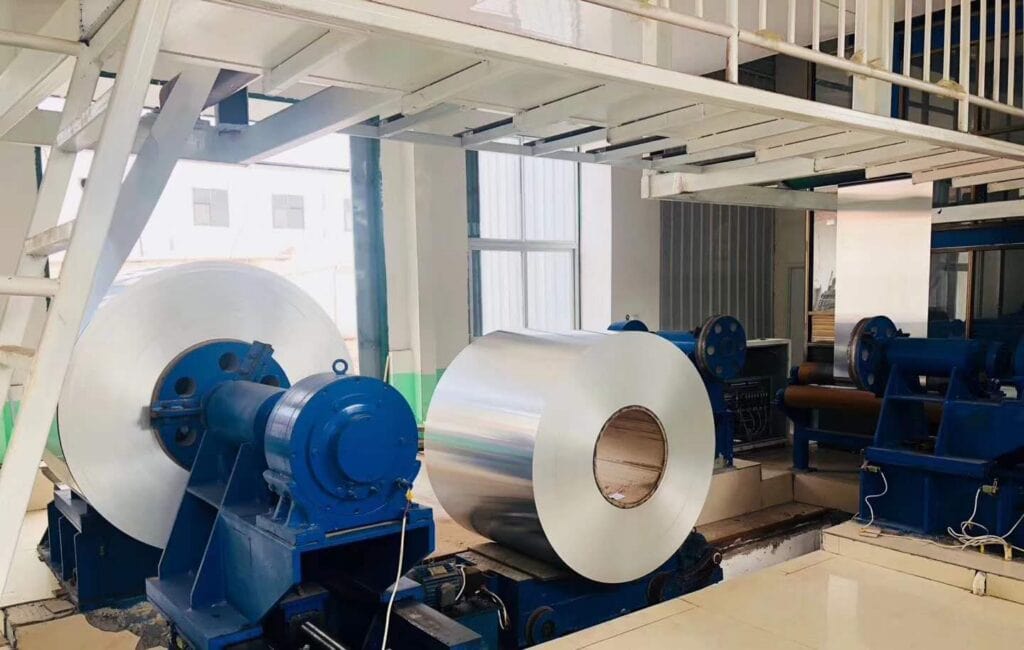
An offset printing plate is a thin aluminium sheet (typically 0.15 mm to 0.30 mm thick) coated with a light-sensitive layer. During platemaking, the image areas of the coating are hardened by light or heat; the non-image areas are then removed by processing (or, with processless plates, by the dampening solution on press). The plate then transfers ink to a rubber blanket, which prints the image onto paper.
Most modern offset plates are imaged directly by a CTP (computer-to-plate) machine. This removes film from the workflow and gives sharper dots and more consistent colour than the older film-based PS plate process.
Offset plate types we manufacture
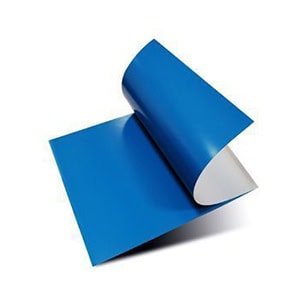
We make four plate families at our factory, each in the grades below.
| Grade | Imaging | Processing | Best for |
|---|---|---|---|
| Single-layer thermal CTP plate | 830 nm thermal laser | Developer processor | Commercial offset: brochures, catalogues, books, general packaging |
| Double-layer thermal CTP plate | 830 nm thermal laser | Developer processor | Long runs, UV ink, abrasive substrates |
| Processless thermal CTP plate | 830 nm thermal laser | None — on-press clean-out | Removing the processor, small plate rooms, chemistry-free workflow |
| CTcP plate | UV light | Developer processor | Shops with UV platesetters / CTcP machines |
| Positive PS plate | Film negative | Developer processor | Film-based workflows |
| Violet photopolymer plate | Violet laser | Developer processor | Violet platesetters |
| Polyester plate | Film / low-energy | Varies | Small format, low volume |
Typical plate gauges run 0.15 mm, 0.20 mm, 0.25 mm, 0.30 mm and 0.40 mm. Sheets are cut to your press size, with the corner and punch register system you specify.
Single-layer and double-layer thermal CTP plate
Thermal CTP plate is imaged by an 830 nm infrared laser inside a thermal platesetter. The laser heat changes the coating chemistry, so the plate does not react to daylight and can be handled under normal room light.
The single-layer grade is our standard plate for commercial offset work — brochures, catalogues, books and general packaging. It runs in a regular processor with thermal developer.
The double-layer grade uses a two-layer coating for longer runs and harsher press conditions, including UV-curing ink work. The second layer improves resistance to plate cleaner, scratches and abrasion on press.
Processless thermal CTP plate
Our processless grade is imaged the same way as standard thermal plate but needs no processor, no developer and no rinse water. After imaging, the plate goes straight to the press. The non-image coating is removed by the fountain solution during the first minutes of printing. This cuts chemistry cost, waste disposal and plate-room space, and it is the easiest type to run if your volume does not justify a processor.
CTcP plates — single layer
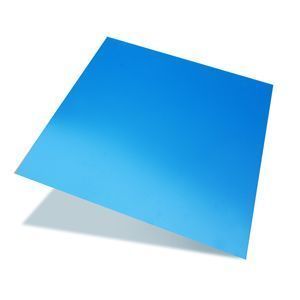
CTcP (computer-to-conventional-plate) plates are exposed by a UV light source instead of an infrared laser. They run on conventional UV platesetters (often called CTcP machines), which lets a print shop move from film to CTP without replacing its exposure equipment. Our single-layer CTcP plate is a direct fit for UV-CTP workflow. Please note we do not currently supply a double-layer CTcP grade; if you need longer runs on UV equipment, tell us your monthly volume and we will recommend whether our double-layer thermal grade or an alternative fits better.
PS plates — positive
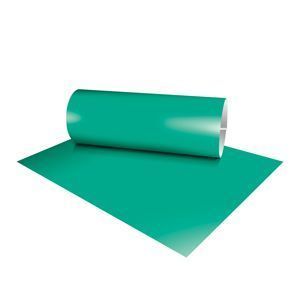
PS (presensitized) plates are the conventional option for print shops still working with film negatives. Our positive PS plate is exposed through film and processed in a regular developer. It remains popular in markets where film equipment is still in use, and we keep it in production for those customers.
Other plates in our range
We also manufacture violet photopolymer plates for violet platesetters, and polyester plates for small-format or low-volume work. Not sure which fits? Use the plate selection guide or read types of CTP plates. If you run a violet or polyester workflow, tell us your platesetter model and we will confirm the matching grade.
How to choose the right offset plate
Four questions decide the plate:
- What platesetter or exposure equipment do you have? Thermal (830 nm) machines need thermal plates; UV/CTcP machines need CTcP plates; film workflow needs PS plates; Violet lasers need violet plates. Check our CTP compatibility matrix for exposure settings by platesetter model.
- What ink do you print with? Conventional oil-based ink runs well on any grade. UV and LED-UV inks put more stress on the coating — for those we recommend the double-layer grade, and we recommend testing before a long run. For newspaper coldset work we can suggest the right grade based on your press speed.
- How long is your run? Single-layer plates suit short to medium runs. If your jobs are regularly long runs, or you run abrasive substrates, the double-layer grade holds up better. Estimate plate cost per job with our calculator.
- Do you want to remove the processor? If you have no processor today, or want to cut chemistry handling, the processless grade is the simplest route. See processless vs processed plates for a comparison.
Many buyers start by thinking that all offset plates are basically the same aluminium sheet. In practice the imaging type, the number of coating layers and the processing chemistry decide run length, ink resistance and your real cost per plate. A single-layer plate on a UV-ink job will wear out early; a double-layer plate on short-run text work is wasted money. Matching the plate to the job is where most of the savings are.
If you are not sure which grade fits, send us your platesetter model, your ink type and a typical job sheet. Our technical team will recommend a grade and put free samples on the next shipment.
Sizes, thicknesses and custom cutting
Offset plates are sold in standard thicknesses from 0.15 mm up to 0.40 mm, and in a wide range of sheet sizes to match different press formats. We cut plates to the exact size your press and punch require — include your plate size, corner type and punch register system in the quote request and we will supply plates ready for your pressroom. If you are unsure of your size, send a photo of an old plate or the press nameplate.
Quality control and plate testing
Every production batch is checked on our in-house platesetter and processed before packing. We check coating uniformity, image resolution, dot reproduction and clean-out behaviour. When a customer switches to us, we follow a fixed plate-test protocol: the customer runs our sample plate on their own press with their own ink and paper, and we review the result together — dot gain, solid density, scumming and run length. This keeps the switch low-risk; you see the plate perform on your equipment before you commit to a volume order.
MOQ, samples, lead time and packaging
- Minimum order: depends on size and thickness — we confirm the exact MOQ per size in the quotation.
- Trial plates: available for press testing before you order; the buyer covers freight. Trial plates come from current production.
- Lead time: confirmed per order, based on quantity.
- Packaging: plates are interleaved and packed in export cartons, then on pallets for sea or air freight. Sizes and pallet counts are confirmed per order.
Offset printing plate price: what affects your quote
We quote per size and thickness rather than a single per-kilo price, because the coating and processing chemistry differ by grade. The main factors are plate type (single or double layer, processless or developer-based), sheet dimensions, thickness, monthly volume and destination port. Send your monthly usage, plate size list and the port you ship from, and we will return a firm price with the lead time.
FAQ
What are offset printing plates made of?
They are made of an aluminium alloy base (usually a 1000-series grade such as 1050 or 1060) with a grained and anodised surface, coated with a light-sensitive layer. The coating is what differs between thermal, CTcP and PS types.
Which offset plate is best for UV ink?
UV ink is harder on the plate coating than conventional ink. We recommend our double-layer grade for UV and LED-UV work, tested on your press before a full run. We do not recommend running standard single-layer plates on long UV jobs.
How long does an offset printing plate last?
Run length depends on the plate grade, the ink, the paper and whether the plate is baked. Thermal plates typically run tens of thousands of impressions; double-layer plates, and baked plates, run considerably longer. We state run length per grade in the TDS, with the test conditions we used.
What sizes and thicknesses do offset plates come in?
Standard thicknesses run from 0.15 mm to 0.40 mm. Length and width are cut to your press size. Tell us your press model or your current plate size and we will confirm availability.
Are thermal plates compatible with my existing platesetter?
Thermal plates work in any 830 nm thermal platesetter regardless of brand — Kodak, SCREEN, CRON, Heidelberg and others. The platesetter brand does not matter; the imaging wavelength does. If you tell us your platesetter model we will confirm the recommended exposure energy.
Can I get a free sample before ordering?
Yes. We send free sample plates from current production; you pay only the freight. Most customers run the sample on press for a few days before placing an order.
Do you ship to India, Indonesia or Africa?
Yes, we export worldwide by sea and air. Share your nearest port and we will quote freight with the plates.
Ready to test a plate on press? Request free samples or request a quote — send your platesetter model, ink type and plate size, and we will reply with a recommendation, price and lead time.
Disclaimer: figures such as MOQ, lead time, thickness ranges and run length are typical values for reference; confirm exact specifications in the TDS or quotation for your order.