
CTP Machine
Last updated: October 2026
Quick answer: A CTP machine (platesetter) images offset plates directly from your prepress system — no film. CTPPress supplies thermal and UV (CTcP) platesetters from 4-up to 8-up format, built by our partner factories in China and configured with RIP, plate loading and processor options. Because we manufacture the thermal CTP plate ourselves, the machine, plates and processor arrive tested together — one supplier, no compatibility blame game.
CTPPress supplies CTP machines — thermal and UV platesetters in 4-up, 8-up and large formats — built by our partner factories in China and matched with our own plate production. We configure each machine with the RIP, automation and processor your pressroom needs, arrange freight and installation, and support it with the plates it images.
- Thermal and UV (CTcP) imaging, 4-up to 8-up and large format
- Machine + plate from one supplier — our own thermal CTP plate, tested on the machine before shipping
- Configuration-first quoting — RIP, automation, processor and installation priced up front
- Export packing — wooden crate, lead time confirmed in quotation
A note on who makes what: CTPPress manufactures printing plates, processors and finishing equipment at our own factory. Platesetters are built by partner factories we have supplied alongside for years — we specify the configuration, test it with our plates, and stand behind the complete line. Read about our company and supply model.
What is a CTP machine?
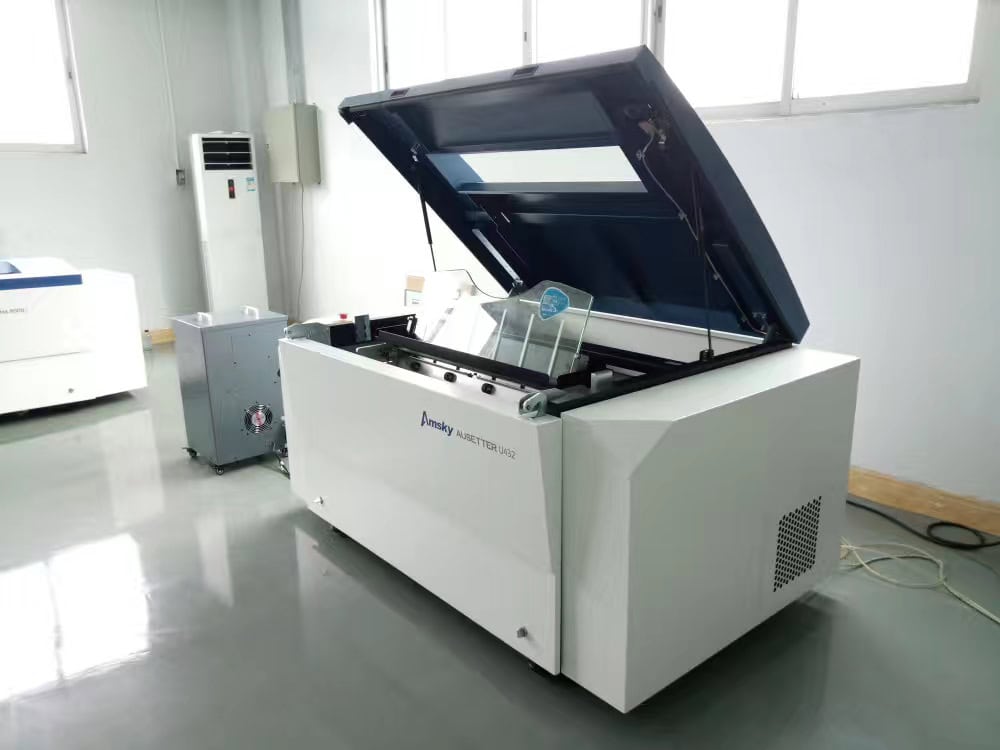
A CTP machine — also called a platesetter or computer-to-plate machine — writes the printing image directly onto an offset plate from digital data. It replaces the camera, film and exposure frame of traditional platemaking. Inside the machine, the plate clamps to a drum; an imaging head writes the image dot by dot — with an 830 nm infrared laser on a thermal machine, or with UV light on a CTcP machine. The plate then goes to a processor (or straight to press with processless plate) and onto the offset press.
The result is sharper dots, faster make-ready, no film cost and a fully digital workflow from PDF to press.
Thermal vs UV (CTcP) platesetters
| Type | Imaging source | Plates it runs | Best for |
|---|---|---|---|
| Thermal platesetter | 830 nm infrared laser | Thermal CTP plate (single-layer, double-layer or processless) | New installations, commercial and packaging work, daylight handling |
| UV / CTcP machine | UV light source | CTcP plate | Upgrading existing UV exposure lines, PS-to-digital transition |
Thermal imaging dominates new installations: it handles room light, holds finer screens and works with processless plate for chemistry-free plate rooms. UV/CTcP machines let a shop keep its existing UV plates and workflow while dropping film. We supply both and will tell you plainly which fits your plates, volume and budget — our plate line runs on either, so the advice is not tied to one machine type.
Choosing a format: 4-up, 8-up and beyond
The format number tells you the maximum plate size the machine images. Match it to your largest press, with headroom:
- 4-up — small and medium sheetfed presses, job shops, in-plant printers. Our 4-up thermal line covers standard commercial sizes.
- 8-up — standard commercial sheetfed formats, the volume mainstream of commercial printing. Our 8-up thermal line covers the common 650 × 550 mm to 1,130 × 800 mm plate range.
- Large format — publication and packaging presses above 8-up, quoted per project.
- Violet platesetters — for shops on violet photopolymer workflows; see the violet page for when it still fits.
If you are unsure, send your current plate size list (or press model) and monthly plate volume. We confirm the smallest format that covers your work — oversizing a platesetter wastes money on imaging head, drum and floor space you will never use.
Configuration: automation, speed and RIP
Two machines with the same format can differ by half their price in configuration. The decisions:
- Manual, semi-automatic or fully automatic loading. Manual suits one-shift job shops; fully automatic (auto plate loading and unloading, online processor connection) pays for itself in multi-shift plants.
- Throughput. Quoted plates per hour always depend on plate size and resolution — a “30 plates/hour” rating is meaningless without those two numbers. We quote throughput at your plate size and your resolution.
- RIP and workflow. We supply the machine with a mainstream RIP configured for your imposition software, and remote support access. See our RIP workflow notes for what to prepare on your side.
- Processor connection. Thermal lines pair with our own CTP plate processor; processless workflows drop the processor entirely.
Every configuration is tested in the factory with our own thermal CTP plate before crating — dot quality, registration and throughput are verified on the plates you will actually run, not on test stock.
Delivery, installation and support
- Lead time: confirmed in quotation, after the configuration is agreed.
- Packing: wooden export crate, sea or air freight; we handle booking and documents to your port.
- Installation: an engineer installs and calibrates the machine at your site, connects the RIP and processor, and runs acceptance plates with your team. Remote preparation checklist is shared before shipping.
- Training: operator and maintenance training during acceptance; manuals and wiring diagrams in English.
- Support and spare parts: remote diagnostics, spare parts stocked for supplied models, and consumables — plates and developer — from the same order. See technical support.
New vs used CTP machines
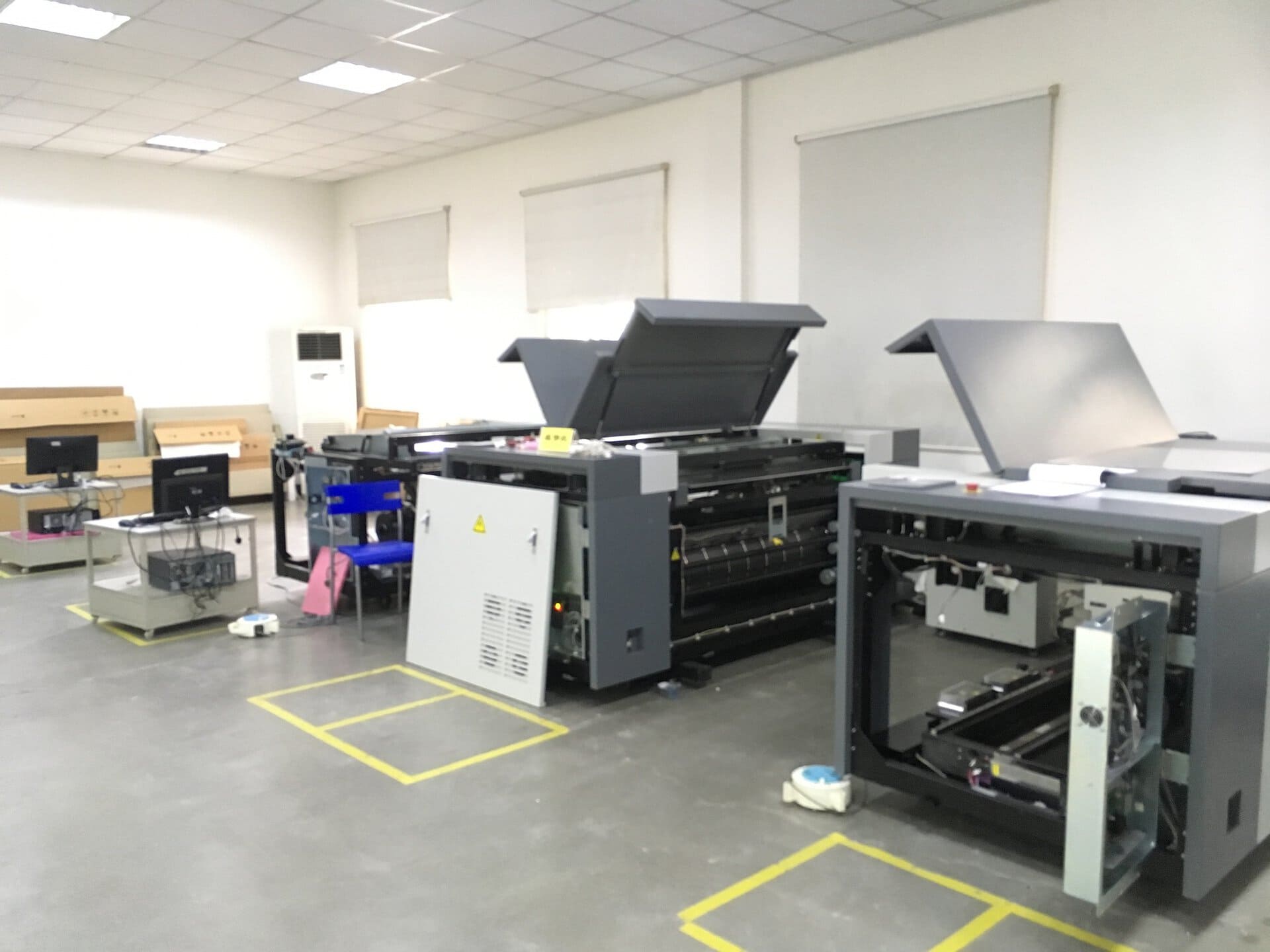
Buyers often assume a used European brand machine is the safe choice. In practice the risk sits in what the brochure does not show: laser head hours, parts pipelines that can take weeks, and service queues. A new machine from our line costs less than a refurbished big-brand unit in most formats, arrives with a warranty, and is supported by the same supplier that makes your plates. Where a used machine genuinely makes sense — a known-serviceable unit at the right price — we will say so. If you want a comparison for your format and volume, send your plate list and we will price both paths.
FAQ
What is a CTP machine?
A CTP machine, or platesetter, images offset printing plates directly from computer data with no film step. A thermal CTP machine writes the image with an 830 nm infrared laser; a UV or CTcP machine exposes the plate with UV light through a violet diode array.
What is the difference between thermal and UV CTP machines?
A thermal CTP machine images plates with an 830 nm laser and needs thermal plates; a UV (CTcP) machine exposes conventional UV plates. Thermal dominates new installations because of resolution and daylight handling; UV suits shops upgrading existing exposure equipment.
How much does a CTP machine cost?
Price depends on format (4-up or 8-up), throughput, automation level, RIP software, freight and installation. New 4-up thermal units typically start in the low tens of thousands of USD; 8-up and fully automatic lines cost more. Send your plate size list and volume for a firm configuration quote.
What is the difference between 4-up and 8-up CTP?
The format sets the maximum plate size the machine can image. A 4-up platesetter covers small and medium press formats; an 8-up covers standard commercial sheetfed presses. Choose by your largest plate size, with some room for future presses.
Should I buy a new or used CTP machine?
Used machines from European brands can be attractive on price, but check laser life, parts availability and service response first. A new machine with full configuration, matched plates and documented support often works out cheaper over five years than an unsupported used unit.
Which plates work with a thermal CTP machine?
Any 830 nm thermal plate. We recommend our own thermal CTP plate — manufactured at our factory and matched to the machine configuration.
Do you install and train on site?
Yes. An engineer installs and calibrates the machine, connects RIP and processor, and trains your operators during acceptance. Remote support continues after installation.
Ready to configure a platesetter? Request a machine configuration quote — send your plate size list, monthly volume and destination, and we will reply with a specified machine, price, lead time and installation plan. Running plates already? Ask about our plate samples to benchmark before you commit.
Disclaimer: specifications, prices and lead times depend on final configuration and destination; figures on this page are typical values for reference. Confirm all details in the quotation.

