
Plate Bender for Offset CTP and PS Plates
Last updated: October 2026
Quick answer: A plate bender folds the lead and tail edges of an offset plate to the exact angle and depth your press clamps need, referenced to the register holes. CTPPress manufactures pneumatic offset plate benders in our own factory and sets each one to your press model, so every plate fits the cylinder the same way. Send your press model and plate size for a quote.
Key takeaways
- Accurate, repeatable bends protect registration and shorten plate changes on press.
- The bend is referenced to the punch holes, so bending and punching must match the same press.
- Our plate benders are pneumatic: an air cylinder applies the same bending force every cycle. Manual benders exist in the market for very low volumes.
- Bend angle and lip length depend on the press model and its plate clamp.
- Our plate benders are made in our factory and configured for your presses.
Many printers still bend plates by hand, in the clamp, or on a simple edge. It works, until a plate cracks at the bend in the middle of a long run, or a plate change on a four-colour job takes three attempts to get in register. A plate bender removes that variation from offset plate bending. It is a small machine, but it sits on the critical path between the plate room and the press, alongside the plate punching machine in your plate line.
What is a plate bender?
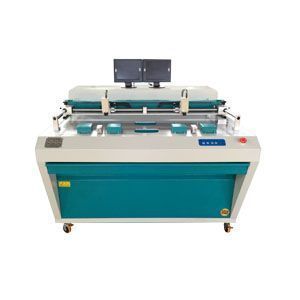
A plate bender (also called a plate bending machine) is a fixture that bends the lead edge, and on most presses the tail edge, of a punched offset plate. The plate is placed on register pins that engage its punch holes, clamped flat, and folded by a bending bar to a set angle and lip length. The result is a plate that drops into the press clamps with no hand forming.
Why accurate bending matters for registration
Registration on an offset press depends on every plate sitting in the same position on its cylinder. The punch holes locate the plate side to side and around the cylinder; the bend decides how the plate edge seats in the clamp. If the bend is not square to the image, or not the right depth, the plate sits slightly skewed or loose, and the press operator has to chase register on every colour.
- Misregister after plate change: an uneven bend shifts the image even when the holes are correct.
- Plates crack at the bend: over-bending, a sharp radius or re-bending by hand stresses the aluminium, and cracks open during the run.
- Plate slipping: a shallow lip does not hold in the clamp.
- Longer makeready: each manual correction costs time and waste sheets.
The belief that bending plates by hand on the press is good enough usually holds until volumes rise or jobs get tighter. A bender referenced to the punch holes gives repeatable registration and faster makeready, which is what buyers mean when they ask for every plate bent the same.
Manual vs pneumatic plate benders
Both types use register pins and a bending bar; the difference is how the bending force is applied.
| Feature | Manual plate bender | Pneumatic plate bender |
|---|---|---|
| Bending force | Operator lever | Air cylinder |
| Consistency | Good with a trained operator | High; same force every cycle |
| Typical use | Lower daily plate volumes, smaller presses | Medium to high volumes, multi-press plants |
| Utilities | None | Compressed air supply |
| Operator effort | Higher on wide, thick plates | Low |
Some printers object that manual bending is good enough. For small volumes on one press, a manual bender is often the right choice and still far more consistent than bending in the clamp. CTPPress benders are pneumatic, because they make sense when several operators share the machine, when plates are wide or thick (0.30 mm rather than 0.15 mm or 0.20 mm), or when the line runs many plates per shift.
Matching the bender to your press clamp
Each press model has its own clamp geometry, so bend angle, lip length and the distance from the register holes to the bend line are set for that press. A common objection is that one bender cannot fit all presses. That is partly true: a bender is built for a press format and clamp type, but plants with several similar presses can often use interchangeable pin and stop settings. We confirm what is possible when we see your press list.
- Identify every press model and its plate clamp (lead and tail).
- Confirm the plate sizes and gauges you run; see our offset plate size chart.
- Check the punch pattern your presses use, so the bender pins match the holes.
- Estimate daily plate volume and how many operators will use the bender.
We make the bender in our factory and set it to your press model before shipping. It works with any punched offset plate, including our thermal CTP plates, CTcP plates and PS plates. For the full plate line, see our plate processing equipment range.
What to send for a plate bender quote
- Press make and model for each press, and the clamp type if known.
- Plate size (width × length) and gauge for each press.
- Your current punch pattern, or a photo or scan of a punched plate.
- Daily plate volume and number of operators per shift.
- Compressed air availability and local power supply.
Configuration, price, MOQ and lead time are confirmed in the quotation. If you also need plates cut and punched to your pattern, see custom plate sizes and punching.
FAQ
What is a plate bender?
A plate bender is a machine that bends the lead and tail edges of a punched offset plate to the angle and lip length the press clamps need, using the register holes as the reference.
Why do offset plates need to be bent?
Most offset presses hold the plate with clamps that grip a bent edge. An accurate bend seats the plate correctly, protects registration and prevents slipping or cracking during the run.
What is the difference between a manual and pneumatic plate bender?
A manual bender uses an operator lever and suits lower volumes. A pneumatic bender uses an air cylinder for the same force every cycle and suits higher volumes and multiple operators. The benders we manufacture are pneumatic and need a compressed air supply.
How do I choose a plate bender for my press?
Start from the press model and clamp, the plate size and gauge, and the punch pattern. Add your daily plate volume and confirm you have a compressed air supply, since our benders are pneumatic. Send these details and we configure the bender.
Can one plate bender handle different presses?
Sometimes. Similar presses can often share a bender with interchangeable pin and stop settings, but very different clamp geometries need separate set-ups. We confirm this from your press list.
Ready to stop bending plates by hand? Request a quote and send your press models, plate sizes and gauges, punch pattern and daily plate volume. Or request trial plates / contact us.
Disclaimer: values on this page are typical and for reference only; final specifications, MOQ, price and lead time are subject to the grade TDS and the quotation.

