
Thermal Flexo Plate
Last updated: October 2026
Quick answer: A thermal flexo plate is a photopolymer flexo plate processed with heat instead of liquid. After exposure, a thermal processor warms the plate so the unexposed polymer softens, and an absorbent blotting web lifts it away. There is no solvent, no wash water and no solvent drying stage — but you need a dedicated thermal processor and its web consumable.
Key takeaways
- Thermal processing is solventless: heat plus a nonwoven blotting web replaces washout and solvent drying.
- The main gain is turnaround — a press-ready plate far sooner than with solvent processing, typically within the same hour in industry practice.
- Trade-offs are processor investment, blotting web as a running cost, and a narrower choice of grades and gauges than solvent plates.
- Thermal grades run only on a thermal processor; they cannot be washed out in solvent or water units.
- CTPPress manufactures thermal-processing flexo plates; MOQ, price and lead time are confirmed in the quotation.
Plate-room managers come to thermal for one reason above all: solvent plates take hours before they can print, and remakes during the shift hold the press. Others simply have no space or permit for solvent recovery. A thermal flexo plate removes both problems. It belongs to our flexo plate range alongside digital LAMS flexo plates, film-exposed analog plates and water washable flexo plates, and differs from them in one step: how the unexposed polymer leaves the plate.
What is a thermal flexo plate?
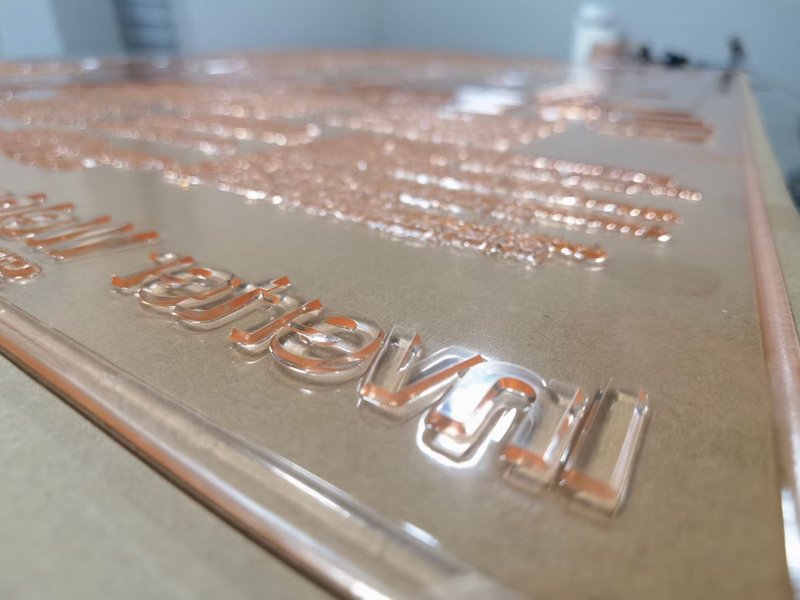
It is a photopolymer plate — UV-curable resin on a polyester base — whose resin is formulated to soften at a controlled temperature when unexposed, while the UV-cured image areas stay solid. That property lets a processor remove the non-image polymer mechanically with heat and an absorbent web, rather than dissolving it. Thermal grades are most commonly imaged digitally through a laser-ablation mask (LAMS) on a flexo CTP imager; tell us your imaging route and we confirm the matching grade.
How thermal processing works
- Back exposure through the polyester base sets the floor and therefore the relief depth.
- Imaging and main exposure: the LAMS mask is ablated by the imager, then UV-A light hardens the image areas.
- Thermal development: the plate is mounted on a heated drum in the thermal processor. Heat softens the unexposed polymer; a nonwoven blotting web is pressed against the surface and absorbs it. The cycle repeats several times until the specified relief is reached.
- Cooling and light finishing: UV-A post-exposure completes curing and UV-C detack removes surface tack. There is no solvent drying step.
The used web leaves the processor as solid waste carrying the removed polymer; check local rules for its disposal. For the complete sequence across all washout routes, read the flexo plate making process explained.
Thermal vs solvent vs water-wash flexo plates
| Factor | Thermal flexo plate | Solvent flexo plate | Water-wash flexo plate |
|---|---|---|---|
| Development | Heat + blotting web | Solvent washout with brushes | Water + additive with brushes |
| Drying | None for solvent; short cooling | Commonly 1–3 hours (typical in the industry) | Usually shorter than solvent |
| Liquid waste | None | Spent solvent for recovery | Polymer-laden wash water to filter |
| Running consumable | Blotting web | Solvent | Water, wash additive, filters |
| Processor | Thermal processor | Solvent processor + dryer | Water-wash processor + dryer |
| Grade and gauge choice | Narrower | Widest | Wide |
Advantages and trade-offs
What buyers gain. The desire we hear is simple: “a plate ready in about an hour, no solvent and no drying oven, and a compact plate room.” Thermal processing is the route that typically delivers that. Plate dimensions are stable as soon as the plate cools, because no solvent was absorbed, so there is no swelling to dry out. Remakes during a shift stop being a crisis.
What it costs. We do not hide the objections, because they are real:
- “The thermal processor is a big investment.” It is usually the largest single cost of the change. It pays back where plate volume and turnaround matter; for a small, infrequent plate output, solvent or water-wash may stay cheaper.
- “Blotting web is an ongoing consumable cost.” Yes — web consumption scales with plate area and relief depth. Include it when you compare cost per square metre.
- “Will heat affect plate gauge and register?” Processor temperature, web tension and drum settings must match the grade; set up correctly, gauge and register hold. We supply the processing window in the grade TDS.
- Choice is narrower: fewer gauges and durometers exist for thermal than for solvent, especially at heavy corrugated thicknesses.
Many buyers believe thermal plates are only for the largest trade shops. In practice, thermal processing pays off wherever plate turnaround and solvent-free operation matter more than processor cost — a mid-sized label or flexible packaging plant with daily remakes can justify it as well.
Gauges and applications
| Gauge | Typical application (industry practice) |
|---|---|
| 1.14 mm | Narrow-web labels, fine screens |
| 1.70 mm | Flexible packaging, labels, folding carton |
| 2.28 mm / 2.84 mm | Wide-web packaging, paper bags, corrugated preprint |
| 3.94 mm | Corrugated postprint — confirm thermal availability per grade |
For heavy postprint work, compare with our corrugated flexo plate grades, and use the flexo plate thickness guide to relate gauge to tape and cylinder undercut.
Is a thermal flexo plate right for your plate room?
A thermal flexo plate cannot run on any processor. Thermal grades require a thermal processor and blotting web matched to the plate; solvent and water-wash units cannot develop them. Before quoting, we check:
- Do you already run a thermal processor, and which web does it use? If not, processing units are offered through our flexo plate processors range, supplied with our partner factories.
- Imaging: which LAMS imager you run and its exposure set-up.
- Ink system, substrate, press and repeat; gauge, sheet size and monthly plate area.
We recommend a trial on your own press first. MOQ, lead time and sample terms are confirmed in the quotation.
FAQ
What is a thermal flexo plate?
A photopolymer flexo plate developed with heat instead of liquid. The unexposed polymer softens when heated and is absorbed by a blotting web in a thermal processor, so no solvent or water washout is used.
How does thermal flexo plate processing work?
After back and main exposure, the plate is heated on the processor drum while a nonwoven web is pressed against it to absorb the softened, unexposed polymer. Several cycles build the relief, then light finishing (UV-A post-exposure and UV-C detack) completes the plate.
What are the advantages of thermal processing over solvent washout?
No solvent, no liquid waste and no long drying stage, so plates reach the press much sooner and the plate room is smaller and cleaner. Plates are dimensionally stable once cooled because they absorb no solvent.
Do thermal flexo plates need a special processor?
Yes. They need a thermal processor and a compatible blotting web. Solvent and water-wash processors cannot develop thermal grades. Thermal processing units are supplied with our partner factories if you need one.
What are the disadvantages of thermal flexo plates?
Higher processor investment, blotting web as a running consumable, and a narrower range of grades and gauges than solvent plates, particularly for heavy corrugated thicknesses.
Can thermal flexo plates be imaged on a LAMS flexo CTP imager?
Yes. Digital thermal grades carry a laser-ablation mask and are imaged on a standard LAMS flexo CTP imager, then exposed and thermally processed.
Weighing thermal against solvent or water wash? Request a quote — send your processor, imaging route, ink system, gauge, plate size and monthly plate area. Or request trial plates / contact us.
Disclaimer: values on this page are typical and for reference only; final specifications, MOQ, price and lead time are subject to the grade TDS and the quotation.

