
Violet CTP Plates — Photopolymer Plates for Violet Platesetters
Last updated: October 2026
Quick answer: A violet CTP plate is a negative-working photopolymer offset plate imaged by the violet laser diode of a violet platesetter. The exposed polymer hardens; after preheat (on grades that need it), a prewash removes the protective overcoat and the developer removes unexposed coating. Violet plates are handled under a yellow safelight and remain a practical choice wherever a violet platesetter is still in good working order.
Key takeaways
- Violet photopolymer plates are negative-working: laser-exposed areas become the printing image.
- They need yellow safelight handling — white light fogs the coating before processing.
- Typical processing: imaging, preheat, prewash, development, rinse and gumming; exact settings come from the grade TDS.
- We manufacture violet photopolymer plates in gauges 0.15, 0.20, 0.25 and 0.30 mm; violet platesetters are supplied with our partner factories.
Many newspaper and commercial printers bought violet CTP systems and still run them every day. A common complaint we hear: our violet platesetter still works but plate supply is getting harder. Others need a reliable second source of violet plates to protect price and delivery. This page explains how violet photopolymer plates work, how to handle and process them, and how to evaluate our grade against your current plate.
What is a violet CTP plate?
A violet CTP plate is a grained and anodised aluminium plate coated with a light-sensitive photopolymer layer and a thin protective overcoat. The overcoat keeps oxygen away from the polymer so the exposure reaction can proceed. When the violet laser writes the image, the exposed photopolymer starts to cross-link. Preheat completes that cross-linking, and the developer then washes away the unexposed areas, leaving a hard, ink-receptive image on the hydrophilic aluminium.
Because the image is built by polymerisation, violet photopolymer plates are negative-working, unlike positive thermal plates or positive PS plates.
Who still uses violet platesetters
Violet technology is sometimes described as obsolete and something to replace immediately. In reality, a working violet platesetter remains productive when plate supply and processing are controlled. Typical users today:
- Newspaper printers — violet systems were widely installed for newspaper printing because imaging is fast and plates are economical for daily runs.
- Commercial printers with an installed violet platesetter that is not yet due for replacement.
- Prepress bureaus serving local printers with plates imaged on violet equipment.
- Dealers who supply violet plates to an existing base of violet CTP users.
“Violet is old technology, so why invest?” is a fair objection. The answer is usually not to invest in new equipment, but to keep the existing system running on a stable plate supply until a planned move to thermal. If you are planning new equipment, compare our thermal CTP plates and the violet CTP machines supplied with our partner factories before deciding.
Safelight handling of violet plates
Plates fog when the safelight is not right. Violet photopolymer coatings react to violet and blue light, so unexposed plates must be handled under a yellow safelight from opening the box until processing is complete.
- Use the safelight type specified in the grade TDS and check filters for fading or gaps.
- Keep plates in their sealed box until they are loaded into the platesetter.
- Limit the time plates spend under safelight; the safe handling time is stated in the TDS.
- Do not open doors to daylight in the plate room during loading and processing.
- Store boxes flat, away from heat and humidity, in the original packaging.
Imaging, preheat and processing steps
Inconsistent preheat gives uneven dots, so the processing line matters as much as the plate. The general sequence for violet photopolymer plates is:
| Step | What happens | What to control |
|---|---|---|
| 1. Imaging | Violet laser exposes the image areas | Exposure energy and focus per the platesetter and grade TDS |
| 2. Preheat | Heat completes cross-linking of exposed polymer | Preheat temperature and dwell; not all grades need it |
| 3. Prewash | Water removes the protective overcoat | Clean water, brush condition |
| 4. Development | Developer removes unexposed photopolymer | Developer type, temperature, replenishment |
| 5. Rinse and gum | Plate is rinsed and protected with gum | Gum coverage and drying |
Violet plates need a processor with preheat and prewash sections — usually the one already installed with your violet system. For general processor options, see our CTP plate processors. A common worry is that switching plate supplier means retuning the processor. Usually only small changes are needed, but any violet plate does not simply drop into any violet workflow: safelight, preheat and developer settings must be matched and confirmed in a trial. Our plate test protocol explains how to run that trial.
Violet vs thermal CTP plates
| Factor | Violet photopolymer plate | Thermal CTP plate |
|---|---|---|
| Imaging | Violet laser diode platesetter | 830 nm thermal platesetter |
| Working mode | Negative-working | Mostly positive-working (single or double layer) |
| Handling light | Yellow safelight | Daylight or room light per TDS |
| Processing | Preheat, prewash, develop, gum | Develop, rinse, gum (or processless on press) |
| Typical use today | Existing violet installations, newspaper printing | Commercial and packaging printing, new installations |
For a wider comparison of plate technologies see our guide to the types of CTP plates.
Ordering violet photopolymer plates
We manufacture violet photopolymer plates on our own coating lines and cut them to your platesetter and press format. Buyers often ask whether a new supplier is compatible with their platesetter. To check, send us your platesetter type, processor and developer, current plate, plate size and gauge, and typical run length. We recommend a trial on your own line, aiming for plates that match your current processor settings as closely as the chemistry allows. Our goal is stable quality from batch to batch. MOQ, lead time and price are confirmed in the quotation; run length and safelight data are on the grade TDS.
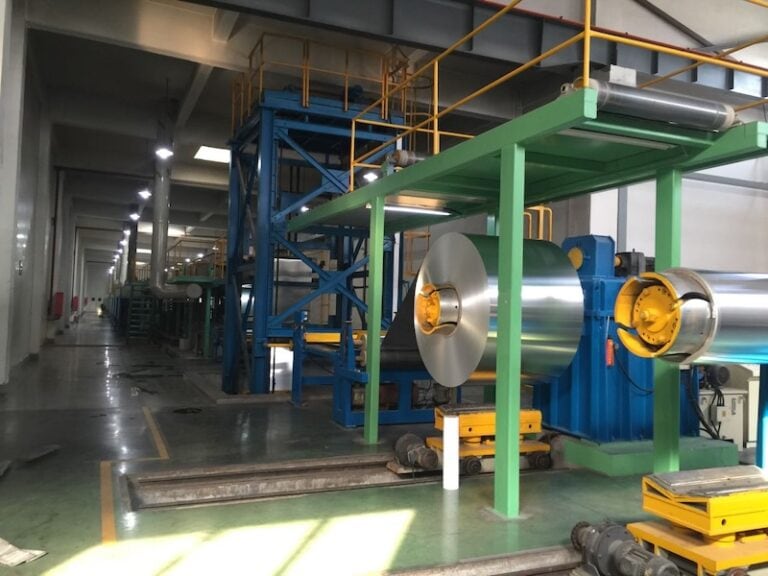
Violet plates are supplied to a newspaper printing company in Venezuela — see our Latin America market page.
FAQ
What is a violet CTP plate?
It is a negative-working photopolymer offset plate imaged by the violet laser of a violet platesetter. Exposed areas harden into the printing image and the unexposed coating is removed in a processor.
Who still uses violet platesetters?
Mainly newspaper printers, commercial printers and prepress bureaus with violet systems that still work well, plus dealers who supply that installed base.
What safelight do violet plates need?
A yellow safelight. Violet photopolymer plates react to violet and blue light, so keep them under the safelight specified in the grade TDS until processing is finished.
Do violet photopolymer plates need preheat?
Most violet photopolymer grades use preheat to complete cross-linking of the image; some grades are designed without preheat. The grade TDS states which applies and the recommended settings.
What is the difference between violet and thermal CTP plates?
Violet plates are negative-working photopolymer plates imaged by a violet laser and handled under yellow safelight. Thermal plates are imaged at 830 nm, are mostly positive-working and can usually be handled in room light.
Looking for a stable second source of violet plates? Request a quote — send your platesetter, processor, plate size, gauge and monthly volume. Or request trial plates / contact us.
Disclaimer: values on this page are typical and for reference only; final specifications, MOQ, price and lead time are subject to the grade TDS and the quotation.

