
PS Plates (Presensitized Offset Plates)
Last updated: October 2026
Quick answer: A PS plate is a presensitized offset plate exposed through film on a conventional exposure frame — the standard plate for shops still running film workflow. CTPPress manufactures a positive PS plate (we do not supply negative PS plates) in standard thicknesses from 0.15 mm to 0.40 mm, cut to size. It remains the right choice where film equipment is still productive.
Key takeaways
- PS (presensitized) plates are pre-coated aluminium offset plates exposed through film and developed in standard PS developer.
- CTPPress supplies positive PS plates only — no negative PS plates — made in our own plant.
- Typical exposure is in the UVA range at 80–180 mJ/cm², with development at 20–25 °C under yellow safelight handling.
- PS plates remain the right choice where film workflows are still productive; CTcP or thermal CTP plates are the upgrade paths.
- Gauges from 0.15 mm to 0.40 mm, cut to size; MOQ, lead time and price are confirmed in the quotation.
What is a PS plate?
PS means presensitized: the aluminium plate arrives already coated with a light-sensitive layer, and you expose it through film on a conventional exposure frame, then develop it in a standard PS developer. No CTP machine, no laser, no digital workflow — which is exactly why it still sells.
Our PS plate is positive-working: the areas exposed to UV light become soluble and wash away in the developer, so it is exposed through a film positive. We manufacture the positive PS plate and its grained, anodised aluminium substrate in our own plant. We do not supply negative PS plates, and we do not supply a double-layer CTcP plate.
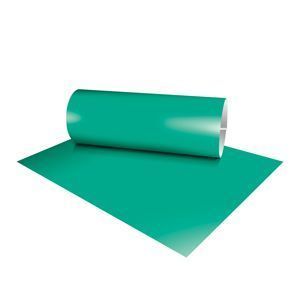
Positive PS plate in use
Buyers who order PS plates usually describe the same situation: “our film equipment still works and I cannot justify CTP yet.” What they want are plates that run on my existing exposure frame, in my existing developer, with no new chemistry to qualify. That is the job of a positive PS plate: the same exposure frame, film and PS processing line you already run, with consistent coating from batch to batch.
| Item | Positive PS plate (typical) |
|---|---|
| Working type | Positive (exposed through film positive) |
| Exposure | UVA range, 80–180 mJ/cm² depending on lamp |
| Dot reproduction | 2–98% at 200 lpi |
| Developer | Standard PS developer, 20–25 °C |
| Safelight | Yellow safelight before development |
| Gauges | 0.15, 0.20, 0.25, 0.30 mm up to 0.40 mm |
Exposure and processing
Our positive PS plate exposes through film in the UVA range (typical exposure energy 80–180 mJ/cm² depending on your frame’s lamp) and reproduces 2–98% dots at 200 lpi after development at 20–25 °C. Handle unprocessed plates under yellow safelight. Typical values are in the TDS that ships with each order; processing follows your existing PS line, so there is no new chemistry to qualify.
- Contact — clean the frame glass and pull full vacuum so the film sits tight on the plate; poor contact shows as soft dots.
- Exposure — set time with a step wedge; lamp output drops with age, so recheck after lamp changes.
- Development — keep the developer in the 20–25 °C window and replenish as plates pass through.
- Rinse, gum and dry — protect the non-image area before the plate goes to press or storage.
Store plates flat in their cartons, in a dry place away from heat and direct light. For storage life and run length, see the grade TDS and its test conditions.
Who still uses PS plates?
Plenty of productive shops: newspaper plants with proven film lines, regions where CTP service support is thin, and plants where film inventory is already amortised. You will hear that PS plates are being phased out everywhere, and that every shop must switch to CTP immediately. That is a vendor story, not a rule — the right time to switch is when your film costs, make-ready times and dot consistency justify a platesetter, and for many plants that day has not arrived. When it does, the natural upgrade paths are our CTcP plate (keeps the UV plate family) or thermal CTP plate with a new platesetter; see the plate range overview.
PS plates are cut to your size and packed for export. For a trial pack use sample request; for pricing, request a quote with your plate sizes, gauge, monthly quantity and exposure frame type.
FAQ
Is a PS plate the same as a CTcP plate?
They are close cousins — both conventional positive plates — but CTcP plate is imaged digitally by UV light in a platesetter while PS plate is exposed through film.
What thicknesses are available?
Standard gauges from 0.15 mm to 0.40 mm, cut to your size.
Do you supply negative PS plates?
No. We supply positive PS plates only. If your workflow uses film negatives, tell us and we will discuss whether a positive workflow or a CTP route fits.
Disclaimer: exposure and processing figures are typical values for reference only; final specifications are subject to the batch TDS and order confirmation.

