
CTP Plate Processor
Last updated: October 2026
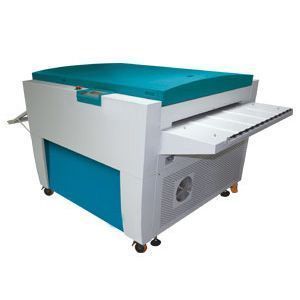
Quick answer: A CTP plate processor develops, rinses, gums and dries imaged thermal plates in one pass. CTPPress processors are made at our own factory and configured to our plate grades — developer temperature, speed and replenishment are set for the plates you actually run. See thermal CTP plate.
Key takeaways
- A CTP plate processor develops, rinses, gums and dries imaged plates in one pass.
- CTPPress processors are made in our own factory and configured for the plate grades you actually run.
- Stable developer temperature, speed and automatic replenishment keep the first and last plate of the day identical.
- Processor chemistry and settings must match the plate grade — thermal and PS/CTcP plates need different developer families.
- Configuration, MOQ, lead time and price are confirmed in the quotation.
What does a CTP plate processor do?
After the platesetter writes the image, the processor finishes the plate: developer removes the unexposed coating, a water section rinses it, gum protects the non-image surface, and drying sections bring the plate to press-ready condition. On a multi-plate job this machine quietly decides whether every plate looks the same — tired chemistry or drifting temperature shows up on press as scumming, lost highlights or tinting.
| Section | What it does | What to watch |
|---|---|---|
| Developer | Removes non-image coating | Temperature, dwell time, replenishment, bath age |
| Rinse | Stops development, washes off developer | Clean water, spray bars not blocked |
| Gum | Protects the non-image area | Even, thin coverage; no dried gum on rollers |
| Dryer | Brings plate to press-ready condition | Dryer temperature, plate fully dry at exit |
Developer temperature and speed
Our thermal plate grades develop at about 23 ± 2 °C with a 25–30 second dwell — but the number that matters on a running line is stability. Plate-room managers describe the problem the same way: “density drifts because the developer is tired.” What they want is stable processing with automatic replenishment. Replenishment keeps developer activity constant as plates pass through; without it, the first plate of the shift and the last plate of the day develop differently. Typical line parameters (development 12–65 seconds depending on speed setting, dry 30–65 °C) are confirmed in the manual for your configuration.
Good daily practice: check developer temperature at start-up, run a control strip and read the 2% and 98% patches, clean the rollers and brushes weekly, and change the developer bath on the schedule in the manual rather than waiting for problems on press. Our CTP developer is also made in-house and matched to our plate grades.
Matching processor to plates
Buyers sometimes assume any processor develops any plate, or object that one processor cannot handle all plate types. Both views miss the point: chemistry family, temperature and speed must match the plate grade — a processor tuned for thermal plates is not a PS-line substitute without the right developer. Because we make both the plates and the processors, we configure them together: the processor ships with settings for our grades, and support answers for the whole line rather than pointing across suppliers. For PS and CTcP workflows we supply a PS/CTcP processor configuration; for processless plates the processor disappears entirely — see processless plates.
What to send for a quotation: maximum plate width and length, plate types and grades you run, daily plate volume, platesetter model (for online connection), and your local power supply. Configuration and pricing: request a quote with your plate size and volume. Related: plate baking oven, punching machine.
FAQ
What plate widths do your processors cover?
Configurations exist for the standard commercial widths; send your plate size list and we match the model.
Do I need different chemistry for thermal and CTcP plates?
Yes — the developer family differs by plate type. We configure the processor and chemistry together with the plates.
Why does plate density drift during the day?
Usually the developer is tired or its temperature is unstable. Automatic replenishment and a fixed bath-change schedule keep processing consistent.
Disclaimer: line parameters are typical and for reference only; final specifications are subject to the configuration manual and quotation.

