
Paper Cup Printing Plates and Paper Bag Plates: Flexo and Offset on Paperboard and Kraft
Last updated: October 2026
Quick answer: Paper cups are printed on PE-coated cup stock either by roll-fed flexo with water-based inks, using photopolymer flexo plates, or by sheetfed offset with aluminium CTP plates before die-cutting into cup fans. Paper bags are mostly printed by flexo, often inline on the bag machine. Choose plates by process, substrate roughness and ink; food-contact compliance comes from the ink and board, not the plate.
Key takeaways
- Flexo dominates paper bag printing and much paper cup printing; offset is used for high-graphic cups printed in sheets.
- Kraft paper is rough and absorbent: softer, well-matched flexo plates and light impression give cleaner logos.
- Cup artwork is pre-distorted into a curved fan in prepress; the plate must hold register for many small designs.
- We make no food-safety certification claims for plates — ink and board suppliers provide food-packaging compliance documents.
Coffee shops, fast-food chains, bakeries and retail brands order paper cups and paper bags in many designs, often in short runs, and expect their logo to look the same on every order. For the converter, the margins are thin and the substrates are difficult: plastic-coated cup board that does not absorb ink like paper, and brown kraft that absorbs too much. This page explains which paper cup printing plates and paper bag printing plates fit each process, and what to send us for a quote.
How paper cups and paper bags are printed
| Product | Common print process | Plate type |
|---|---|---|
| Paper cups (hot and cold drinks) | Roll-fed flexo on cup stock, then die-cut to cup fans | Flexo plates for paper cups (digital or analog) |
| Premium printed cups | Sheetfed offset on cup board sheets, then die-cut | Offset plates: thermal CTP or CTcP |
| Kraft shopping and takeaway bags | Inline flexo on the bag machine, or roll-to-roll flexo before bag making | Flexo plates for paper bags (analog or digital) |
| Paper sack (multiwall) for cement, flour, feed | Flexo on sack tubers or stack presses | Thicker flexo plates |
| Paper food wrap and bakery bags | Narrow- or mid-web flexo | Thin-gauge flexo plates |
Plate challenges on cup stock and kraft paper
- The logo looks blurry on brown kraft bags. Rough, absorbent kraft paper spreads ink; a hard plate under heavy impression squeezes ink out and fills in type and fine lines.
- The cup design is distorted after forming. A cup is a cone, so artwork must be laid out as a curved fan in prepress; any plate stretch or mounting error shows as wavy text on the formed cup.
- Colours change between cup orders. Coffee chains compare brand colours across orders; plate consistency and repeatable mounting matter as much as ink.
- PE-coated cup stock. The plastic-coated surface does not absorb ink, so drying and ink lay-down behave differently from uncoated paper.
- Few print units. When a bag machine printer only has two colours, every colour counts — clean solids and clear logos are the whole job.
Recommended plates for paper cup and paper bag printing
| Job need | Recommended plate type | Why |
|---|---|---|
| Logos, text and solids on kraft bags | Analog flexo plates | Economical for line work; a softer grade copes better with rough kraft |
| Halftone images on white cup stock | Digital flexo plates | Sharper small dots and gradients on the cup wall |
| Converters making plates in-house without solvent | Water-wash flexo plates | Simpler plate room; check ink compatibility on the TDS |
| High-graphic cups printed in sheets | Thermal CTP plates or CTcP plates | Offset image quality on cup board before die-cutting into fans |
| Paper sacks and heavy kraft | Thicker-gauge analog flexo plates | More relief and cushion on coarse multiwall paper |
The plates above are made in our factory. Gauge follows the press: typical in the industry, 1.14 mm or 1.70 mm on cup and food-wrap presses, 1.70 mm to 2.84 mm on many bag machines, and thicker gauges such as 3.94 mm on some sack presses. Our flexo plate thickness guide explains how gauge relates to press and mounting.
A common assumption is that kraft bags only need the cheapest plate. In practice, rough, absorbent kraft paper prints better with a softer, well-matched plate and a light impression. A slightly better plate often removes the need for a reprint.
Paper cup printing: flexo or offset?
Both are used. Roll-fed flexo is the volume route: it prints on reels of cup stock with water-based inks, works well with the low plate cost of many small cup designs, and keeps the reel-to-die-cut flow simple. Offset is chosen for cups with photographic images and fine gradients; sheets of cup board are printed on a sheetfed press and then die-cut into fans.
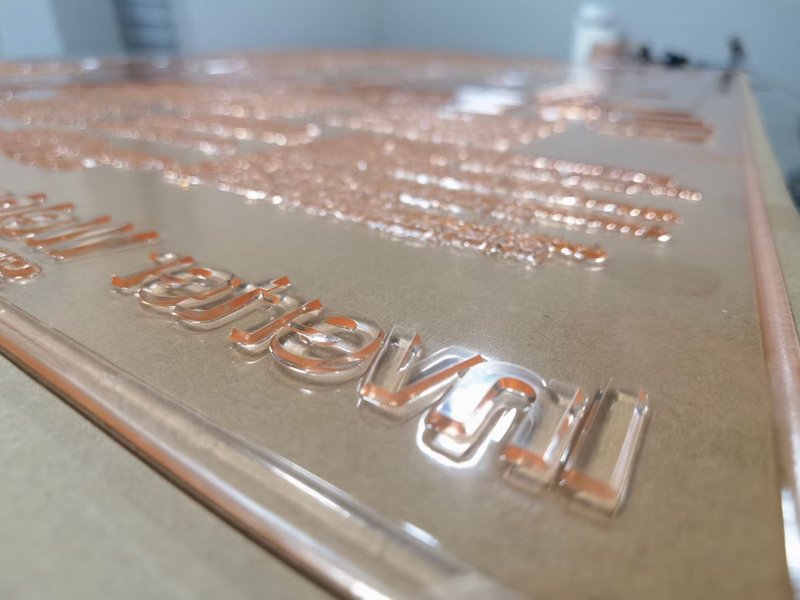
- Choose flexo plates for paper cups — the most common printing plates for paper cups — when you have many designs, short runs and roll-fed equipment.
- Choose offset plates when cup customers need photographic quality and you already run a sheetfed press.
The objection that offset is too expensive for short cup runs is usually fair: each offset job needs a full set of plates and press makeready. For short runs, flexo with analog plates is often the economical route. Offset plate makers need a thermal or UV CTcP platesetter (supplied with our partner factories) and a plate processor from our factory; flexo plate makers need a flexo imager for digital plates and flexo plate making machines, both supplied with our partner factories.
Food packaging inks and compliance: what the plate does and does not do
Many buyers believe paper cups need special food-grade plates, and their customer asks for a food-grade plate certificate. Here is the honest position: the printing plate is a tool on the press and is not part of the finished cup or bag. Food-contact compliance comes from the ink, coating and cup stock system; the plate choice is about print quality and ink compatibility.
- We do not make food-safety or food-contact certification claims for our plates.
- Ask your ink, varnish and board suppliers for the food-packaging compliance documents your market requires.
- Tell us which ink system you use — water-based, UV or offset inks for cup board — so we recommend a plate grade whose TDS confirms it works with your water-based ink or other ink system.
What to send for a paper cup or bag plate quote
- Product and process: cups (flexo or offset), bags (inline on bag machine or roll-to-roll), sacks.
- Press or bag machine type, number of colours, plate gauge or offset plate size.
- Substrate: PE-coated cup stock, white or brown kraft, multiwall paper.
- Ink system and how you make plates today.
- Number of new designs per month and monthly plate area.
MOQ, price and lead time are confirmed in the quotation.
FAQ
What plates are used to print paper cups?
Roll-fed flexo cup printing uses photopolymer flexo plates, digital or analog. Sheetfed offset cup printing uses aluminium thermal CTP or CTcP plates, with the sheets die-cut into cup fans after printing.
Are paper cups printed by flexo or offset?
Both. Flexo is common for volume and many small designs on roll-fed equipment with water-based inks. Offset is used for high-graphic cups printed in sheets.
What flexo plate thickness is used for paper bags?
Typical in the industry, many bag machines use 1.70 mm to 2.84 mm plates, while some paper sack presses use thicker gauges such as 3.94 mm. Always follow your machine’s plate cylinder and mounting setup.
Why does print look blurry on kraft paper bags?
Kraft paper is rough and absorbent, so heavy impression or a plate that is too hard squeezes ink and fills in type. A softer, well-matched flexo plate, the right anilox and a light kiss impression usually give cleaner logos.
Are printing plates certified for food packaging?
We do not make food-contact certification claims for plates. The plate is a press tool and not part of the finished cup or bag; food-packaging compliance documents come from your ink, coating and board suppliers.
Printing cups, bags or sacks? Request a quote — send the product, press or bag machine type, number of colours, plate gauge and substrate. Or request trial plates / contact us.
Disclaimer: values on this page are typical and for reference only; final specifications, MOQ, price and lead time are subject to the grade TDS and the quotation.

