
Aluminum Newspaper Printing Plates
Last updated: October 2026
Quick answer: Newspapers print cold-set web offset on newsprint, so aluminum newspaper printing plates must image fast, process consistently and bend accurately under a nightly deadline. We manufacture violet photopolymer, thermal (including processless) and single-layer CTcP plates for newspaper work. The platesetter you already run decides which grade fits; we also make the processors, punches and benders.
Key takeaways
- Cold-set web offset has no dryer: ink sets by absorption into newsprint.
- Time is the main constraint; a remake at night can delay the press start.
- Violet, thermal, processless and CTcP all suit newspapers; match the installed platesetter.
- Punching and bending accuracy decide register and plate security at web speed.
A daily newspaper is a race. Editorial closes late, ads arrive late, zoned editions change pages between runs, and the press must start on time so trucks can leave. Every page passes through the platemaking line in minutes. This page explains what aluminum newspaper printing plates have to do on a cold-set press, which grades we supply, and the equipment around them. Heat-set magazine work is covered on our magazine and catalog printing page.
How newspapers are printed: cold-set web offset
Cold-set web offset prints from reels of newsprint, usually on tower presses that print four-colour on both sides of the web in one pass. Unlike heat-set web, there is no hot-air dryer: the ink sets by soaking into the absorbent paper. That has consequences for the plate:
- Uncoated, absorbent newsprint sheds lint and fibre that builds on the blanket and abrades the plate.
- Coarser screens and higher dot gain than coated-paper work, so plates are calibrated with newsprint compensation curves.
- Fast press start-up: plates must roll up clean in the first copies because waste on newsprint adds up quickly.
- Many plates per night: page count, colour pages and edition changes multiply the plate total.
Newspaper plate pain points
Newspaper production managers describe pains that differ from commercial or book plants:
- Late pages push the press start. The platemaking line has no slack, so imaging speed and processor throughput matter.
- Remakes at night when the deadline is close. A scratched, under-developed or mis-bent plate is costly at 2 a.m.
- Paper dust and lint from newsprint wear plates and cause hickeys; the plate must hold up for the full run.
- Supply continuity. A daily paper cannot run out; a steady supply of plates without stock gaps is a buying priority.
Buyers also worry that imported plates could miss our ship schedule. We can plan rolling orders and safety stock with you; quantities and lead time are confirmed in the quotation, and our shipping and packaging page explains how pallets are protected.
Aluminum newspaper printing plates we supply
All of these are made in our factory on grained, anodised aluminium, cut to your press size; gauge is set by your press (offset plates are made in 0.15 mm, 0.20 mm, 0.25 mm and 0.30 mm).
- Violet photopolymer plates: long the workhorse of newspaper CTP because violet platesetters image fast; handle under yellow safelight.
- Thermal CTP plates: 830 nm imaging, daylight handling and a wide processing window.
- Processless thermal plates: develop on press, removing the processor from the nightly line; check run length and newsprint conditions against the grade TDS first.
- Single-layer CTcP plates: for newspapers imaging on UV platesetters. We do not supply double-layer CTcP plates.
Speed, run length and resolution depend on the grade and the platesetter; see the grade TDS and the machine specification sheet for test conditions.
Job need, plate type and why
| Job need | Recommended plate type | Why |
|---|---|---|
| Violet platesetter already installed, high nightly volume | Violet photopolymer | Matches fast violet imaging; no platesetter change |
| Thermal platesetter, daylight handling wanted | Thermal CTP | Stable 830 nm imaging and wide processing window |
| Want to remove processor and chemistry from the line | Processless thermal | On-press development; fewer steps at deadline |
| UV platesetter in use | Single-layer CTcP | Images with UV exposure on the existing device |
| Several printing sites needing one plate type | Thermal or CTcP, per site’s device | One supplier, matched developer, consistent results |
A common belief is that newspaper plates only need to be cheap. On a nightly deadline the plate must image fast, process consistently and bend cleanly, because a remake costs press time. Another is that a newspaper must stay with the plate technology it already has. In fact violet photopolymer, thermal including processless, and CTcP each fit newspaper work; the platesetter you run decides the grade, and changing plate type means changing the platesetter only if you change technology.
Newspaper platemaking line: imaging, processing, punching, bending
A newspaper line is usually automated end to end. We supply violet CTP platesetters, thermal and UV platesetters with our partner factories. The line after imaging is our own:
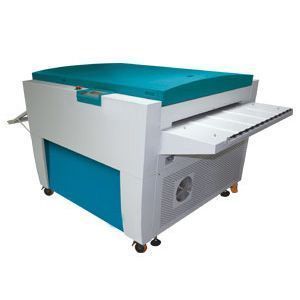
- Plate processors sized to newspaper plate widths, set to the grade TDS.
- Plate punches for register holes matched to your press pins.
- Plate benders matched to the cylinder lock-up of your tower press.
- CTP developer for our processed grades.
Our punches and benders are pneumatic and need compressed air. Stable plates from the first copy depend on the whole line: calibrated imaging, fresh developer and accurate bends.
What to send for a quote
- Press model, plate size, gauge, punch and bend drawings (or a used plate).
- Platesetter type and model: violet, thermal or UV.
- Pages and colour pages per night, editions, and printing days per week.
- Current developer and processor.
- Preferred delivery rhythm and safety-stock needs.
MOQ, price and lead time are confirmed in the quotation.
FAQ
What plates are used for newspaper printing?
Aluminum plates for cold-set web offset: violet photopolymer, thermal (including processless) and CTcP plates. The grade follows the platesetter technology installed in the plant.
Are violet or thermal plates better for newspapers?
Both work well. Violet plates suit plants with violet platesetters and need safelight handling; thermal plates allow daylight handling and a wide processing window. Choose the plate that matches your platesetter.
Can processless plates be used for newspaper printing?
Yes. Processless thermal plates develop on press and remove the processor from the nightly line. Check run length, newsprint and fountain solution conditions against the grade TDS and run a trial first.
What is cold-set web offset printing?
Web offset printing in which ink dries by absorption into uncoated paper such as newsprint, without a hot-air dryer. It is the standard process for newspapers.
Why do newspaper plates need bending and punching?
Plates are punched for register on the press pins and bent to lock into the plate cylinder. Accurate punching and bending keep colour in register and stop plates lifting at web speed.
Need a steady supply of newspaper plates? Request a quote — send press and plate details, platesetter type, nightly plate volume and delivery rhythm. Or request trial plates / contact us.
Disclaimer: values on this page are typical and for reference only; final specifications, MOQ, price and lead time are subject to the grade TDS and the quotation.

