Processless CTP Plates — Chemistry-Free Thermal Plates That Develop on Press
Last updated: October 2026
Quick answer: A processless CTP plate is a thermal offset plate that is imaged at 830 nm on a standard thermal platesetter and then goes straight to press. There is no developer, no plate processor and no rinse: the unexposed coating is removed on press by fountain solution and ink during the first sheets. You save chemistry and processor upkeep, but accept lower image contrast and a more careful press start-up.
Key takeaways
- Processless (process-free, on-press development) plates skip the developer, processor and gumming line entirely.
- They image on the same 830 nm thermal platesetters as processed thermal plates — no new CTP machine is needed.
- Trade-offs: weaker visible image before press, no baking, and run length and ink compatibility set by the grade TDS.
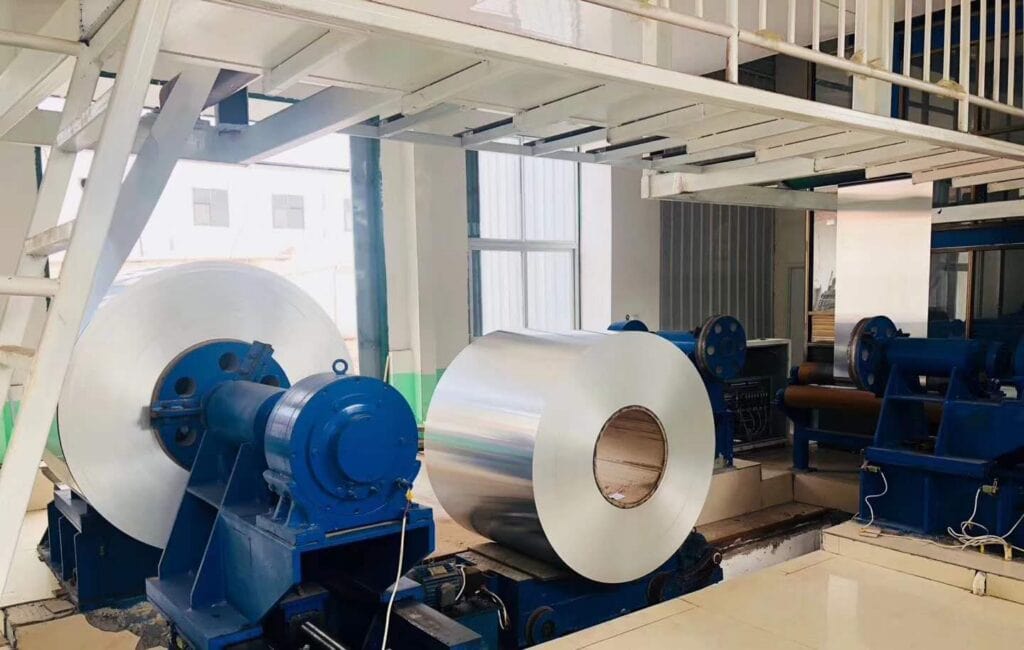
- We manufacture processless thermal plates in our own factory in gauges 0.15, 0.20, 0.25 and 0.30 mm, cut to your platesetter size.
Developer chemistry and waste disposal cost too much for many printing houses, and processor maintenance takes too much operator time. Environmental rules on chemical waste are getting stricter in many markets too. A processless CTP plate removes that whole step: you skip the processor and go straight to press. This page explains how the technology works, where it fits and where it does not, so a purchasing or prepress manager can decide whether to trial it alongside our processed thermal CTP plates.
What is a processless CTP plate?
It is a grained and anodised aluminium plate carrying a heat-sensitive coating. When the thermal laser (830 nm) writes the image, the exposed areas become ink-receptive and firmly anchored to the substrate. The unexposed coating stays soluble in the press dampening and ink system, so it is removed on press instead of in a developer bath.
The industry uses several names for the same idea: processless, process free (process-free), developer-free, on-press development (sometimes called DOP plates). The term “chemistry-free” is also used, but it can mean two different things — see the comparison below. Across all of them the buyer’s question is the same: can I drop the processor without losing print quality?
How on-press development works
- Imaging — the plate is exposed on a thermal platesetter at 830 nm, like any thermal plate. Exposure energy follows the grade TDS.
- Mounting — the imaged plate goes straight to the press cylinder. Only a faint latent image is visible.
- Dampening start-up — fountain solution wets the plate and begins to soften the non-image coating.
- Inking — ink rollers come on; the tack of the ink lifts the softened non-image coating.
- Clean-up sheets — the removed coating is carried away to the blanket and onto the first sheets. After that the plate prints like a developed plate.
Because development happens on press, the start-up sequence (dampening first, then ink, then paper) matters. The recommended sequence and number of revolutions are given in the grade TDS and confirmed during a trial.
Processless vs processed thermal plates
A conventional thermal plate is developed in an alkaline developer inside a CTP plate processor, then rinsed and gummed. A processless plate removes all three steps. The table below compares the two in general terms; values for a specific grade are on its TDS.
| Factor | Processless thermal plate | Processed thermal plate (single-layer / double-layer) |
|---|---|---|
| Imaging | Thermal platesetter, 830 nm | Thermal platesetter, 830 nm |
| Developer and processor | Not needed | Needed; developer must be replenished and monitored |
| Chemical waste | No developer waste | Spent developer and rinse water to manage |
| Image visible before press | Low contrast, harder to inspect | High contrast, easy to inspect and measure |
| Baking for longer runs | Not baked | Many grades can be baked |
| Press start-up | A few extra sheets to clean up | Standard start-up |
| Run length | Per grade TDS — generally aimed at short and medium runs | Per grade TDS — wider range, higher with baking |
| Typical gauges | 0.15 / 0.20 / 0.25 / 0.30 mm | 0.15 / 0.20 / 0.25 / 0.30 mm |
Processless vs “chemistry-free”: some plates sold as chemistry-free still pass through a simple clean-out or gumming unit off press. A true processless plate develops only on press. When you compare offers, ask whether any off-press unit is required.
Which printers benefit from processless plates
A common belief is that processless plates are only for small shops. In practice, processless thermal plates suit any printer whose run lengths and inks fit the grade TDS. Typical good fits:
- Commercial printers with many short runs and frequent plate changes, where processor upkeep is a large share of prepress labour.
- Printing houses in areas where chemical waste disposal is expensive or tightly regulated.
- Sites with unstable water quality or temperature, where developer activity drifts and plate consistency suffers.
- Prepress bureaus that want to cut processor floor space and maintenance.
Less suitable: very long runs that need baking, abrasive stocks, and workflows where operators must measure dot values on the plate before it goes to press.
Handling and press start-up tips
Removing the processor does not remove every quality risk. Processless shifts quality control to imaging, handling and press start-up. Practical points from our technical support work:
- Handle plates under the lighting conditions in the grade TDS and avoid long exposure to daylight before mounting.
- The coating is softer than a baked image area — avoid stacking imaged plates face-to-face or sliding them across each other.
- Run a step-wedge test on your platesetter to set exposure; our plate test protocol describes how.
- Keep the press start-up sequence identical every time so the clean-up waste is predictable.
- Check fountain solution and blanket wash compatibility before a production trial.
See how a print shop and bookstore in Canada switched to our processless plates on its existing thermal platesetter in our Canada processless plate case study, or read about supply to dealers and printers in North America.
Ordering processless plates from our factory
We manufacture processless thermal plates on our own coating lines, from substrate preparation through coating, cutting and packing. Plates can be cut to standard or custom plate sizes for your platesetter and press. Buyers comparing all plate technologies can start with our CTP plates overview or the guide to the types of CTP plates.
For a trial, tell us your platesetter model and laser type, press, ink type (conventional or UV), typical run length and plate size. Will processless plates last long enough for your runs? That is exactly what a short production trial answers. Dealers can also ask about OEM private-label processless plates. MOQ, lead time and price are confirmed in the quotation.
FAQ
What is a processless CTP plate?
It is a thermal offset plate that is imaged at 830 nm and then mounted directly on press without any developer, plate processor or rinse. The non-image coating is removed on press by fountain solution and ink.
How does on-press development work?
After imaging, the plate is mounted on press. Dampening softens the unexposed coating, the ink rollers lift it, and it is carried off on the first sheets. From then on the plate prints like a developed plate.
Are processless plates really chemistry-free?
A true processless plate needs no developer and no off-press unit. Some plates sold as chemistry-free still use a clean-out or gumming unit, so ask the supplier whether any off-press step is required.
What is the difference between processless and processed thermal plates?
Both image on 830 nm thermal platesetters. Processed plates are developed in a processor and give high image contrast and the option to bake; processless plates skip the processor and chemical waste but have low image contrast and are not baked.
Do processless plates need a plate processor?
No. That is the main point of the technology. Your existing thermal platesetter images the plate and it goes straight to press.
Can processless plates be used with UV inks?
Yes. Our processless plate can be used with UV inks. Use a suitable UV wash and run a short trial with your own ink before production; for very long UV runs that need baking, choose the double-layer thermal plate.
Want to test processless plates on your own platesetter and press? Request a quote — send your platesetter, plate size, gauge, ink type and monthly volume. Or request trial plates / contact us.
Disclaimer: values on this page are typical and for reference only; final specifications, MOQ, price and lead time are subject to the grade TDS and the quotation.