
Last updated: October 2026
Quick answer: CTP printing is offset printing where the plate is imaged directly from the computer — no film. A platesetter writes the image onto the plate with a laser (thermal, 830 nm) or UV light (CTcP), the plate is processed and goes to press. CTP removes film cost, sharpens dots and stabilizes colour; you need a platesetter, matching plates, a processor (unless you go processless) and a RIP. Browse our CTP plate range or platesetters.
Film costs and make-ready time keep creeping up, and “switching” sounds disruptive — so before investing in anything, here is the clear picture of CTP: what it is, what it costs, and what changes on your floor.
How CTP printing works
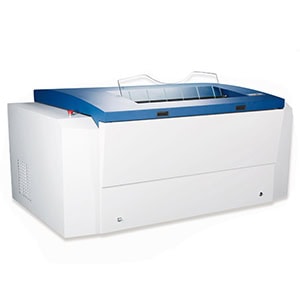
The name says the whole idea: computer to plate. Your prepress PDF goes straight to the platesetter, which clamps the plate on a drum and writes the image dot by dot. On a thermal machine an 830 nm infrared laser heats the coating where each dot belongs; on a UV (CTcP) machine a UV light source exposes those areas instead. After imaging, the plate passes through a processor that develops, rinses, gums and dries it — or, with processless plates, goes straight to the press where the fountain solution cleans the non-image areas during startup.
Every step that film used to add — imagesetting film, processing film, contacting film to plate, registering film on the plate — disappears. The plate you get is the digital file, one generation closer to the press.
CTP vs the film workflow
Against film, CTP wins on four counts. First, dots: removing two analogue generations (film recording and film contact) sharpens highlights and stabilizes dot gain, which shows up as cleaner process colour. Second, time: no film processing or contact frame step means faster make-ready, especially on repeat jobs. Third, cost structure: film and its chemistry disappear, replaced by a machine amortised over years of plates. Fourth, consistency: a digital plate images identically in month twelve and month one.
Film is not dead everywhere: shops with amortised film lines and low volumes can still run PS plates economically. We sell PS plates for exactly that case and will tell you honestly if film still wins for your volume. But for most commercial printers, the film-to-CTP switch is a when, not an if.
Types of CTP plates
The plate must match the machine’s imaging source:
- Thermal plates (830 nm): the mainstream. Daylight handling, fine screens, and a processless option that removes the processor entirely.
- CTcP plates (UV): for shops keeping UV exposure equipment; digital imaging on your existing chemistry family.
- Violet plates: for installed violet platesetters.
Within thermal, the choice is single-layer versus double-layer coating (run length and ink resistance) and processed versus processless. Our plate selection guide walks the decision, and types of CTP plates compares every grade.
What a CTP system costs
The full line is four purchases, not one: platesetter, processor (unless processless), RIP software, and plates. Budget rules of thumb: compact 4-up thermal lines start in the low tens of thousands of USD, 8-up lines cost more by format and automation, and the plates themselves are a consumable quoted per size and volume. Used machines exist, but laser hours, parts and support decide their real price. Detail in our CTP machine price guide.
How to switch to CTP
- Audit the plates first: list sizes, monthly volume and inks — this decides format and grade.
- Pick the imaging route: thermal for new equipment, CTcP if UV gear has life in it.
- Trial plates before volume: run trial plates from the chosen grade on press before committing — this is the single step that de-risks the switch, and it is how we start every new customer.
- Train on the processor: chemistry control is where plate quality is won or lost daily.
Buyers sometimes assume CTP is one more complicated machine to babysit. Planned properly — plates matched to chemistry, operator training on the processor, trials before volume — it removes work (film) rather than adding it. Ask us a question or request trial plates to start.
FAQ
What is CTP printing?
Offset printing where the plate is imaged directly from digital data by a platesetter, with no film step.
What equipment do I need for CTP?
A platesetter, matching plates, a processor (unless you choose processless plates) and a RIP.
Can I keep my presses?
Yes — CTP changes platemaking, not printing. Any offset press takes CTP plates.
Disclaimer: prices and figures are typical values; confirm in the quotation for your configuration.


