
Last updated: November 2026
Quick answer: Single-layer and double-layer CTP plates are both positive thermal plates imaged at 830 nm and developed in the same kind of processor. The single-layer plate has one coating and suits conventional oil-based ink. The double-layer plate adds a chemically resistant base layer, so it handles UV and LED-UV ink, UV washes and abrasive board. On our data sheets the single-layer plate runs at least 50,000 impressions unbaked and the double-layer plate at least 80,000. Choose by ink and run length, not by price.
Key takeaways
- Both grades image the same dots: 1 to 99% at 200 lpi and 20 µm FM on our data sheets.
- UV or LED-UV ink decides the grade. The single-layer plate is not UV resistant, even after baking.
- For long runs on conventional ink, a baked single-layer plate (at least 150,000 impressions) comes close to a baked double-layer plate (at least 160,000).
- The double-layer plate needs a little more laser energy, so recalibrate exposure when you switch.
- Both grades use the same positive thermal developer, so one processor can run both.
Most printers who ask us about plate grades are trying to settle one argument in the plate room: is the dearer plate worth it? Some say “we pay for a premium plate on jobs that do not need it”. Others say “the UV wash eats the image” on the cheaper one. Both can be right, on different jobs. This article puts our two thermal plate grades side by side, using the values from their technical data sheets (TDS), and gives you a clear rule for which plate goes on which job. We manufacture both grades in our own factory, so the numbers below are the ones we quote and test against.
Single-layer vs double-layer CTP plates at a glance
| Property | Single-layer thermal plate | Double-layer thermal plate |
|---|---|---|
| Coating | One heat-sensitive phenolic coating | Chemically resistant base layer plus heat-sensitive top layer |
| Imaging | 830 nm platesetters (800 to 850 nm) | 830 nm platesetters (800 to 850 nm) |
| Exposure energy | 100 to 130 mJ/cm² | 120 to 150 mJ/cm² |
| Dot reproduction | 1 to 99% at 200 lpi; FM 20 µm | 1 to 99% at 200 lpi; FM 20 µm |
| Developer | Positive thermal CTP developer, 23 to 25 °C, 20 to 30 s | Positive thermal CTP developer, 23 to 25 °C, 20 to 30 s |
| Run length, unbaked | ≥ 50,000 impressions | ≥ 80,000 impressions |
| Run length, baked | ≥ 150,000 impressions | ≥ 160,000 impressions |
| UV and LED-UV ink | Not resistant, also not after baking | Resistant; bake for the longest UV runs |
| UV washes, alcohol-substitute fount | Use mild chemistry only | Resistant |
| Gauge | 0.15 / 0.20 / 0.25 / 0.30 / 0.40 mm | 0.15 / 0.20 / 0.25 / 0.30 / 0.40 mm |
All values are typical figures from our single-layer TDS and double-layer TDS, measured under our standard test conditions. Your press, paper, ink and processing set the real result.
How each plate is built
Both plates start the same way: electrochemically grained and anodised aluminium in 1050 or 1060 alloy. The grain holds water in the non-image areas, and the anodic layer gives the surface its hardness. The difference is what sits on top.
- Single-layer. One coating, typically a phenolic resin with an infrared-absorbing dye. Where the 830 nm laser hits, heat makes the coating soluble in alkaline developer. Where it does not, the coating stays and carries the ink. One layer does both jobs: it responds to the laser and it survives the press.
- Double-layer. Two coatings. The top layer handles imaging. The base layer is a polymer chosen for resistance to solvents, UV ink components and wear. Where the laser images the plate, both layers clear down to the aluminium. As paper and blanket wear the top layer on press, the base layer keeps carrying the image.
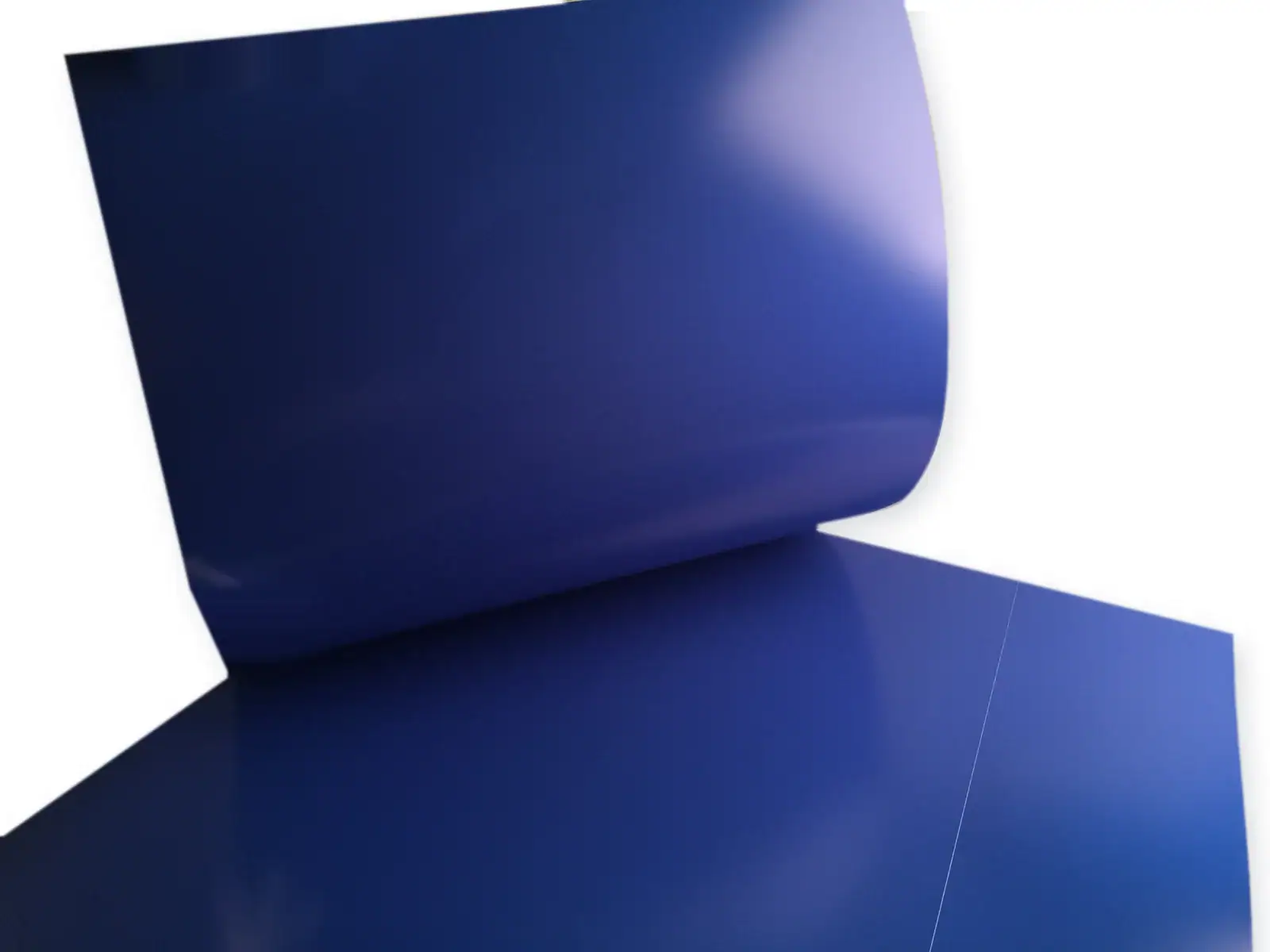
Separating the two jobs is the whole point of the second layer. It does not make the dots sharper. It makes the image last longer when the chemistry gets harsh. For background on the other plate families, see our guide to types of CTP plates.
Run length, unbaked and baked
On our data sheets, the single-layer plate gives at least 50,000 impressions unbaked and the double-layer plate at least 80,000. If you bake them, the gap almost closes: at least 150,000 impressions for single-layer and at least 160,000 for double-layer.
That has a practical consequence. For a long run on conventional ink, you have two routes:
- Bake a single-layer plate. It reaches about the same run length as a baked double-layer plate, on the cheaper grade, but every plate goes through the oven.
- Run a double-layer plate unbaked. It covers runs up to 80,000 impressions without baking, which saves oven time and energy on medium-long jobs.
Both grades bake at 230 to 250 °C for 5 to 8 minutes with baking gum in a plate baking oven. Our printing plate baking guide explains how to set it up and how to avoid a stained background. Run length is never a guarantee. Paper, ink, fountain solution, press pressure and processing all affect it, so test on your own line.
UV ink and pressroom chemistry
This is where the two grades really differ. UV and LED-UV inks contain reactive monomers, and UV washes are stronger solvents than conventional blanket wash. Both attack a phenolic coating. On a single-layer plate the result is familiar: highlights drop out halfway through the run, or the image weakens every time the operator cleans the plate.
A common belief is that baking makes any thermal plate ready for UV ink. It does not. Our single-layer data sheet states the plate is not resistant to UV inks, also not after baking. Baking raises run length but does not give a single-layer plate UV resistance. Baking hardens the image against wear. UV resistance has to come from the coating design, which is what the double-layer base layer provides. So if someone in your plate room says “baking a single-layer plate should be enough for UV”, run a test before you trust it on a customer job.
The double-layer plate is rated resistant to UV inks, UV washes and alcohol-substitute fountain solutions. Many UV jobs run on it unbaked; bake it for the longest UV runs. Our article on printing plates for UV ink and the UV and LED-UV offset solution page cover washes, cleaners and roller set-up.
Imaging and processing differences
Both grades are thermal CTP plates and image on any 830 nm thermal platesetter. The double-layer plate needs more energy: 120 to 150 mJ/cm² against 100 to 130 mJ/cm². On a platesetter that already runs near its laser power limit, that can mean a slower drum speed and fewer plates per hour. Either way, keep a separate media setting for each grade and calibrate exposure with a step wedge when you switch. Our CTP plate exposure test walks through the method.
Many buyers worry that “we would have to change our developer or processor”. In most plate rooms you do not. Both grades use positive thermal CTP developer at 23 to 25 °C with 20 to 30 seconds dwell. The difference is tolerance. On a double-layer plate both layers must clear in the image areas, so an exhausted bath shows up sooner as background toning. Keep replenishment active, read a control strip every shift and clean the brushes on schedule. If your plate processor already runs positive thermal plates, it can run both grades. We confirm the settings with you before the first delivery.
Cost per good impression, not price per plate
“Double-layer plates cost too much for everyday work” is a fair objection on short conventional jobs. On those jobs it is true. The useful comparison is cost per good impression:
Cost per good impression = (plate price × (1 + remake rate) + processing and baking cost) ÷ impressions the plate delivers.
Two worked cases show how the answer changes. The price ratio here is an assumption for illustration; use your own quoted prices.
- Conventional ink, 30,000 impressions. Both plates finish the run with no remake. If the double-layer plate costs 30% more, the job simply costs 30% more in plates. Single-layer wins.
- UV ink, 40,000 impressions. The single-layer plate is not rated for UV ink. If it wears out mid-run, you pay for a second plate, a press stop, makeready waste and the risk of a colour shift between the two halves of the job. One double-layer plate finishes the run. Even at 30% more per plate, it is the cheaper job.
Our plate cost calculator sets out the formula step by step, and CTP plate price factors explains what moves the quoted price.
Which plate for which job
| Job | Recommended grade | Why |
|---|---|---|
| Brochures, books, catalogues on conventional ink | Single-layer | Same dots, lower cost; resistance you would not use |
| Conventional ink, up to about 50,000 impressions | Single-layer, unbaked | Within the data-sheet run length |
| Conventional ink, 50,000 to 80,000 impressions | Double-layer unbaked, or single-layer baked | Choose by oven capacity and plate price |
| Conventional ink, longer runs | Either grade, baked | Baked run lengths are close |
| UV, LED-UV or hybrid ink, any run length | Double-layer | Only grade rated for UV ink |
| Folding carton and coated or abrasive board | Double-layer | Better wear resistance, more with baking |
| Metal decorating | Double-layer, baked | UV ink and abrasion together |
For packaging specifically, see our folding carton printing and metal decorating pages. If you are also comparing processless or CTcP plates, the printing plate selection guide covers every family.
So is double-layer simply the better plate? No. Both grades image the same dots; the choice depends on ink chemistry and run length, so the right plate is the one matched to the job. Treating single-layer as the budget option leads to overspending on text work, and treating double-layer as optional leads to remakes on UV work.
Running both grades in one plate room
Many plants want one plate that covers their UV and conventional jobs. If more than a small share of your work is UV, standardising on double-layer is the simplest answer. If most jobs are conventional, running both grades usually costs less. Make it hard to put the wrong plate on the wrong job:
- Put the grade on the job ticket. Ink type and run length decide it, using the table above.
- Label and separate stock. Both coatings are blue-green, so the plates look alike. Store the cartons apart and mark the grade on each one.
- Keep separate exposure settings. Name the media settings by grade in the platesetter or RIP so operators cannot pick the wrong energy.
- Check the processor for both. One developer works for both, but read a control strip for each grade after a bath change.
- Bake by rule, not by habit. Bake single-layer plates for long conventional runs, and bake double-layer plates for the longest UV runs and abrasive board.
Done this way, the plate room gets fewer remakes on long runs without paying double-layer prices on every job.
How to test before you switch
A data sheet tells you what to expect. Your press tells you what you get. Before you move volume from one grade to the other, or to a new supplier, run a short, planned trial:
- Image both grades with the same test form, after calibrating each grade’s exposure with a step wedge.
- Process them in the same bath and read the control strip on each.
- Run them on the same press, with the ink, washes and paper of a real job.
- Check 1% to 3% highlight dots and solids at fixed intervals, and note the impression count at the first visible loss.
- Repeat with a second batch before deciding, so you judge consistency and not one lucky delivery.
Our plate test protocol gives a full checklist. Tone values should repeat to your ISO 12647-2 targets on both grades. If they do not, look at exposure and processing before you blame the plate.
FAQ
What is the difference between single layer and double layer CTP plates?
A single-layer plate has one heat-sensitive coating that both images and prints. A double-layer plate adds a chemically resistant base layer under the imaging layer, so it resists UV ink, UV washes and abrasion. Both are positive thermal plates for 830 nm platesetters.
Are double layer CTP plates resistant to UV ink?
Yes. That is their main purpose. Our double-layer plate is rated resistant to UV inks and UV washes and gives at least 80,000 impressions unbaked. Bake it for the longest UV runs, and test on your own ink first.
Can a single layer CTP plate be baked?
Yes. Baking at 230 to 250 °C for 5 to 8 minutes raises our single-layer plate from at least 50,000 to at least 150,000 impressions on conventional ink. Baking does not make it resistant to UV ink.
Do double layer plates need a different developer?
Normally no. Both grades use positive thermal CTP developer at 23 to 25 °C with 20 to 30 seconds dwell. Keep replenishment active, because an exhausted bath shows up sooner as toning on a double-layer plate.
Is a double layer plate worth the extra cost?
It is on UV, LED-UV and hybrid ink, abrasive board, metal decorating and medium-long runs where you want to skip baking. On short conventional jobs it is not, because the single-layer plate prints the same dots for less.
Which CTP plate is best for packaging printing?
For folding carton, labels and other packaging on coated or abrasive board, or with UV ink, choose the double-layer plate. Packaging on conventional ink with short runs can still use the single-layer plate.
Not sure which grade fits your jobs? Request a quote with your plate sizes, gauge, platesetter and processor, ink system, typical run lengths and monthly volume, and we will recommend a grade. You can also ask for trial plates of both grades or contact us.
Disclaimer: values on this page are typical figures from our technical data sheets, measured under our standard test conditions, and are for reference only. Final specifications, MOQ, price and lead time are subject to the grade TDS and the quotation.


