
Last updated: October 2026
Quick answer: Solvent processing washes out unexposed polymer with a solvent and needs long drying. Water-wash processing uses water with a wash additive, dries faster and needs no solvent handling, but water-wash plates are not for UV inks. Thermal processing melts the unexposed polymer and blots it away with a nonwoven web, with no liquid and no long drying. Each route needs its own processor.
Key takeaways
- All three routes start with the same back and main exposure; they differ in how unexposed polymer is removed.
- Solvent processing has the largest installed base and broad ink compatibility, but needs solvent storage, ventilation and recovery.
- Water-wash plates remove solvent from the plate room; they are not suitable for UV inks.
- Thermal processing gives the fastest plate turnaround with no washout liquid, at the cost of a dedicated processor and blotting media.
- We manufacture flexo plates for all three routes; processors are supplied with our partner factories.
Plate room managers usually start this comparison because of a specific pain: the solvent smell in the plate room, drying that takes hours before press, or plates that swell with their ink. Each processing route answers some of these problems and creates others. This guide compares solvent vs water-wash vs thermal flexo plate processing on workflow, plate room needs and ink compatibility, then gives a simple way to choose. For the full step-by-step plate making sequence, see how flexo plates are made.
Solvent vs water-wash vs thermal processing at a glance
| Criterion | Solvent | Water-wash | Thermal |
|---|---|---|---|
| Washout medium | Washout solvent with brushes | Water plus wash additive with brushes | Heat plus nonwoven blotting web |
| Drying | Longest; commonly 1 to 3 hours (typical in the industry) | Shorter; water swells the polymer less | No solvent drying stage; short cooling only |
| Plate room needs | Solvent storage, ventilation, recovery or distillation | Water supply, filtration or treatment of wash water | Thermal processor and web supply; no liquid waste |
| Ink compatibility | Broad; per grade TDS | Water-based and some solvent inks per TDS; not for UV inks | Per grade TDS |
| Turnaround | Slowest | Medium | Fastest |
| Running consumables | Solvent, distillation residue disposal | Additive, filters, water treatment | Blotting web (single use) |
| Our plates | Solvent flexo plates | water-wash flexo plates | thermal-processing flexo plates |
Solvent processing
Solvent processing is the classic route. After exposure the plate goes into a washout unit where rotating brushes and a hydrocarbon-based solvent dissolve the unexposed photopolymer. The washed plate has absorbed solvent and swelled, so it must dry in a dryer until it returns to its nominal thickness. Then come light finishing (detack) and post-exposure.
Strengths: the widest choice of plate grades, broad ink compatibility, and the largest installed base of processors. Weaknesses: the solvent smell, fire and ventilation requirements, solvent recovery or distillation, and long drying that slows urgent jobs. Plate rooms with high volume often accept this because the process is well understood.
Water-wash processing
Water-wash plates use a photopolymer that disperses in warm water with a mild wash additive. The washout unit looks similar to a solvent unit, but the medium is water. Because water swells the polymer less, drying is shorter, and the plate room needs no solvent storage or distillation. Wash water still contains dispersed polymer, so it must be filtered or treated before discharge according to local rules.
The important limitation is ink. Our water-wash flexo plates are not for UV inks. They suit water-based inks and, depending on the grade, certain solvent-based inks; the TDS states which. If you print UV flexo, choose a solvent or thermal grade instead. Many converters choose water-wash for a cleaner plate room, especially for paper bags, corrugated and water-based packaging work.
Thermal processing
Thermal processing removes the unexposed polymer without any liquid. The exposed plate is heated so the unexposed polymer softens and melts, and a nonwoven blotting web pressed against the plate absorbs it. Several heating and blotting cycles build the relief. Because no liquid enters the plate, there is no solvent drying stage; the plate only cools before finishing.
Strengths: fast plates for short runs and urgent jobs, no washout liquid, and no solvent recovery. Weaknesses: a dedicated thermal processor, the cost of the blotting web, and a narrower set of plate grades than solvent processing. Thermal processing costs too much to run for some low-volume plate rooms; for high-throughput plate rooms the time saving usually justifies it.
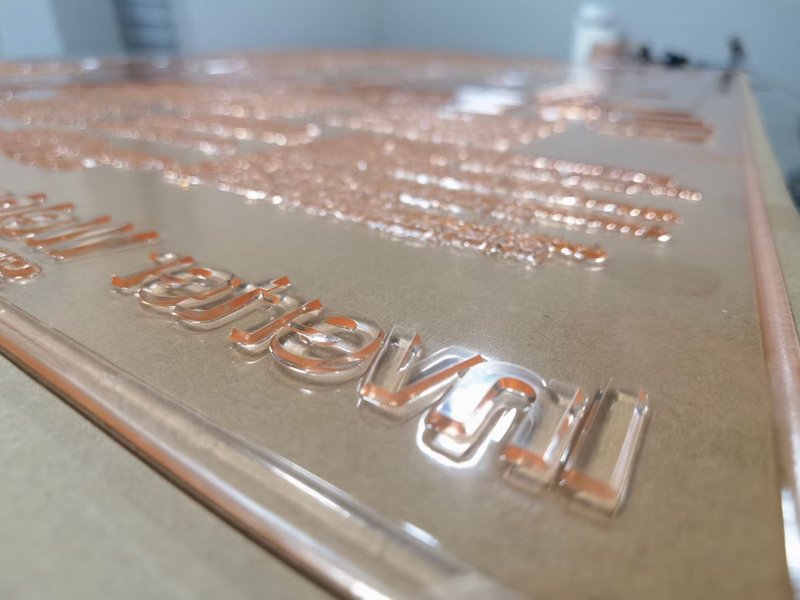
Ink compatibility by processing route
Many buyers think the processing method only changes the plate room. In practice the processing route also decides ink compatibility, because each route needs a differently formulated photopolymer. Match the plate grade to your ink before you choose the route:
- UV inks: choose a UV-resistant solvent-washout grade, or a thermal grade only if it is UV-rated. Water-wash plates are not for UV inks.
- Water-based inks: all three routes are possible; water-wash is a natural fit.
- Solvent-based inks (alcohol/acetate on film): check the solvent-ink resistance per grade; ester-rich inks need a resistant grade.
If plates swell with your ink, run a simple swell test: weigh and measure a processed sample, soak it in your ink solvent for the press run time, and measure again. Our technical support team can help interpret the result.
How to choose a processing route
- Start with the ink. UV ink rules out water-wash. Mixed ink systems usually point to solvent plates.
- Look at volume and urgency. If you need faster plates for short runs, thermal or water-wash shortens turnaround.
- Check local rules. Strict VOC or fire rules favour water-wash or thermal.
- Count existing equipment. A working solvent processor is a strong reason to stay solvent, at least for now.
- Trial before switching. Process test plates with the grade TDS settings and print them on your press and ink.
No single processing route is best for every converter: solvent, water-wash and thermal each fit a different mix of volume, ink system, environmental rules and existing equipment.
Can you switch or run more than one route?
Yes, but each route needs its own washout or thermal unit. You cannot run water-wash plates in a solvent processor, or solvent plates in a water-wash processor, and thermal plates need a thermal processor. The exposure unit and, for digital plates, the flexo imager can be shared across routes. Some converters keep solvent for UV work and add water-wash for water-based jobs.
A common objection is that changing processor is too expensive. That is true if the current unit is in good condition; switching is usually timed with a processor replacement or a new plate room. Another is that water-wash plates are lower quality. With a grade matched to the ink and correct processing settings, print quality is comparable; the real risk is ink compatibility, not image quality. Our flexo plate processors (exposure, washout and drying units) are supplied with our partner factories, matched to the plate route you choose. Plate care after the run is the same for all routes; see flexo plate cleaning and storage.
FAQ
What is the difference between solvent and water wash flexo plates?
Solvent plates are washed out with a solvent and need long drying, solvent storage and recovery. Water wash plates use water with a wash additive, dry faster and remove solvent from the plate room, but they are not suitable for UV inks.
What is thermal flexo plate processing?
Thermal processing heats the exposed plate so the unexposed polymer melts, and a nonwoven blotting web absorbs it. No washout liquid is used and there is no solvent drying stage, so plates are ready faster.
Can water wash flexo plates be used with UV inks?
No. Our water-wash flexo plates are not for UV inks. For UV flexo printing, we recommend a UV-resistant solvent-washout grade; thermal-processing plates suit UV inks only when the grade is UV-rated, so ask us first.
Which flexo processing method is fastest?
Thermal processing is usually the fastest because there is no liquid washout and no solvent drying stage. Water-wash is next, and solvent processing is slowest because of the long drying step.
Can I use a solvent processor for water wash plates?
No. Each route needs its own processor: water-wash plates need a water-wash unit, solvent plates a solvent unit and thermal plates a thermal processor. The exposure unit and flexo imager can be shared.
Choosing a processing route or a new plate supplier? Request a quote with your processor type, ink system (water, solvent or UV), plate gauge, sheet size and monthly volume. Or request trial plates / contact us. See all our flexo printing plates.
Disclaimer: values on this page are typical and for reference only; final specifications, MOQ, price and lead time are subject to the grade TDS and the quotation.


