
Last updated: November 2026
Quick answer: A photopolymer plate uses a light- or heat-sensitive polymer that hardens (polymerises) where it is exposed. In offset, a thin photopolymer layer on aluminium forms a flat, ink-receptive image — for example violet CTP plates. In flexo, a thick photopolymer sheet is exposed and washed out to leave a raised relief. Same chemistry family, very different plates.
Key takeaways
- “Photopolymer” describes the chemistry, not the printing process — it is used in both offset and flexo plates.
- Offset photopolymer plates are thin, flat and negative-working; flexo photopolymer plates are thick relief plates.
- Violet photopolymer plates are preheated in line and are not post-baked.
- Exposure, preheat or washout and safelight handling must follow the grade TDS.
When a buyer asks us for “photopolymer plates”, our first question is: for an offset press or a flexo press? The word causes real confusion. Some buyers are confused whether photopolymer means offset or flexo; others have had plates fogged under the wrong safelight, or seen fine dots wash away during processing. This guide explains how photopolymer chemistry works, how it is used in offset and flexo plates, and how to handle these plates so they store well and process consistently. For the plate types we supply, from flexo and letterpress plates to stamp-making sheets, see our photopolymer plates page.
What is a photopolymer plate?
A photopolymer is a material made of small molecules (monomers) and an initiator that link into a hard, insoluble polymer network when they receive enough energy from light or heat. This reaction is called polymerisation. A photopolymer plate uses this effect: exposed areas harden and stay, unexposed areas remain soluble and are removed during processing. Because the exposed area becomes the image, photopolymer plates are typically negative-working.
The belief that a photopolymer plate is always a flexo plate is common, especially among packaging buyers. In fact photopolymer chemistry is used in both offset plates (violet and some negative-working thermal plates) and flexo relief plates, and they work very differently on press.
How photopolymer chemistry works
- Exposure. Laser, UV or LED light (or heat, for thermal grades) starts the polymerisation in the image area.
- Reinforcement. On many offset photopolymer plates a preheat step completes the reaction so the image is strong enough for processing and the run.
- Removal of unexposed material. A developer (offset) or a solvent, water or heat washout (flexo) removes the soluble polymer.
- Finishing. Offset plates are gummed; flexo plates are dried, post-exposed and light-finished.
Oxygen inhibits polymerisation, which is why offset photopolymer plates usually carry a protective overcoat and why flexo plate exposure conditions matter for dot shape, as in the flat-top versus round-top dot discussion in flexo.
Offset photopolymer plates: violet and negative-working thermal
Violet photopolymer plates are imaged on violet platesetters. The thin, highly sensitive photopolymer layer is exposed, preheated, the overcoat is washed off, the plate is developed and gummed — usually in one in-line processor. Violet plates are handled under the yellow safelight specified in the TDS and are not post-baked. We manufacture violet photopolymer CTP plates for printers who run violet platesetters.
Negative-working thermal photopolymer plates are a related industry design: an 830 nm thermal laser triggers the polymerisation, and many grades also need a preheat. Our own thermal range is positive-working single- and double-layer thermal CTP plates plus negative-working processless thermal plates, which clean out on press. If you are deciding between violet and thermal imaging, read thermal vs violet CTP.
| Offset plate | Imaging | Working | Processing | Baking |
|---|---|---|---|---|
| Violet photopolymer | Violet laser | Negative | Preheat, prewash, develop, gum | Not post-baked |
| Thermal photopolymer (industry) | 830 nm thermal | Negative | Often preheat, then develop | Per TDS |
| Processless thermal | 830 nm thermal | Negative | Cleans out on press | Per TDS |
| Single-/double-layer thermal | 830 nm thermal | Positive | Develop, gum | Bakeable per TDS |
Flexo photopolymer plates: relief printing
A flexo plate is a much thicker photopolymer sheet on a polyester backing — standard gauges include 1.14, 1.70, 2.28, 2.84, 3.94 and 6.35 mm. The plate is made in the plate room in these steps:
- Back exposure through the polyester base with UV light to set the floor and relief depth.
- Imaging — through a film negative (analog plates) or by laser-ablating the thin black LAMS layer (digital plates).
- Main UV exposure to harden the image.
- Washout with solvent, water or heat to remove the unexposed polymer and leave a raised relief.
- Drying, post-exposure and light finishing to stabilise the plate and remove surface tack.
Our full flexo plate range covers analog, digital LAMS, solvent, water-wash and thermal-processing grades. Note that water-wash flexo plates are not for UV inks; for UV flexo we recommend a UV-resistant solvent-washout grade. The flexo plate making process guide covers each step in depth.
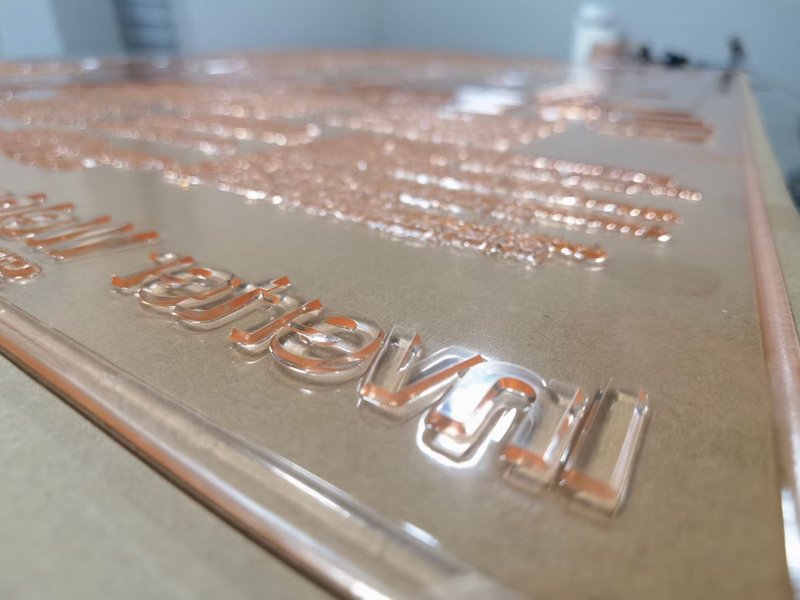
Flexo plates can also be made from liquid resin that is cast in the plate room. Our guide to liquid vs sheet photopolymer plates compares the two.
Offset vs flexo photopolymer plates compared
| Factor | Offset photopolymer plate | Flexo photopolymer plate |
|---|---|---|
| Base | Grained, anodised aluminium | Polyester backing |
| Polymer layer | A few microns, flat | Most of the plate thickness |
| Image principle | Planographic: ink and water separation | Relief: raised image takes ink from anilox |
| Imaging | Violet or thermal platesetter | Film + UV, or LAMS ablation + UV |
| Processing | Preheat, develop, gum (or on-press) | Washout, dry, post-expose, light finish |
| Typical work | Commercial, newspaper, books | Labels, flexible packaging, corrugated |
Offset photopolymer plates are calibrated toward ISO 12647-2, while flexo photopolymer plates are usually controlled to ISO 12647-6: the chemistry is related, but each process has its own colour reference.
Handling and storage of photopolymer plates
Some printers think photopolymer plates are hard to process. They are reliable when exposure, preheat or washout follow the TDS and a few handling rules are respected:
| Problem | Likely cause | Check / fix |
|---|---|---|
| Fog or background tint on offset plates | Wrong safelight, light leaks, old plates | Use the safelight in the TDS; check plate-room light; rotate stock |
| Fine dots wash away | Under-exposure, low preheat, aggressive developer or washout | Run an exposure test; check preheat and chemistry per TDS |
| Image too heavy, plugged shadows | Over-exposure or preheat too high | Reduce exposure step by step; re-linearise |
| Flexo plate tacky or cracks | Missing light finishing, ozone, over-drying | Complete post-treatment; store away from ozone and UV |
Store unexposed plates flat, in their original light-tight packing, in a cool, dry room away from chemicals, and use older stock first. Our plate storage guide and flexo plate cleaning and storage article give detailed checklists.
FAQ
What is a photopolymer plate?
It is a printing plate whose image is formed by a polymer that hardens when exposed to light or heat. Unexposed areas stay soluble and are removed during processing.
How does a photopolymer plate work?
Exposure starts polymerisation in the image area, often completed by a preheat on offset plates. The unexposed polymer is then removed by developer or washout, leaving the hardened image.
Is a photopolymer plate offset or flexo?
Both exist. Offset photopolymer plates are thin layers on aluminium, such as violet CTP plates; flexo photopolymer plates are thick relief plates on a polyester backing.
What is the difference between photopolymer and thermal plates?
Photopolymer describes the chemistry, while thermal describes the imaging laser. Many thermal plates are positive-working and not photopolymer; some negative-working thermal plates do use polymerisation triggered by the 830 nm laser.
How should photopolymer plates be stored and handled?
Keep them flat in the original light-tight packing in a cool, dry room, handle them only under the safelight given in the TDS, and use older stock first.
Not sure which photopolymer plate fits your press? Request a quote — tell us your press type, platesetter or exposure unit, inks and plate sizes. Or request trial plates / contact us.
Disclaimer: values on this page are typical and for reference only; final specifications, MOQ, price and lead time are subject to the grade TDS and the quotation.


