
Last updated: November 2026
Quick answer: Plate gauge is the thickness of an offset printing plate. Common offset gauges are 0.15, 0.20, 0.25, 0.30 and 0.40 mm; smaller presses typically use thinner plates and large-format sheetfed and web presses thicker ones. The correct gauge is the one in your press manual, because it sets the packing under the plate, the printing pressure and how well the plate survives the bend.
Key takeaways
- Order plates by size, gauge and punching together — never size alone.
- The press manual gives the plate gauge and the cylinder undercut; packing makes up the difference.
- Too thin can crack at the bend; too thick can fail to clamp or over-pressure the blanket.
- Your platesetter, punch and bender must also accept the gauge.
Plate gauge is one of those details that only gets attention when something goes wrong: plates crack at the bend on long runs, the print length changes after switching plates, or a shipment arrives and someone realises “we ordered the wrong thickness”. This guide explains what plate gauge is, the standard gauges, how to confirm the right one for each press and how gauge links to packing, the platesetter and plate finishing equipment.
What is plate gauge?
Gauge is the total thickness of the plate, expressed in millimetres (or in thousandths of an inch in some markets). For an aluminium offset plate it is mostly the aluminium base; the grain, anodic layer and coating add only a few microns. Gauge is set when the aluminium is rolled, so it cannot be changed after the plate is made. Every grade is produced to a nominal gauge with a tolerance given in the specification.
Gauge and size are separate parameters. Two plates of identical size can be quite different in gauge, and the press will notice even if the platesetter does not.
Standard offset plate gauges and typical uses
The table shows how gauges are commonly matched to presses in the industry. It is a general guide, not a rule — the press manual always wins.
| Gauge | Typical use in the industry | Notes |
|---|---|---|
| 0.15 mm | Small-format sheetfed presses and small offset | Light, easy to bend; can fatigue on large cylinders |
| 0.20 mm | Small to medium sheetfed presses | Used where the press maker specifies it |
| 0.25 mm | Medium-format sheetfed presses | Check the press manual; makers differ |
| 0.30 mm | Large-format sheetfed and many web presses | More stiffness for wide plates and long runs |
| 0.40 mm | Some large-format and older presses, where the press maker specifies it | Check that your platesetter and bender accept the gauge |
All four gauges are available across our CTP plate range and positive PS plates, depending on grade. Formats are listed in the plate size chart. Polyester and paper-base plates for small presses have their own thicknesses, and flexo plates use much thicker gauges (1.14 mm and up) — see the flexo plate thickness guide.
How to find the right gauge for your press
- Check the press manual. It states the plate thickness, the plate cylinder undercut and the recommended packing.
- Measure a plate that runs well. Use a micrometer at several points away from the edges and bend, on a clean plate.
- Check the platesetter specification sheet for the accepted gauge range, especially if you have an autoloader.
- Confirm the punch and bender settings for that press model and gauge.
- Write it down per press. Keep one line per press: size, gauge, punching, bend — and send it with every order.
A common belief is that gauge does not matter if the plate size is right. In fact gauge changes packing, print length and pressure, so it must be confirmed together with size and punching. Our custom plate sizes service uses exactly this information.
Plate gauge, cylinder undercut and packing
On an offset press the plate cylinder body is cut below its bearers (the undercut). The plate plus packing sheets fill that undercut so the plate surface sits at the height the press maker specifies relative to the bearers. In simple terms:
Packing thickness = cylinder undercut − plate gauge (adjusted to the plate height given in the press manual).
If you change from one gauge to another and do not change the packing, the plate surface sits higher or lower than intended. The result is too much or too little squeeze between plate and blanket, uneven image transfer and a shift in print length that throws multicolour register. Moving packing between the plate and blanket cylinders is also a normal way to fine-tune print length — but only after the gauge and total packing are correct. Measure packing with a packing gauge or micrometer, not by eye.
Gauge and the platesetter, punch and bender
Gauge does not stop at the press:
- Platesetter. Every platesetter accepts a specified gauge range. Clamps, the drum vacuum and autoloader pick-up are set for it, so plates outside the range can cause loading errors or focus problems. Check the machine specification sheet; if you are choosing a machine, our CTP machine selection guide lists what to confirm.
- Plate processor. Rollers and transport handle the common gauges, but a thicker plate needs correct roller pressure for even development.
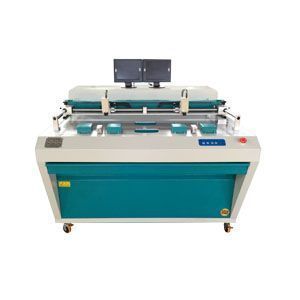
- Punch and bender. Our pneumatic plate punches and plate benders are set per press model; the bend angle and radius must suit the gauge, or the plate cracks or will not seat in the clamp.
Correct gauge and packing keep pressure even across the cylinder, which keeps tone values stable and makes it easier to print to ISO 12647-2.
Gauge-related problems and fixes
Many printers believe a thicker plate is always better and stronger. The correct gauge is the one specified for the press clamps, cylinder undercut and platesetter; the wrong gauge causes cracking, register and pressure problems.
| Symptom | Likely gauge-related cause | Check / fix |
|---|---|---|
| Plate cracks at the bend or clamp | Gauge too thin for the press, bend too sharp | Confirm gauge in press manual; check bender setting; see plate cracking on press |
| Print length changed after new plates | New plates differ in gauge, packing unchanged | Measure both plates; re-calculate packing |
| Uneven solids, heavy or weak print | Wrong plate height: packing plus gauge off | Check plate height to bearer with a packing gauge |
| Plate will not clamp or seat | Gauge too thick, bend not matched | Order the specified gauge; reset bender |
| Platesetter loading or focus errors | Gauge outside the machine range | Check the specification sheet |
FAQ
What is plate gauge in offset printing?
Plate gauge is the total thickness of the printing plate, mostly the aluminium base. It must match the press, because it decides how much packing goes under the plate and the pressure against the blanket.
What thickness are offset printing plates?
Common offset plate thicknesses are 0.15, 0.20, 0.25, 0.30 and 0.40 mm. Thinner plates are typical on small presses and thicker plates on large-format sheetfed and web presses.
How do I know which plate gauge my press needs?
Check the press manual, measure a plate that runs well with a micrometer, and confirm that the platesetter, punch and bender accept the same gauge.
Does plate gauge affect plate cylinder packing?
Yes. Packing thickness is the cylinder undercut minus the plate gauge, adjusted to the plate height in the press manual, so a gauge change needs a packing change.
Can a platesetter handle any plate gauge?
No. Each platesetter accepts a specified gauge range for its clamps, drum and autoloader. Check the machine specification sheet before ordering a different gauge.
Ordering for several presses? Request a quote — send each press model, plate size, gauge, punching and monthly quantity. Or request trial plates / contact us.
Disclaimer: values on this page are typical and for reference only; final specifications, MOQ, price and lead time are subject to the grade TDS and the quotation.


