
Last updated: November 2026
Quick answer: Offset plates usually crack along the bend line at the gripper or tail edge. It is a fatigue failure: the plate flexes slightly at the cylinder gap on every revolution until the aluminium breaks. The main causes are inconsistent or wrong bending, excessive or uneven lock-up tension, a plate gauge that does not suit the press, and over-baking. A consistent bend made with a bender set for your press prevents most cracks.
Key takeaways
- Most cracks start at the bend line, and most are caused by the bend or the lock-up, not by the aluminium.
- Bend once, with the correct angle and position for your press. Never re-bend.
- Use the plate gauge your press clamps are designed for.
- Follow baking temperature and time in the grade TDS; over-baking changes how the aluminium behaves.
A plate that cracks halfway through a long run is expensive: the press stops, the plate is remade, and the job loses time and paper. The first reaction is often “the aluminium is bad”. It can be, but in practice most cracks trace back to how the plate was bent and clamped. This guide explains the mechanism and gives a step-by-step check.
Cracking is different from wear (image loss) and from blinding (image refuses ink). For those, see plate wear causes and plate blinding.
Where and how plates crack
- Along the bend line at the gripper (lead) edge or the tail edge. This is the most common.
- From a punch hole or a corner, where stress concentrates.
- Short cracks that grow over the run until the plate tears in the clamp.
The plate wraps around the cylinder with its two ends bent into the cylinder gap. On every revolution, the plate edge passes the gap and the blanket, and the bend flexes very slightly. Thousands of cycles later, a small flaw at the bend becomes a crack. That is metal fatigue, which is why cracks usually appear on long runs and not on short ones.
Bending causes of plate cracking
The bend is the weak point of every plate, so how it is made matters most.
- Manual bending varies from plate to plate in angle, position and radius. A bend that is too sharp, or not straight, leaves the plate stressed before it reaches the press.
- Wrong bend angle or position for the press: the plate does not sit in the clamp properly and flexes more at the gap.
- Re-bending a plate to correct a bend works the aluminium twice and makes it much more likely to crack.
- Worn or damaged bender tooling that marks or nicks the plate along the bend line.
- Bend not aligned with the punch holes, so the plate is pulled at an angle when clamped.
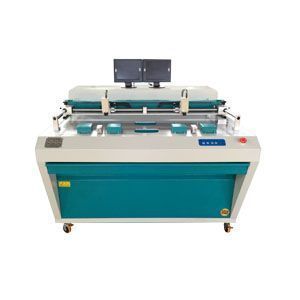
Our pneumatic plate benders are set per press model, so every plate is bent in the same place and at the same angle. They need compressed air in the plate room. Pair them with a plate punch; punch dies can be custom-made for your press model so the bend and the register holes line up.
Press and lock-up causes
- Excessive or uneven clamp tension. Over-tightening one side pulls the plate at an angle and concentrates stress at the bend.
- Plate not fully seated in the clamp before tensioning.
- Cylinder gap and clamp condition: worn clamp bars, dirt or dried ink in the gap, or a damaged cylinder edge.
- Packing errors: over-packing raises the pressure at the gap edge; see offset blanket and plate.
- Re-registering the plate many times on the cylinder during make-ready, loosening and tightening the clamps each time.
Plate gauge, aluminium and baking
Plate gauge
Offset plates are commonly supplied in 0.15, 0.20, 0.25, 0.30 and 0.40 mm gauges. The press clamps, bend tooling and packing chart all assume one gauge. A thicker plate is not automatically safer: if it is stiffer than the clamp and bend expect, it can crack sooner. Use the gauge your press is designed for; our offset plate gauge guide explains how to check it, and the plate size chart lists common sizes.
Aluminium
Plate-grade aluminium is rolled to a controlled alloy and temper so it bends and wears predictably. Edge burrs from cutting, or an inconsistent temper between batches, can make some plates crack more easily. If cracking follows one batch on several presses, keep the batch label and a cracked plate and ask your supplier to check it. Our aluminium plate substrate page explains how plate aluminium is supplied.
Baking
Baking extends the run length of bakeable grades, but heat also affects the aluminium. Over-baking (too hot or too long) can soften it, so the plate may stretch or tear in the clamps on long runs. Follow the temperature and time in the grade TDS, and avoid re-bending a plate after baking. See our plate baking guide.
Plate cracking troubleshooting table
| Symptom | Likely cause | Check / fix |
|---|---|---|
| Crack along the gripper bend on long runs | Fatigue from inconsistent bend or wrong angle | Use a bender set for the press; bend once |
| Crack starting at one corner | Uneven clamp tension, plate pulled at an angle | Seat plate fully; tension evenly |
| Crack starting at a punch hole | Punch and bend misaligned, burr at the hole | Check punch die and register to the bend |
| Cracks only on one press | Clamp or gap condition, packing | Inspect clamps and cylinder edge; check packing |
| Cracks only on baked plates | Over-baking, re-bending after baking | Check oven temperature and time against the TDS |
| Cracks on one plate batch across presses | Edge burrs or aluminium variation | Keep batch label and sample; contact the supplier |
Plates that crack late in the run cost more than the plate: the remake has to be brought back to the same colour, usually the aims in ISO 12647-2, with extra make-ready sheets.
Prevention checklist
- Confirm the plate gauge and size for each press.
- Punch and bend with tooling set for that press model; no manual bending on long-run jobs.
- Bend once. If a bend is wrong, use a new plate for long runs.
- Inspect bender and punch tooling for wear and nicks.
- Seat the plate fully in the clamps, then tension evenly.
- Keep clamps and cylinder gaps clean; check packing to the press chart.
- Bake only within the TDS temperature and time.
Need non-standard sizes for an older press? See custom plate sizes.
FAQ
Why do offset plates crack on press?
Most cracks are fatigue failures: the bent plate edge flexes slightly at the cylinder gap on every revolution until it breaks. Inconsistent bending, uneven clamp tension, the wrong plate gauge and over-baking make it happen sooner.
Why does the plate crack at the bend line?
The bend line is where the aluminium has already been deformed and where it flexes at the cylinder gap. A sharp, uneven or repeated bend concentrates stress there.
Can plate bending cause cracking?
Yes. Manual bending, the wrong bend angle or position, re-bending and worn tooling are common causes. A plate bender set for the press model gives the same bend on every plate.
Does baking make plates crack?
Baking within the TDS temperature and time should not cause cracking. Over-baking can soften the aluminium so it stretches or tears in the clamps, and re-bending after baking adds stress.
How do you prevent plate cracking on long runs?
Use the correct plate gauge, punch and bend with tooling set for the press, bend only once, seat and tension the plate evenly, keep clamps clean and follow baking limits in the TDS.
Plates cracking on long runs? Request a quote — send your press models, plate gauge and size, and whether you bend manually or with a bender. Or request trial plates / contact us.
Disclaimer: values on this page are typical and for reference only; final specifications, MOQ, price and lead time are subject to the grade TDS and the quotation.


