
Last updated: November 2026
Quick answer: Offset printing transfers ink from an imaged aluminium plate to a blanket and then to the sheet; digital printing writes each sheet directly from the file with toner or inkjet and needs no plate. Digital wins on short, personalised or rush jobs. Offset wins once fixed plate and make-ready cost is spread over enough sheets, typically from a few hundred to a few thousand sheets depending on format and colours, and it still leads on spot colours, paper range and cost per sheet on long runs.
Key takeaways
- Offset has a fixed cost per job (plates, make-ready) and a low cost per sheet; digital has almost no fixed cost and a higher cost per sheet.
- The crossover quantity is not a constant: it moves with sheet size, number of colours, click charges and how fast your plate room works.
- Digital takes short and variable-data jobs; offset stays cheaper per sheet on medium and long runs and handles Pantone spot colours natively.
- Faster plate making with CTP and processless plates lowers the offset crossover, so more jobs stay profitable on the offset press.
- Most growing print shops run both processes and route each job by quantity, substrate and deadline.
“Short runs are killing our offset margin” is the line we hear most often from printing-house buyers. Customers order smaller quantities every year, and every small job still needs plates and make-ready. The usual conclusion is that digital printing will replace offset anyway. The numbers say something more useful: digital is the right tool for one band of jobs, offset for another, and the border between them is something you can move. This guide compares offset vs digital printing on cost, quality, substrates and workflow, and shows where plates fit into the decision. If you already know your job mix, our CTP plate price guide explains how plate cost enters the calculation.
Offset vs digital printing at a glance
| Criterion | Offset printing | Digital printing |
|---|---|---|
| Image carrier | Aluminium plate, one per colour, imaged on a CTP platesetter | No plate; image written per sheet from the file |
| Ink | Paste ink (conventional, UV or LED-UV) with fountain solution | Dry toner, liquid toner or inkjet ink |
| Fixed cost per job | Plates, make-ready sheets and press time | Very low; file preparation only |
| Cost per extra sheet | Low: paper and ink | Higher: click charge or ink plus paper |
| Typical sheet size | Up to B1 and larger on sheetfed; web presses for long runs | Mostly SRA3, with B2 on larger production presses |
| Spot colours | Pantone inks printed directly | Simulated from CMYK or extended gamut |
| Variable data | Not possible within a run | Every sheet can be different |
| Best fit | Medium and long runs, carton, books, magazines | Short runs, proofs, personalised mail, rush jobs |
How offset printing works: plates, blanket and press
Offset lithography is planographic. A grained and anodised aluminium plate, usually 0.15 to 0.40 mm thick, carries the image. After imaging and development, the image areas accept paste ink and the non-image areas hold a thin film of fountain solution. The plate transfers the image to a rubber blanket, and the blanket prints it onto the sheet. A four-colour job needs four plates.
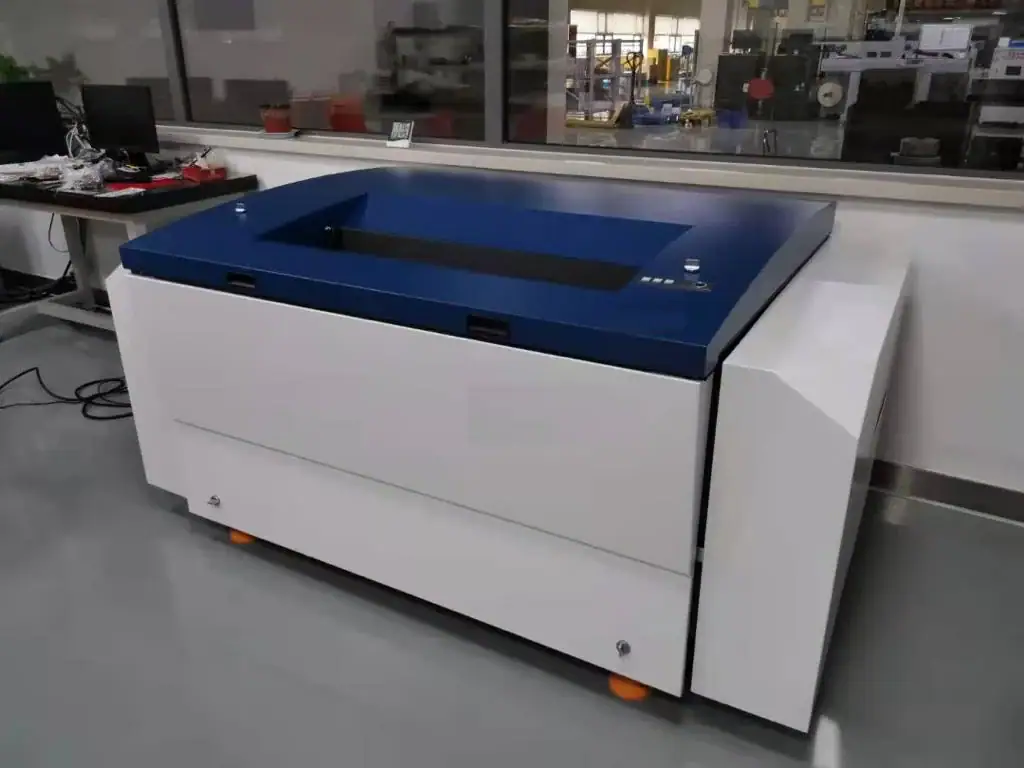
Plates are imaged on a CTP machine: thermal platesetters write at 830 nm, UV platesetters image CTcP plates, and violet systems use 405 nm. Thermal plates still pass through a processor, while processless plates go from the platesetter straight to press. We manufacture the CTP plates on our own coating lines; platesetters are supplied with our partner factories.
How digital printing works
Digital presses build every sheet directly from the file. Toner presses fuse dry or liquid toner onto the paper; inkjet presses jet drops of ink onto it. There are no plates, no make-ready sheets and no ink-water balance to reach, so the first sheet is a saleable sheet. That is why digital owns proofs, samples, short brochure runs and personalised direct mail.
The trade-off is the cost per sheet. Every impression carries a click charge or ink cost that does not fall with quantity, and most production presses work at SRA3 or B2, so one offset B1 sheet can equal several digital sheets.
Where the cost crossover sits
Offset cost per job is roughly fixed cost + quantity × low unit cost. Digital cost per job is roughly quantity × higher unit cost. The quantity where the two lines cross is your switching point. On standard four-colour sheetfed work it often falls somewhere between a few hundred and a few thousand sheets, and it shifts with:
- Number of colours. Each extra colour adds a plate and more make-ready on offset, which pushes the crossover up.
- Sheet size. A large offset sheet carries more pages per impression, which pulls the crossover down.
- Click charges. Higher digital click costs pull the crossover down.
- Plate room speed. Every minute and every chemical step before the plate reaches the press is fixed cost.
| Job (4/4 colour, illustrative) | Usually cheaper on | Why |
|---|---|---|
| 50 personalised invitations | Digital | No plates; variable data |
| 300 brochures, next-day delivery | Digital | Fixed offset cost spread over too few sheets |
| 2,000 brochures | Depends on format and click cost | Close to the crossover for many shops |
| 10,000 catalogues | Offset | Low cost per sheet dominates |
| 50,000 folding cartons with a Pantone colour | Offset | Run length, board range and spot colour |
Put your own numbers into our plate cost calculator to see what plates add to each job.
Quality, colour and substrates
Modern digital presses print sharp, consistent CMYK, and for many short commercial jobs customers cannot tell the difference. Offset still leads in three areas:
- Spot colours. Offset prints a Pantone ink directly; digital simulates it from process colours or an extended gamut.
- Screening. Commercial offset commonly runs 175 lpi, and thermal plates hold fine dots for higher screens and stochastic work.
- Substrate range. Offset handles heavy board, uncoated stocks, metallised papers and, with UV or LED-UV inks, some plastics. Digital substrates are narrower and often need pre-treated or certified papers.
For colour targets, both processes are usually checked against ISO 12647-2, the process-control standard for offset printing that many buyers also use as the reference when they approve digital proofs.
When the same job runs on both processes, approve both against one proof made to ISO 12647-7, so the comparison is about the print and not the proof.
Offset vs digital for packaging
Packaging follows the same economics with extra weight on substrates. Folding cartons on paperboard run mostly on sheetfed offset, often with UV inks, coatings and Pantone brand colours; see our page on folding carton printing plates. Digital packaging presses take prototypes, seasonal versions and short SKUs. Film, labels and corrugated belong mostly to flexo, which we compare in flexo vs offset printing plates.
Running both: a hybrid print shop
Most growing shops do not choose one process. They route jobs:
- Quote every job on both processes from the same cost model.
- Send short, personalised and rush jobs to digital.
- Keep medium and long runs, spot-colour work and heavy board on offset.
- Review the crossover each quarter, because paper, click and plate prices move.
The offset side of a hybrid shop earns its keep on cost per sheet, so it pays to keep its fixed cost per job as low as possible.
How to lower offset make-ready cost
The objection “offset plates and chemistry are too expensive for short runs” is partly a plate-room problem. Three changes move the crossover down:
- Remove film. If you still expose plates through film, a CTP or CTcP workflow removes film cost and registration errors.
- Remove the processor. Processless CTP plates skip developer, gum and rinse water, so the plate goes from the platesetter to the press. Our case study of a Canadian print shop shows how a short-run commercial printer made that switch.
- Keep plates consistent. Plates that behave the same from batch to batch reach colour in fewer make-ready sheets; see what to check for batch consistency.
Need plates for an offset press that has to compete with digital on short runs? Request a quote with plate type, size, gauge, platesetter model and monthly volume.
FAQ
Is offset printing cheaper than digital printing?
Per sheet, yes: offset has a lower unit cost. Per job, only once the run is long enough to cover plates and make-ready. Below the crossover quantity, digital is cheaper.
At what quantity is offset cheaper than digital?
There is no single number. For standard four-colour sheetfed work it often falls between a few hundred and a few thousand sheets, depending on sheet size, colours, click charges and how quickly your plate room works.
Is offset print quality better than digital?
For CMYK on coated paper, good digital presses come close. Offset still leads on Pantone spot colours, fine screens and the range of papers and boards it can print.
Is offset printing still used in 2026?
Yes. Books, magazines, catalogues, folding cartons and most medium and long commercial runs are still printed offset, because its cost per sheet is the lowest once plates are made.
Does digital printing need plates?
No. Digital presses image each sheet from the file, which is why they have almost no set-up cost. Offset needs one plate per colour.
Can offset and digital work together in one print shop?
Yes, and most growing shops run both. Route short, variable and rush jobs to digital, and keep longer runs, spot colours and heavy board on offset.
Disclaimer: quantities and cost comparisons on this page are illustrative; your crossover depends on your press, paper, click charges and plate prices. Plate specifications, price and lead time are confirmed in the quotation.


