
Last updated: October 2026
Quick answer: A used CTP machine can make sense if you have in-house technicians, a trusted local service partner and verified laser and parts condition. Otherwise a new platesetter usually costs less over its life, because it comes with warranty, installation, training and a clear spare-parts route. We do not sell used machines; our new platesetters are supplied with our partner factories.
Key takeaways
- Compare total cost of ownership, not the purchase price: laser condition, parts, installation, warranty and downtime decide the real cost.
- A used platesetter is a fair choice when you can inspect it running, verify its history and service it locally.
- A new machine is the safer choice for a first CTP line, remote locations and shops without a technician.
- We do not sell used machines. New platesetters we offer are supplied with our partner factories and matched with plates and processors from our own factory.
Almost every buyer planning a first or replacement CTP line asks the same question: should we buy new, or pick up a used platesetter at a fraction of the price? We are a plate and processing equipment manufacturer, and we offer new platesetters only. That is a bias you should know about, so this guide tries to be fair: there are situations where used is the right call, and we say so. For the wider machine decision, start with our CTP machine selection guide.
New vs used CTP machine at a glance
| Criterion | New CTP machine | Used CTP machine |
|---|---|---|
| Purchase price | Higher | Lower, sometimes much lower |
| Laser and optics condition | New, per the machine specification sheet | Unknown unless tested; the most expensive part to replace |
| Warranty | Supplier warranty | Usually sold as-is |
| Installation and training | Normally included or quoted | Arranged separately, often by a third party |
| Spare parts | Known supply route | May be discontinued or slow to source |
| RIP and software licences | Current, licensed to you | May not transfer; older operating systems |
| Plate compatibility | Tested with the plates you plan to run | Must be checked with trial plates |
| Best fit | First CTP line, remote sites, no in-house technician | Experienced shops with local service and a known machine history |
When a used CTP machine makes sense
Used machines are not a bad idea by default. They make sense when most of these are true:
- You can see the machine imaging plates before it is dismantled, ideally with your own test form.
- The seller provides service records and the history of laser and head replacements.
- You have an in-house technician or a local service engineer who knows that model.
- Spare parts for that model are still available in your region.
- Software and RIP licences transfer legally to you.
- You already run CTP and can keep the old machine as backup during the switch.
In that situation a used unit can be a good buy. The objection we hear, “used machines from known makers are good enough”, is sometimes true. The question is not the maker; it is the condition, history and service access of that specific machine.
When a new CTP machine is the better choice
A new platesetter is usually the better choice when:
- This is your first CTP line and nobody on site has maintained one.
- Your location is far from a service engineer for the used model.
- You need installation, training and acceptance tests from one responsible supplier.
- You cannot stop production for long if something fails.
- You want a warranty and a clear spare-parts route in writing.
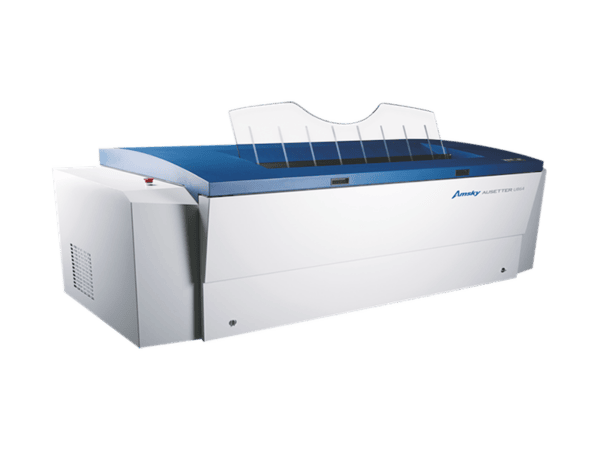
“A new machine is too expensive for our shop” is a fair objection. A smaller format or a semi-automatic configuration often closes most of the gap; our 4-up vs 8-up CTP comparison explains how format drives cost. The new CTP machines we offer, thermal and UV, are supplied with our partner factories and matched with plates from our own factory.
Hidden risks of a used platesetter
The listing price rarely shows the real risks. These are the issues buyers tell us about most often:
- Laser condition. Imaging heads and laser diodes wear. A weak laser may still image, but with uneven exposure that shows up as density variation on the plate. Replacement is the most expensive repair on the machine.
- Spare parts. “Spare parts take weeks to arrive” is a common pain, and for discontinued models some parts may not be available at all.
- Dismantling and transport damage. Platesetters are precision machines. Poor crating or moving without locking the drum and optics can cause damage that only appears after installation.
- Software. RIP licences may be tied to the previous owner, and older control computers may not run on current operating systems.
- No one responsible. When the used machine stopped and nobody could fix it, buyers find out the seller only sold the hardware, or the seller disappeared after payment.
Used CTP machine inspection checklist
If you do buy used, use a checklist like this one, and do not pay in full until the machine has passed acceptance tests at your site.
| Area | What to check |
|---|---|
| Imaging test | Image a test form with tint patches and fine lines across the full plate width; check evenness |
| Laser and head history | Service records, replacement dates, current diagnostics report |
| Plate handling | Loading, clamping and unloading at the smallest and largest plate size |
| Drum and mechanics | Noise, vibration, vacuum, wear on belts and rollers |
| Control computer and RIP | Licence transfer, operating system, backups of calibration files |
| Spare parts | Availability of laser parts, boards and sensors in your region |
| Crating and transport | Who dismantles, locks and crates the machine; transport insurance |
| Installation | Who installs, calibrates and trains, and at what cost |
Total cost of ownership: what to compare
A used platesetter looks like the cheaper way into CTP. The cheaper option is the one with the lower total cost of ownership once laser condition, parts, installation, warranty and downtime are counted. Put both options in the same table:
| Cost line | New | Used |
|---|---|---|
| Machine price | Quoted | Quoted |
| Dismantling, crating, freight | Included in quote terms | Often extra |
| Installation and training | Quoted by supplier | Third-party engineer |
| Laser or head replacement risk | Low in early years | Budget for it |
| Spare parts and service contract | Supplier route | Local market price |
| Downtime cost | Lower risk | Higher risk |
| Plates and processing | Same plates either way | Same plates either way |
How long a CTP machine lasts depends far more on maintenance, laser care and parts supply than on age alone; our CTP machine maintenance guide covers the routines that matter. For the price factors behind a new machine, see the CTP machine price guide.
How to reduce risk whichever you choose
- Get the machine specification sheet in writing and check plate size range, imaging technology and power requirements.
- Run trial plates and follow a plate test protocol on your own presses.
- Plan the processor too. We manufacture plate processors and baking ovens that fit new or existing platesetters.
- Prepare the site and agree acceptance tests before payment; use our installation and acceptance checklist.
- Confirm who handles warranty and service and how spare parts reach you.
FAQ
Is it worth buying a used CTP machine?
It can be, if you can test the machine running, verify laser and service history, transfer the software legally and get local service. Without those, a new machine usually costs less over its life.
What should I check when buying a used platesetter?
Check an imaging test across the full plate width, laser and head history, plate handling, drum mechanics, RIP licence transfer, spare parts availability, crating and who will install it.
How long does a CTP machine last?
Working life depends on maintenance, laser care, operating conditions and spare parts supply rather than age alone. A well-maintained machine with available parts can serve for many years.
Does a used CTP machine come with a warranty?
Usually not; most used platesetters are sold as-is. Some resellers offer short service terms, so get any warranty in writing before you pay.
Do you sell used CTP machines?
No. We do not sell used machines. The new platesetters we offer are supplied with our partner factories, and we can supply plates and processors for a used machine you already own.
Weighing a new machine against a used offer? Request a quote — send your plate sizes, plate type, daily volume, the used offer you are comparing and your destination port, and we will quote a comparable new configuration. Or contact us.
Disclaimer: values on this page are typical and for reference only; final specifications, MOQ, price and lead time are subject to the grade TDS and the quotation.


