
Last updated: November 2026
Quick answer: Offset printing plates are made on a continuous line from rolled aluminium coil. The coil is cleaned, electrochemically grained, anodised and post-treated to create a hard, water-holding surface, then coated with a heat- or light-sensitive layer and dried. The finished web is inspected, cut into sheets, interleaved with paper and packed. Each stage affects how the plate prints.
Key takeaways
- A plate is built in stages: aluminium, grain, anodic layer, post-treatment, coating. See graining and anodising for the surface steps.
- Graining and anodising decide water balance and wear as much as the coating does.
- In our factory the aluminium arrives as rolled, un-grained coil; graining, anodising and coating are done on our own line.
- Flexo plates are made in a completely different way, from photopolymer sheets.
Printers often ask us why plates from different suppliers behave so differently when they look the same. Plates scum even with correct fountain solution, coating scratches come out of the box, or one batch prints differently from the last. The answer is in how the plate is made. This guide follows an offset plate through a typical production line, explains what each stage does on press, and finishes with how flexo plates are made. It is general industry practice; exact process settings vary by grade and are not published.
How offset printing plates are made: the overview
Most modern offset plates — thermal, processless, CTcP, violet and PS — are made on the same kind of line. Only the coating chemistry changes. The table shows the main stages.
| Stage | What happens | What it controls on press |
|---|---|---|
| Aluminium coil | High-purity rolled aluminium is unwound into the line | Flatness, gauge, stiffness |
| Degreasing | Alkaline cleaning removes rolling oil and natural oxide | Even grain, no spots |
| Graining | Electrochemical (sometimes plus brush) roughening | Water holding, coating adhesion |
| Anodising | Electrolytic growth of hard aluminium oxide | Wear and scratch resistance, run length |
| Post-treatment | Hydrophilic sealing layer | Clean non-image areas after processing |
| Coating and drying | Imaging layer(s) applied and oven-dried | Sensitivity, resolution, processing latitude |
| Inspection, cutting, packing | Web inspected, cut to size, interleaved, boxed | Flat, clean, undamaged plates on arrival |
Step 1: aluminium coil and cleaning
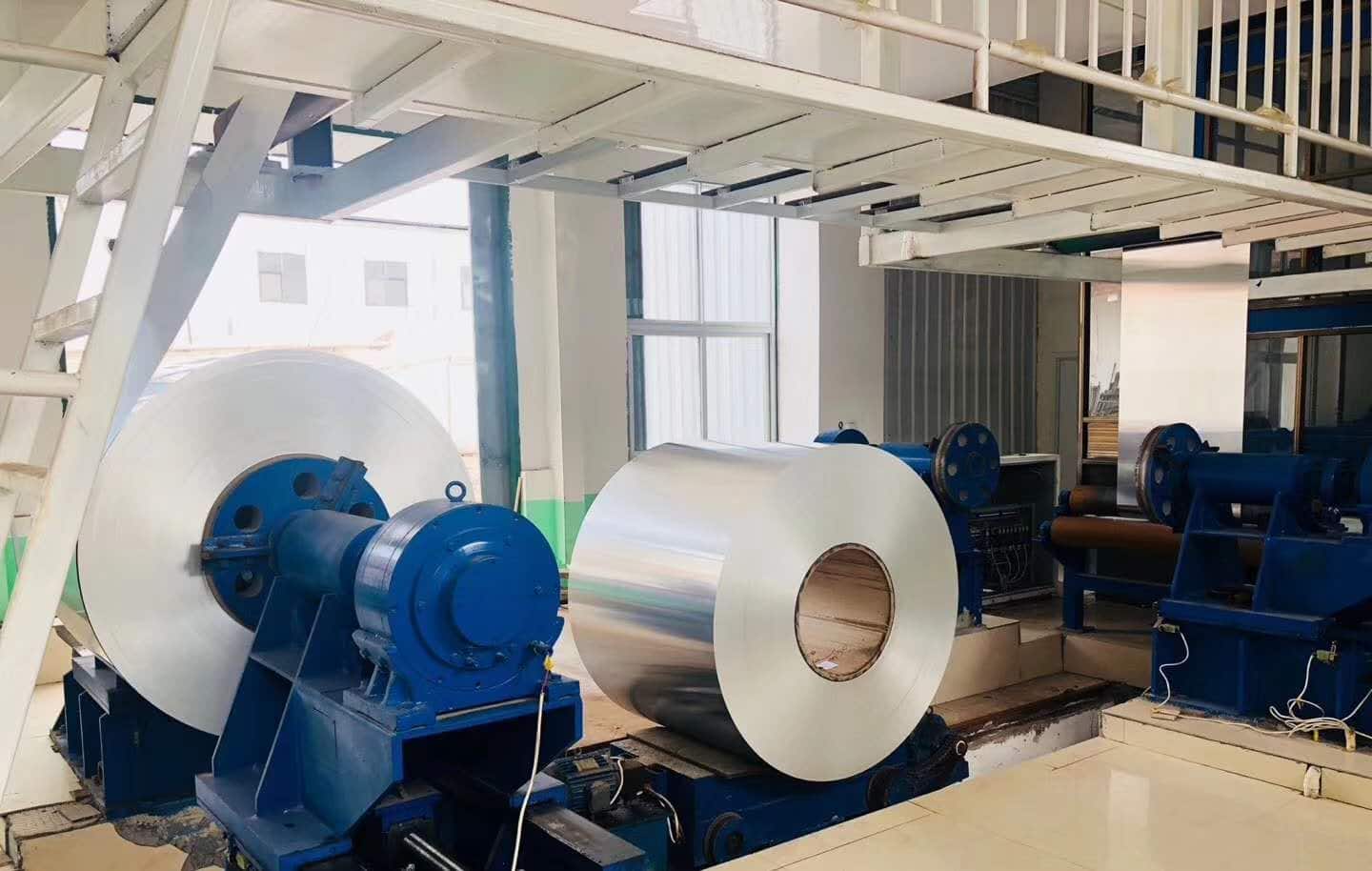
Plate making starts with lithographic-quality aluminium coil, typically from high-purity 1xxx alloys, rolled to gauges such as 0.15, 0.20, 0.25, 0.30 or 0.40 mm. The coil must be flat and free of roll marks, inclusions and oil residue, because surface defects print through the coating later. You can read more about substrate requirements on our aluminium plate substrate page.
In our factory the aluminium arrives as rolled coil — not grained and not anodised. It is unwound into the line and passes through degreasing, where an alkaline bath removes rolling oil and the natural oxide film so the next stage can work evenly across the full width.
Step 2: graining and anodising
Many buyers believe plate quality is decided only by the coating. In fact graining, anodising and post-treatment of the aluminium decide water balance and wear as much as the coating does.
- Electrochemical graining. The web runs through an acid electrolyte under alternating current. This creates a fine, uniform micro-texture of pits that holds fountain solution and anchors the coating. Some lines also brush-grain first. Grain that is too fine holds too little water; grain that is too coarse or uneven can lead to scumming and poor dot reproduction.
- Desmutting. Graining leaves residues that are washed off before anodising.
- Anodising. An electrolytic process grows a hard aluminium oxide layer on the grained surface. This layer gives the plate its wear and scratch resistance during the run.
- Post-treatment. A thin hydrophilic layer seals the anodic surface, helps the non-image area stay clean after processing and controls how strongly the coating bonds.
Every stage is controlled by bath chemistry, temperature, current and line speed. Small drifts here are a common reason why one batch prints differently from the last, even when the coating is the same.
Step 3: coating and drying
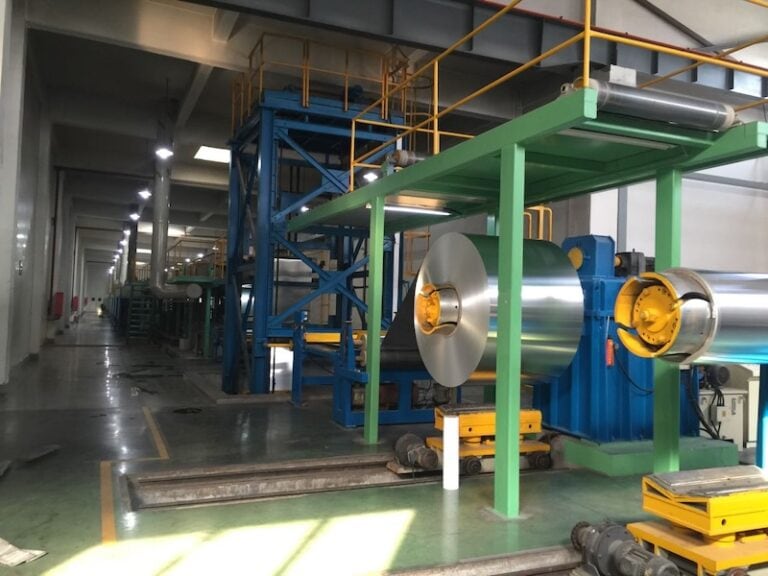
The grained and anodised web then passes the coating station, where the imaging layer is applied as a liquid and dried in an oven. The coating defines the plate type:
- Single-layer thermal and CTcP plates carry one positive-working layer.
- Double-layer thermal plates carry two layers, giving more chemical resistance for UV inks and demanding runs.
- Processless thermal plates carry a negative-working layer designed to clean out on press.
- Violet photopolymer plates carry a photopolymer layer and usually a protective overcoat.
- Positive PS plates carry a UV-sensitive layer for exposure through film.
Coating weight, uniformity and drying conditions control sensitivity and processing latitude. A coating line usually runs under safelight conditions suited to the coating. Our guide to CTP plate types explains how these plates differ in use.
Step 4: inspection, cutting and packing
- Inspection. The coated web is checked for coating defects, streaks, spots and scratches.
- Cutting. The web is cut to plate size — standard formats or custom sizes — with square, clean edges so plates load correctly in the platesetter.
- Interleaving. Interleaving paper is placed between plates to protect the coating; the paper type matters for autoloaders.
- Packing. Plates are packed in light-tight, moisture-protected cartons and then in export cases. Good packing is why plates arrive flat and clean.
Formats and gauges are listed in our plate size chart, and export packing is described on our shipping and packaging page.
Quality checks that decide how a plate prints
Some buyers assume all plate factories use the same process, so plates are identical. In practice, process control at each stage of the line is what makes plates consistent from batch to batch. This is how line problems typically show up on press:
| Symptom in the print shop | Possible origin on the plate line | What to ask the supplier |
|---|---|---|
| Scumming or toning with normal fountain solution | Uneven or too-fine grain, weak post-treatment | How grain is monitored per batch |
| Early image wear | Thin anodic layer or under-cured coating | Run length conditions on the grade TDS |
| Speed or exposure shifts between batches | Coating weight or drying variation | Batch sensitivity check, batch number on the box |
| Spots or streaks in solids | Coating defects, contamination | Inspection method, claim process |
| Plates not flat, loading errors | Coil flatness, cutting quality | Flatness and size tolerances |
You cannot easily audit a factory abroad, but you can ask for these checks, run trial plates and use a written test. See our quality control process and the plate test protocol.
The finished plate is judged by what it prints: offset plates are expected to reproduce dots well enough for the press to reach the tone value increase aims in ISO 12647-2, the offset process-control standard.
How flexo plates are made differently
Flexo plates are not coated aluminium. They are photopolymer sheets — a light-sensitive polymer on a polyester backing, with a cover film or, for digital plates, a thin black LAMS layer. In the plate room they are back-exposed, imaged (through film or by ablating the LAMS layer), main-exposed with UV light, washed out with solvent, water or heat, dried and post-treated. The result is a raised relief image. Our flexo plate making process guide covers each step, and our range of flexo plates includes analog, digital, water-wash and thermal grades.
FAQ
How are offset printing plates made?
Rolled aluminium coil is cleaned, electrochemically grained, anodised and post-treated, then coated with an imaging layer and dried. The finished web is inspected, cut into sheets, interleaved with paper and packed.
What is graining and anodising on printing plates?
Graining roughens the aluminium into a fine texture that holds fountain solution and anchors the coating. Anodising grows a hard oxide layer that resists wear and scratches on press.
How is the coating applied to a printing plate?
The imaging layer is applied as a liquid onto the moving grained web and dried in an oven. Double-layer plates receive two coatings; coating weight and drying control sensitivity and processing latitude.
How are flexo printing plates made?
Flexo plates are photopolymer sheets on a polyester backing. In the plate room they are back-exposed, imaged, main-exposed with UV light, washed out with solvent, water or heat, dried and post-treated to form a raised relief.
How are printing plates made in the print shop?
In the print shop a blank plate is imaged on a platesetter from RIP data, developed in a plate processor (unless it is processless), gummed, punched and bent, and then mounted on the press.
Want to see how our plates run on your press? Request a quote — tell us your plate type, platesetter, sizes, gauge and monthly volume. Or request trial plates / contact us.
Disclaimer: values on this page are typical and for reference only; final specifications, MOQ, price and lead time are subject to the grade TDS and the quotation.


