Understanding the Role of Plates in Modern Lithography
In the pressroom, the most critical consumable determining whether a shift runs smoothly or faces delays is often the plate, not the ink. It’s the plate.
Offset printing plates are the image-carrying medium in high-volume lithographic production. The plate transfers the image to a blanket, which then transfers it to the sheet, ensuring no direct contact with the paper. The whole system rides on ink and water balance: the imaged areas are oleophilic and accept greasy ink, while the open grain is hydrophilic and holds a thin film of fountain solution that repels it.
Analog plates once required film, vacuum frames, and exposure units. Computer to plate technology collapsed that into a direct laser write. Aluminum stays the standard because it holds dimensional stability under tension, heat, and millions of revolutions.
What is a Plate in Offset Printing?
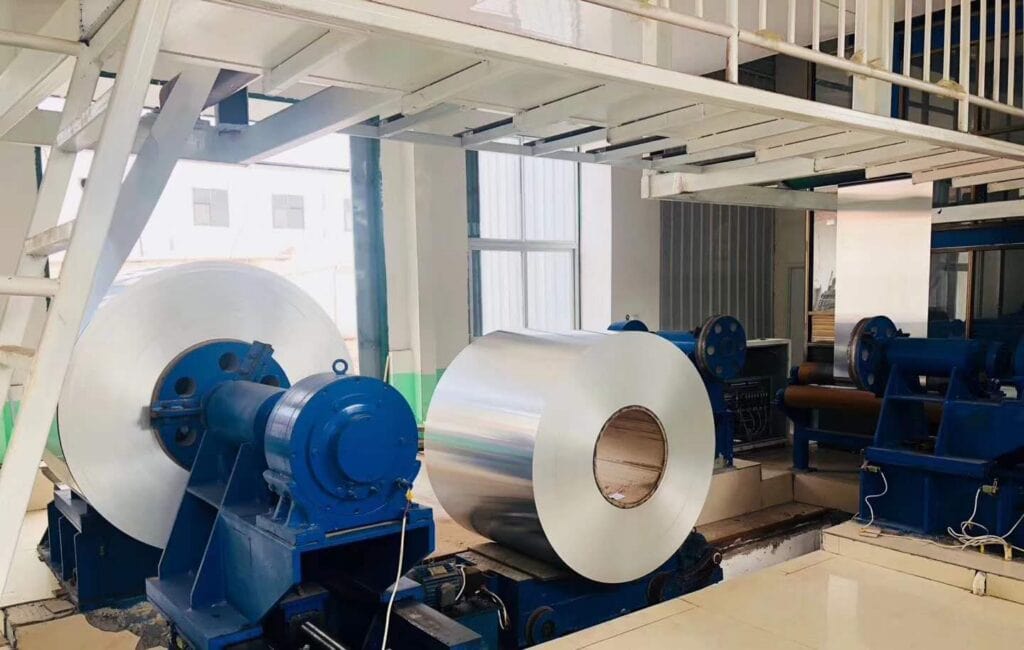
A plate consists of multiple layers. An aluminum substrate provides rigidity. Electrochemical graining roughens the surface into microscopic valleys that anchor water and coating alike. On top sits a light-sensitive layer that hardens or dissolves depending on chemistry. Lithographic printing plates never meet the sheet — the rubber blanket absorbs that abrasion, shielding the grain from paper fiber and filler.
How Are Offset Printing Plates Made?
After graining and coating, imaging happens in the CTP unit: an infrared thermal laser ablates or cures the layer, or a violet diode exposes a photopolymer. Baked plates get a post-exposure oven cycle that hardens the image for extended runs; unbaked plates skip it for standard commercial work. From there the plate either passes through chemical processing or, with processless offset plates, develops on press during the first revolutions.
Thermal CTP vs. Violet Technology: Choosing the Right Standard
The choice between 830nm and 405nm technologies influences all downstream processes — throughput, prepress lighting, consumable spend, and how far you can push screen rulings before dots collapse.
- Imaging mechanism. Thermal uses heat to create a hard threshold at the dot edge. Violet uses light-sensitive photopolymer chemistry, which images faster but with a softer exposure curve.
- Run length. Thermal coatings, particularly baked, generally support longer commercial and packaging runs. Violet plates are typically specified toward shorter and mid-length work.
- Dot fidelity. High-screen-frequency and stochastic work favors thermal’s sharper dot structure.
- Room conditions. Thermal plates handle daylight loading. Violet requires controlled yellow-light prepress areas.
- Failure modes. Watch for coating delamination from humidity, laser calibration drift producing inconsistent dot gain, and drum debris causing repeating imaging artifacts.
Thermal CTP Plates: The Precision Benchmark
Thermal CTP plates image on a near-binary threshold — the coating either reacts or it doesn’t — which removes the soft, fuzzy dot edges that older exposure methods produced. That hard edge holds up against UV inks and aggressive fountain solutions. For 200+ line screen jobs, fine type reversals, and tight four-color registration, the sharper dot is what keeps midtones from drifting across a long run.
Violet CTP Systems: The Speed Alternative
Violet shines where throughput beats fidelity. Photopolymer coatings react quickly, so plate-per-hour rates suit newspaper and high-volume magazine production where presses are waiting. Laser diodes are generally cheaper to replace than thermal imaging heads, which softens the maintenance line in the budget. The trade-off is chemical resistance: violet coatings typically tolerate harsh UV systems and aggressive washes less comfortably than high-end thermal plates.
Procurement and Economic Realities: Are Printing Plates Worth It?
The calculations are straightforward and reliable. Plates are a fixed cost absorbed across the run, while toner and inkjet carry a per-sheet click charge that never falls. Somewhere past a few thousand impressions, offset’s declining cost-per-impression crosses under digital and keeps going. For packaging and long commercial runs, that crossover is the entire business case.
When buyers ask what a plate costs, they’re really asking about two stacked numbers: the aluminum and coating itself, plus the imaging overhead — laser hours, chemistry, labor, and amortized CTP hardware. The second number is where undisciplined shops bleed.
Procurement leverage comes from volume commitments and predictable reorder cadence rather than spot buying. Aluminum also has scrap value; recovering used plates returns real money against total cost of ownership instead of paying to haul them away.
Bulk Pricing and Inventory Management
Plates ship in standard pallet quantities, and gauge drives logistics — thinner stock like 0.15mm packs more per skid, while heavier 0.30mm gauges for large-format presses eat pallet space and freight weight fast. Store boxes in climate-controlled conditions; humidity swings cause oxidation and coating degradation long before the expiry date. Custom sizes for non-standard press formats carry longer lead times than catalog gauges, so order ahead.
Total Cost of Ownership (TCO) Metrics
Traditional plate-making carries costs that never appear on the plate invoice: developer and replenisher chemistry, regulated disposal fees, water consumption, and processor cleaning labor. Then there’s handling — manual plate hanging consumes press operator time that automated loading systems return to running hours. For multi-million impression packaging work, higher-durability plates often pay back through avoided plate changes and the make-ready waste each one triggers.
Industry Secrets: What Most Guides Miss About Plate Performance
In many plate complaints, the underlying issue isn’t the plate itself. It’s the fountain solution. pH drift and rising conductivity change how the grained surface holds water; too acidic and you attack the aluminum, too alkaline and the non-image area loses its desensitized character. Often, the plate is mistakenly blamed for issues originating in the tank.
Processless plates are marketed as maintenance-free, but in high-speed packaging the removed coating has to go somewhere — usually into the dampening system, where it accumulates. Those shops need a filtration and cleanup discipline, not less of one.
Partially run plates that sit unprotected will oxidize and pick up ink on reuse; proper gumming before storage prevents it.
And abrasive substrates — heavily filled recycled board especially — dust into the dampening path and contribute to plate blinding, where the image area simply stops taking ink.
The Impact of Press Chemistry on Plate Life
Consider two identical plates: one running alcohol-free solution with a surfactant replacement, one running traditional isopropyl. Film thickness and surface tension differ, so wear patterns differ. Calcium leaching from coated stock compounds either case, building deposits that blind the image. Conducting a simple audit can help: log pH and conductivity at the start of each shift, record water hardness, check replenishment rates, and date the tank changes.
Advanced Diagnostics: Troubleshooting Plate Failure
Scumming — ink taking in non-image areas — usually points to lost desensitization rather than a defective coating. Learn to read the pattern: mechanical scratches from the press run in the sheet direction and appear after mounting, while imaging artifacts repeat at drum circumference and show up on the plate before it ever reaches the cylinder. A plate reader verifies dot percentage against the proof at prepress, catching calibration drift before it becomes a wasted make-ready.
Limitations, Disadvantages, and Trade-offs
Offset’s weakness is the mirror image of its strength. Every job carries fixed prepress cost and setup time before a single salable sheet exists. Short runs absorb that overhead badly.
Offset printing is also a rigid process. Once a plate is imaged, the content is locked — no last-minute copy correction, no variable data, no personalization. Changing one line means reimaging, repunching, and remounting the plate.
Environmentally, aluminum production is energy-intensive upstream, and traditional processing chemistry requires compliant disposal rather than drain discharge.
The practical switching point sits at the low end of the run spectrum: when plate and make-ready costs for a job in the hundreds consume the margin, industrial inkjet or toner is the right answer. Efficient operations utilize both methods and choose based on run length.
Setup Time and Fixed Prepress Costs
Each plate needs imaging time in the CTP, punching for register, and physical mounting on the cylinder. Then the press has to find ink and water balance, which consumes make-ready sheets before color stabilizes — multiplied across every unit on a six-color line. Industrial inkjet skips all of it, which is exactly why short-run work migrated there.
Environmental and Regulatory Considerations
VOC limits on processing chemicals continue to tighten, pushing shops toward low-chemistry and processless workflows that reduce what goes down the drain and into the air. Aluminum plates are recyclable, but only if the shop has a collection and buy-back channel that actually closes the loop. Thermal imaging also draws meaningful power compared with lower-energy diode systems — worth noting where facilities carry carbon reporting obligations.
Summary: Key Takeaways for Commercial Printers
Aluminum offset plates imaged through CTP remain the practical choice for high-volume, high-fidelity production. The technology is mature, the dimensional stability is proven, and the cost curve rewards every additional thousand impressions.
Choose by workload rather than brochure. Thermal belongs where fine screens, UV systems, and long packaging runs demand a hard dot. Violet belongs where plate throughput is the constraint and run lengths are moderate. The positive vs negative offset plates question follows the same logic — match the coating chemistry to your press chemistry, not to habit.
Build total cost of ownership honestly: chemistry, disposal, labor, make-ready waste, and scrap aluminum recovery all belong in the number.
Above all, treat plate, fountain solution, and substrate as one system. Most “plate problems” are really synergy problems, and they’re solvable before the press ever rolls.