The Evolution of Prepress: Defining Processless Printing Plates
What if the noisiest, messiest machine in your prepress department simply disappeared?
That is the premise behind processless printing plates. A processless plate is a lithographic plate that, once imaged in a computer to plate printing device, goes straight to the press — no chemical developer, no rinse water, no gum, no dryer. Traditional thermal plates still need a processor bath to strip away the non-image coating. Processless plates let the fountain solution and ink do that work during the first few revolutions of the press.
Commercial printers and packaging producers chasing lower maintenance have driven adoption hardest, and by 2026, coatings are expected to mature enough that high-definition offset output is routine rather than experimental.
Technical Distinction: Processless vs. Traditional CTP Workflows
Traditional workflow: image the plate, run it through a chemical bath, rinse, gum, dry, then store and eventually pay to dispose of spent chemistry.
Processless workflow: image the plate, hang it on the press. The industry shorthand is DOP — Develop-On-Press — where dampening solution lifts the non-image coating into the first sheets instead of into a tank.
Hardware and CTP Compatibility Requirements
- Confirm your platesetter uses an 830nm thermal laser, the standard exposure wavelength for most processless coatings.
- Check available laser power; some coatings demand higher energy for stable, fully-cured imaging.
- Calibrate internal laser focus and drum speed, then verify sharp dot reproduction across the full plate width before committing production work.
Operational and Economic Impact of Eliminating Processors
Total cost of ownership is where this technology earns its keep. A plate processor consumes electricity to heat its bath, water to rinse, and developer and gum that must be purchased, stored, and then paid for again as regulated waste. Remove the processor and all four line items vanish at once.
Labor follows. No one drains, scrubs, or recharges a machine that isn’t there, and nobody schedules a service call for it either.
Floor space comes back too — processing units are large, plumbed, and awkwardly placed.
A quieter advantage is consistency. Bath temperature, developer fatigue, and pH drift are three variables that silently shift dot gain over a shift. Eliminating the processor eliminates all three.
The ROI of Chemistry-Free Operations
Hazardous waste hauling invoices cease. So does the compliance paperwork that accompanies them.
Then there is the cost nobody budgets for: when the processor jams, and plates — plus press time — wait. Consider replacement rollers, pumps, and filters over a processor’s life and the gap narrows fast.
Short-run shops benefit most, because time-to-press shrinks on every single job.
Sustainability Metrics for Packaging Manufacturers
Rinse water is the obvious line item — a processor that never runs consumes none of it, and that volume adds up across a year of plate output.
Removing developer and gum also removes a source of volatile emissions from the prepress room, which matters when facilities are audited against low-emission targets.
For packaging suppliers, documented chemistry-free prepress strengthens bids with brand owners who score vendors on environmental criteria.
Processless Performance: Image Resolution and Run Lengths
The old objection was that a plate developed on press could not be durable or sharp. Current coatings answer both.
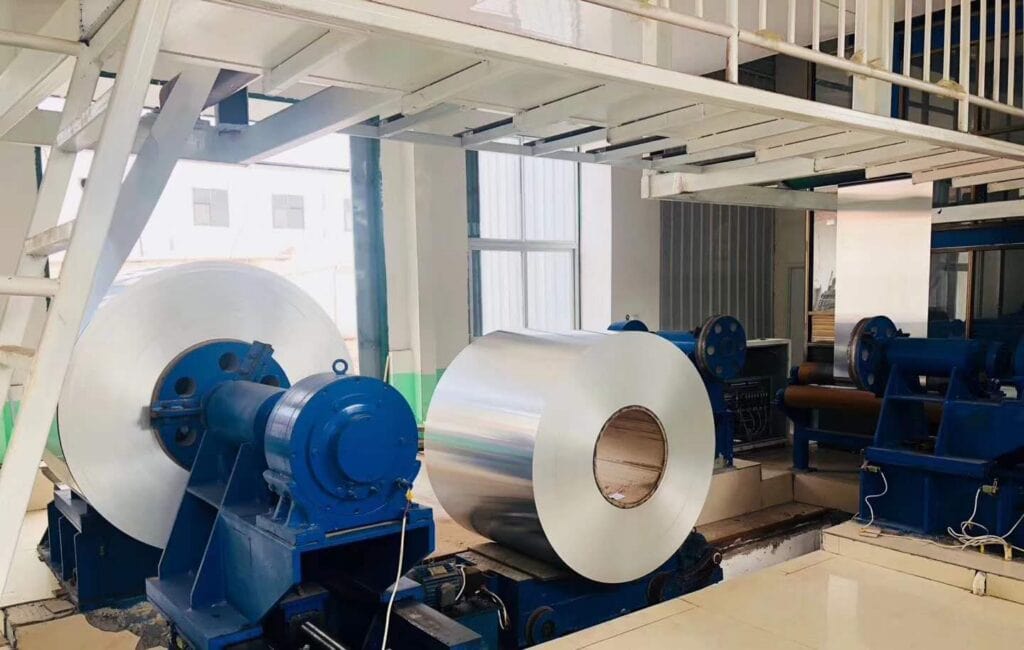
Grained and anodized aluminium printing plates provide the same rigid, water-receptive base used in conventional offset, so the mechanical foundation under high-speed commercial press conditions is unchanged. What differs is the imaging layer, which modern formulations harden during exposure rather than during development.
Screening capability now extends to a 1% to 99% dot at 200 LPI, enough for high-definition color work and fine vignettes. Coatings have also been reformulated to resist aggressive UV and H-UV ink chemistries that once attacked unprocessed layers.
Latent image stability is strong — imaged plates typically hold for 24 to 48 hours before mounting, giving planners real scheduling flexibility.
Screening and Detail Retention
Stochastic screening exposes any weakness in a coating faster than AM does, because every highlight becomes a field of isolated micro-dots. Current process-free surfaces hold those dots cleanly, which matters in packaging gradients that fade to nothing.
Against wash-off chem-free plates, sharpness is comparable; the difference is that no rinse stage can soften edges.
Run Length Expectations by Application
Standard sheetfed commercial work in the 100,000 to 150,000 impression range is well within reach without baking.
Abrasive substrates change the math. Recycled board and uncoated stocks wear any coating faster, so expect shorter life and plan reruns accordingly.
For genuinely extra-long runs, specialized high-durability coatings remain the right conversation to have with your supplier.
Limitations and Technical Considerations
Honesty about trade-offs saves money later.
Visibility is the first one. Processed plates carry a blue dye that makes the image pop; an imaged processless plate shows much lower contrast, which complicates eyeball verification at the plate bench.
Press start-up behavior is the second. Development happens in the first dampening cycles, so the opening ten to twenty sheets are effectively part of the process. Operators accustomed to a fully-developed plate need to adjust expectations rather than chase a phantom fault.
Handling matters more, too. Fingerprints, abrasion, and prolonged ambient light exposure all attack an unprotected coating in ways a processed plate shrugs off.
Finally, fountain solution chemistry is no longer just a press variable — it is the developer. Keep it within the plate maker’s specified range.
Common Failure Modes and Fixes
Scumming in the background usually traces to ink-water balance during startup rather than the plate itself; bring dampening up before ink and the tint clears.
Slow or incomplete development often means fountain solution pH has drifted too high to trigger the release layer — test it before blaming the coating.
Scratching is almost always handling. Train loaders to support plates by the edges.
Trade-offs in Visual Inspection
With no high-contrast latent image, verification shifts upstream: trust the RIP proof and plate-naming workflow, and check register punch and plate ID rather than squinting at content.
Plate readers and densitometers designed for low-contrast surfaces restore measurable quality control.
Businesses that genuinely need visible plates can look at wash-off alternatives instead.
Comparison: Processless vs. Traditional vs. Waterless Plates
Three technologies share the 2026 market for offset printing plates, and the right pick depends on volume and substrate more than on preference.
| Plate type | Post-imaging step | Strongest fit | Main cost driver |
|---|---|---|---|
| Processless | None — develops on press | Short to medium commercial runs | Plate price |
| Traditional thermal | Chemical processor | Very long runs, bakeable | Chemistry, water, labor |
| Waterless | Silicone layer, dedicated press | High-gloss specialty work | Press and ink system |
A small shop running many short jobs recovers processor overhead immediately. An enterprise plant running few, enormous jobs spreads that overhead thin.
The selection rule is simple: when per-plate price sits above conventional stock but processor labor, waste, and downtime exceed the difference, processless wins. Traditional processing still holds its niche where baking and sheer impression count rule.
The Triple-Type Plate Showdown
Processless — lowest maintenance, cleanest environmental story, fastest route from imaging to press.
Traditional thermal — the choice when runs are long enough to justify baking, since baking requires a processed plate.
Waterless — a specialist tool for high-gloss, ultra-fine work on plastics and metal, demanding temperature-controlled presses.
Kodak Sonora process free plates and Fuji processless plates are the names most shops encounter first.
When Is Traditional Processing Better?
Web offset work pushing past half a million impressions still favors baked conventional plates.
So does a plant with an automated, fully-depreciated processing line already installed, staffed, and running without incident — the savings case is weaker when the asset is paid off.
Operations relying on high-contrast visual sorting of stacked plates are a third case.
Key Takeaways: Transitioning to a Processless Workflow
Strip the processor out and you strip out the chemistry, the rinse water, the disposal manifest, and the single machine most likely to delay a plate.
Modern coatings are not a compromise: 200 LPI screening, 1% highlight dots, and compatibility with UV and H-UV ink systems cover the majority of commercial and packaging work. Flexo plate printing, however, follows a separate development path, so apply these conclusions to offset specifically.
Success is not automatic. It depends on a correctly calibrated 830nm thermal CTP engine and disciplined press-side control of fountain solution pH and conductivity.
Return on investment comes from labor hours never spent, waste never generated, and jobs that reach the press sooner.
Summary of Operational Benefits
- Zero chemical disposal costs — no developer, no gum, no regulated waste stream from prepress.
- Reduced energy consumption — no heated bath, pumps, or dryer running through the shift.
- Lower maintenance burden — technical staff stop servicing a processor and redirect that time to press uptime and color management.
How to Find Credible Industry Standards
Start with the manufacturer’s technical data sheet for the exact plate you are quoting — run length ratings, exposure energy, and fountain solution specs live there.
Cross-reference ISO printing standards for dot gain and color reproduction benchmarks.
Then have a prepress equipment specialist audit your platesetter’s laser health before you switch.