The Core Dilemma: CTP Offset vs. Digital Printing in 2026
A production manager evaluating a quote request for 30,000 folding cartons and another for 400 personalized mailers faces two distinct machine choices, not just one decision.
CTP — computer-to-plate — is the bridge between a digital file and an analog press. A platesetter images the job directly onto an aluminum printing plate, skipping film entirely, and that plate goes onto a lithographic press where ink transfers through a blanket to the sheet. It is prepress automation serving a mechanical process built for volume.
Digital printing puts ink or toner straight onto the substrate. No plate, no makeready, no amortization math on a single job.
Most shops in 2026 do not pick a side. They run hybrid floors and route jobs by volume. The real question is determining the routing line — a break-even calculation, not a philosophical choice.
Decision Criteria: Unit Cost, Speed, and Volume Benchmarks
Three variables decide almost every job: setup burden, run speed, and substrate.
Makeready represents the true cost of offset. Plates have to be imaged, mounted, registered, and brought up to color, and that sheet waste and press time are charged to the job whether you print 500 copies or 500,000. A digital printing press starts clean — first sheet is a sellable sheet.
The crossover point is where that fixed setup cost stops mattering. Offset presses run fast and their consumables get cheaper per impression at volume, so the per-unit curve keeps falling. Digital’s curve is nearly flat: click charges and toner or ink costs are roughly the same on sheet 100 and sheet 10,000. Two curves, one intersection. Everything left of it belongs to digital; everything right belongs to plates.
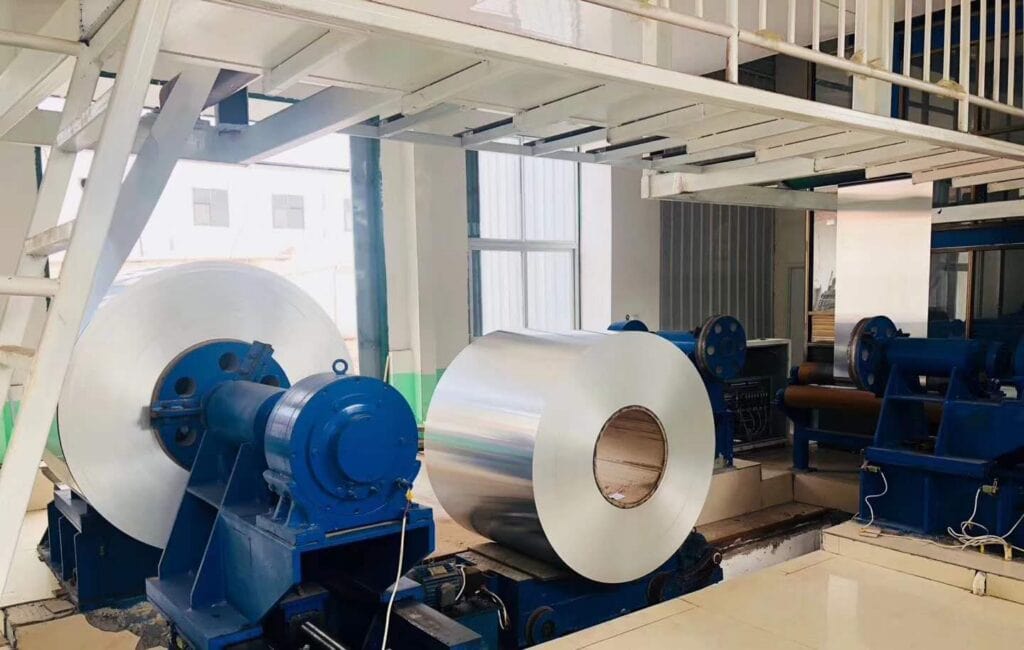
Substrate often serves as the overlooked tiebreaker. Aluminium plate printing handles heavy board, uncoated stocks, synthetics, and metallics with a flexibility most digital engines cannot match on their certified media lists.
Calculating the Break-Even Point for Plate Production
Build the model with two buckets. Fixed: platesetter depreciation and service contracts, aluminum printing plate cost per set, makeready labor, and spoilage sheets. Variable: ink, which discounts at volume, versus per-click metering on digital.
A 2,500-unit brochure usually sits comfortably in digital territory — the plate set never earns back its setup. A 50,000-unit packaging run flips it decisively; the plates cost the same as they did at 2,500, but they are now spread across twenty times the impressions.
Turnaround Times and Workflow Efficiency
Digital eliminates prepress plate-making entirely, enabling same-day and next-morning delivery promises. File approved at 10 a.m., shipped by 4 p.m.
The gap is narrower than it used to be. Processless CTP plates eliminate the chemical processing and washout step, so a plate can go from imaging to press in minutes rather than through a wet line.
Busy commercial shops typically batch plate jobs into blocks and keep the digital machine open for rush work and reprints, which stops the queue from stalling behind one long makeready.
Technical Deep Dive: Comparing Output Quality and Precision
The mechanisms differ in a way that explains almost every quality argument.
Lithography operates indirectly. Ink and water compete on the plate surface, image areas accept ink, non-image areas repel it, and the image transfers to a rubber blanket before meeting paper. That blanket conforms to the sheet, which is why offset lays down a smooth, even film on textured and uncoated stocks.
Digital operates directly. Toner is fused to the surface or inkjet drops are placed on it. Nothing conforms; the ink sits where it lands.
So what are the real quality differences? On a short run viewed in isolation, a modern digital printing machine is difficult to distinguish from offset. The difference shows up across length. Offset holds color because the ink film and press settings stabilize after makeready and stay there for thousands of impressions. Digital engines drift — head temperature, toner density, and substrate humidity all nudge output, and the sheet pulled at hour four may not match the sheet from hour one without recalibration.
Spot Color and Pantone Matching Accuracy
- Offset dominates in brand color accuracy. A spot ink is mixed to the specification and printed as a dedicated unit, so the match is physical rather than simulated.
- Digital simulates. CMYK and extended gamuts approximate Pantone values but cannot reliably hit fluorescents, metallics, or deep corporate blues that sit outside the gamut.
- Evaluate before you commit. Pull the brand guidelines, flag every spot color in the artwork, and press-proof the problem ones on both systems. If one color fails on digital, the packaging job belongs on plates.
Halftone Screening and Detail Resolution
Digital engines are described in DPI — how many dots they can place. CTP imaging is described in LPI — the frequency of the halftone screen the plate carries. Higher LPI means finer rosettes and smoother gradients, which is why fine-screen commercial work still routes to plates.
Moiré appears when screen angles interfere. Thermal CTP platesetters image with tight, square dots that hold angle accuracy well; CTcP systems image conventional plates with UV light and generally run coarser screens.
For high-definition photography and catalog work, thermal plates are the safer specification.
Hardware Analysis: Choosing the Right Plate or Digital Press
Three CTP families dominate pressrooms.
Thermal platesetters use infrared lasers and thermally sensitive plates. They image in daylight-safe conditions, hold fine dots, and suit long runs and high-screen commercial work.
Violet systems use a violet laser diode with photopolymer plates. Imaging is fast and the hardware is generally cheaper, but the plates require safelight handling.
CTcP — computer-to-conventional-plate — is the one that confuses buyers. The difference between CTP and CTcP is the plate, not the concept. Standard ctps printing systems require plates coated for a specific laser wavelength. CTcP uses a UV light source to image ordinary conventional plates, the same ones a shop would have exposed through film. That means lower plate cost and a familiar supply chain, at the expense of the finest screening.
Processless plates are the direction the industry is moving. Removing the developer, the chemistry, the water, and the waste stream shortens the path from imaging to press and takes an environmental liability off the floor.
Is a CTP Platesetter Right for Your Shop?
Buy one when plate volume is steady enough that outsourcing becomes the bottleneck rather than the savings. Occasional offset work is cheaper to farm out.
Staffing matters too. A platesetter needs a prepress technician who understands imposition, calibration, and screening. A digital press needs an operator and a color profile.
And check the room: conventional processing means chemistry, drains, and ventilation. Processless removes most of that requirement.
Digital Press Alternatives for Low-Volume Manufacturers
High-speed roll-fed inkjet sits between toner and offset. It handles mid-length runs at speeds toner cannot reach, without a plate printing press in the workflow at all.
Variable data printing is the capability plates genuinely cannot match. Every impression can carry a different name, code, or image — impossible when a fixed image is burned into an offset printing plate.
The ceiling is substrate. Heavy packaging board, rigid synthetics, and unusual coatings frequently fall outside a digital engine’s certified media range.
Comparison Table: CTP Offset vs. Digital Printing Showdown
| Factor | CTP Offset | Digital |
|---|---|---|
| Setup time | Plate imaging plus makeready | None — print on demand |
| Speed at volume | Very high sustained throughput | Steady, lower ceiling |
| Cost per unit | Falls sharply as volume rises | Essentially flat |
| Customization | Fixed image per plate | Full variable data |
| Color consistency | Stable across long runs | Requires periodic recalibration |
| Spot colors | True mixed inks | Gamut simulation |
| Substrate range | Broad — board, uncoated, synthetics | Certified media only |
Direct mail, personalized catalogs, and prototype packaging belong on digital. Long-run magazines, folding cartons, labels, and newspaper work — the classic aluminum newspaper printing plate territory — belong on offset.
Limitations, Trade-offs, and Common Misconceptions
A common misconception is that digital is inherently inferior. On coated stock, at short length, with in-gamut colors, that stopped being true some time ago. The honest limitation is consistency over distance and reach outside CMYK — not resolution.
The quieter problem is digital’s cost structure. Click charges are per-impression and contractual, proprietary inks and toners carry locked-in pricing, and service agreements bundle them together. A low acquisition price can hide a punishing operating cost at volume, which is the whole argument in digital printing vs offset printing for packaging.
Environmentally, neither is clean. Offset generates spent aluminum, though plates are recyclable and processless systems remove the chemistry. Digital generates cartridge waste, fuser components, and consumables that rarely re-enter a material stream.
And sometimes neither wins. Textiles, heavy industrial substrates, and certain specialty finishes still belong to screen printing or flexography — forcing them onto a sheetfed workflow costs more than it saves.
Summary: The Bottom Line on CTP and Digital
Under roughly 1,000 units, digital wins on speed, personalization, and setup cost. Above roughly 5,000, ctp printing wins on unit economics, spot color accuracy, and substrate range. Between those figures is a gray zone where only a job-specific ROI calculation settles it.
Successful shops in 2026 are not choosing; they are routing.