The Technical Divide: How Offset and Flexo Function in 2026
The question of offset printing vs flexo printing starts with mechanics, not marketing. Offset is an indirect planographic process: the image and non-image areas sit on the same plane of an aluminum plate, separated chemically rather than by height. Ink and dampening solution are applied, the image transfers to a rubber blanket cylinder, and the blanket lays it onto the sheet. That intermediate step is what gives offset its fidelity — the compressible blanket conforms to minor surface irregularities while the plate itself never touches the stock, so the plate stays clean across long runs.
Offset printing technology accounted for approximately 62% of total print volume globally by impression count as of 2025 — a figure that reflects how much commercial, publication, and folding carton work still moves through litho presses.
Flexography reverses the process. It is a direct relief process: raised image areas on a flexible photopolymer plate carry ink from an anilox roller straight to the substrate. There is no blanket and no water. Because the plate flexes and the impression pressure is light, flexo handles films, foils, corrugated board, and stretch materials that offset cannot physically accommodate. Offset, by contrast, wants smooth, flat, dimensionally stable stock — that limitation is structural, not a tuning issue.
Image Fidelity and the 133 LPI Resolution Threshold
The clearest technical answer to the difference between offset and flexo printing lives in the halftone structure. Offset builds continuous-tone images from screened dots arranged in rosette patterns — the flower-like clusters formed when cyan, magenta, yellow, and black screens are angled against one another. When the screen ruling is coarse enough, the eye resolves those rosettes as texture rather than smooth tone. Research on halftone perception places the threshold of resolution by the human eye for rosette patterns at approximately 133 lpi, which is why high-end commercial work routinely specifies line screens above that point and why fine-art reproduction and premium marketing collateral still default to litho.
Flexo’s historical challenge has been dot gain. A relief plate under impression pressure spreads ink at the dot edge, pushing midtones darker and compressing highlight detail. Flat-top dot plate technology and refined anilox engraving have narrowed that gap considerably, but the physics of a squeezed relief element remain.
Quality benchmarks worth holding your vendors to:
- Line screen capability at or above 133 lpi for any job judged at reading distance
- Measured dot gain curves per substrate, not press-wide averages
- Minimum reproducible highlight dot, stated as a percentage
- Rosette stability across the full ink sequence
- Plate exposure and imaging consistency batch to batch
The Economics of Ink and Substrate in Packaging
Flexo owns flexible packaging for a reason that has nothing to do with resolution. Films, laminates, and metallized substrates are non-absorbent and often non-flat, and flexo’s light-impression direct transfer handles them with solvent and water-based ink systems formulated to key into those surfaces. The commercial momentum follows the application: the global flexographic printing market is projected to grow at a CAGR of 4.8% through 2034, driven overwhelmingly by packaging demand rather than general commercial work.
That growth comes with an ink bill that packaging converters underestimate. Printing on clear or metallized film requires an opaque white base layer, often applied twice, and the titanium dioxide used for opacity is costly. White ink accounts for 40% to 50% of total ink costs in flexographic printing — a line item that can reshape the margin on a job that looked profitable on press-time alone.
Offset does not incur the same cost on paper. Porous stock accepts thin oil-based ink films, coverage per pound is high, and there is no opacity layer to buy. For paper-based commercial runs, ink is a minor cost center.
Cost Reality: In a flexo packaging quote, model white ink as a primary cost driver alongside substrate and plates — not as a rounding error inside “ink and consumables.”
Prepress Efficiency: The Role of CTP and Plate Technology
Both processes converge at the plate, and that is where Computer-to-Plate technology changed the economics for everyone. By imaging directly from RIP output to the plate surface, CTP removed the film intermediate, eliminated a generation of dot loss, and collapsed makeready preparation from a multi-step darkroom operation into a single automated pass. The registration accuracy that modern high-LPI work demands is largely a prepress achievement.
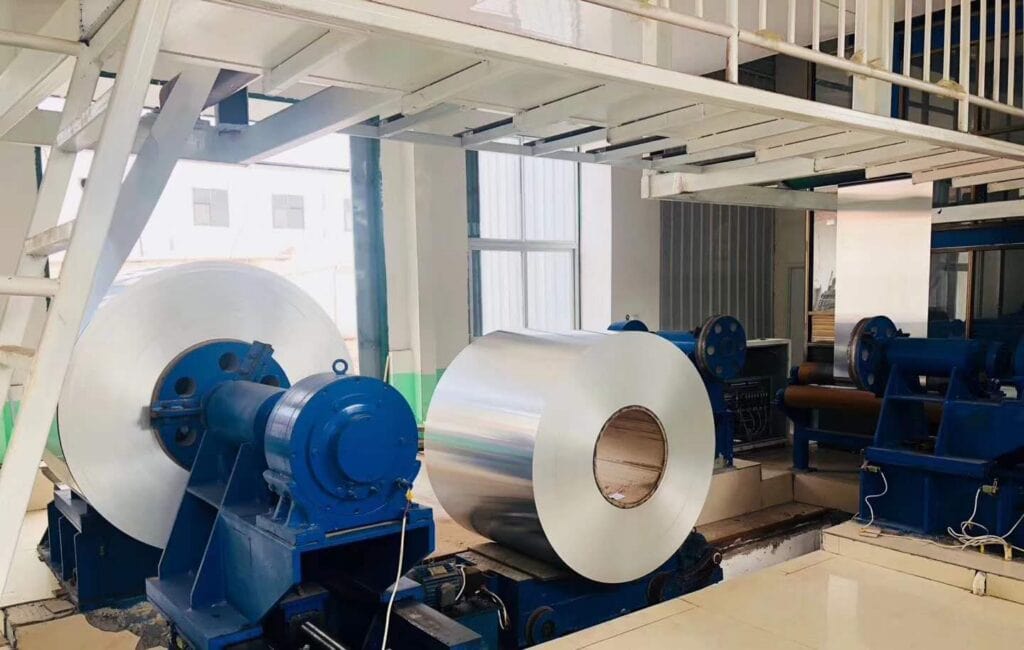
The plate materials differ sharply. Offset plates are thin grained aluminum with a photosensitive coating — rigid, dimensionally stable, and built to survive long impression counts without image breakdown. Flexo plates are thicker photopolymer, imaged and then relief-processed so the printing elements stand proud of the base. Durability expectations follow: aluminum tolerates abrasive long runs; photopolymer is more susceptible to wear at the shoulder of fine elements and is typically replaced more aggressively.
Workflow path: PDF preflight → RIP and screening → CTP imaging → processing or clean-out → punch and bend (offset) or mounting (flexo) → press.
In a just-in-time shop, the deciding factor is not press speed. It is how quickly a corrected file becomes a mounted plate.
Choosing Your Method: Volume vs. Versatility
The flexo vs offset printing decision resolves against three variables in sequence. Run length comes first: offset carries higher per-plate setup cost but low marginal cost per impression, so there is a break-even point beyond which the plate investment amortizes into the cheapest sheet on the floor. Below that point, setup dominates and the method punishes you.
Substrate is the second filter and it frequently overrides the first. Porous, flat, dimensionally stable stock belongs on offset. Non-porous films, foils, shrink sleeves, and corrugated board belong on flexo regardless of what the run length suggests, because offset cannot hold ink on a surface that will not absorb it.
Turnaround is the tiebreaker. When two methods are technically viable, the one whose plates are ready sooner wins the job — which is why plate-making throughput, not press rating, often determines realistic delivery dates.
| Volume | Substrate | Best Method |
|---|---|---|
| High | Coated/uncoated paper, board | Offset |
| High | Film, foil, laminate | Flexo |
| Medium | Corrugated, kraft | Flexo |
| Medium–High | Carton stock, smooth | Offset |
| Any | Shrink sleeve, stretch | Flexo |
The Bottom Line: Key Differences for 2026
The flexographic vs offset printing comparison comes down to five operational realities worth carrying into any equipment conversation:
- Offset leads high-volume commercial paper work. Its share of global impression volume reflects a cost-per-sheet advantage that digital alternatives have not displaced at scale.
- Flexo is non-negotiable for flexible packaging. Films, foils, and non-porous substrates require a direct relief process with light impression pressure; no amount of offset optimization changes that.
- Resolution favors offset at the top end. Line screens above the rosette perception threshold remain easier to hold consistently on litho than on relief plates, even with modern flat-top dot technology.
- Ink economics diverge dramatically. White opacity layers make flexo ink a leading cost driver on packaging; porous paper makes offset ink nearly incidental.
- Prepress is the equalizer. CTP throughput determines makeready readiness for both methods, and in short-lead-time environments it governs capacity more directly than press speed does.
Understanding what is offset printing at the mechanical level — indirect, planographic, blanket-mediated — is what makes these trade-offs predictable rather than situational.
Optimizing Your Print Production with CTPPress
Whichever method a facility runs, the plate is the heart of the process. Press uptime, color consistency, and delivery commitments all trace back to how fast and how accurately a file becomes an imaged, processed, production-ready plate. A press capable of 18,000 sheets per hour is limited by a prepress department that cannot keep up with plate production.
CTPPress supplies the equipment and consumables that sit at that bottleneck: CTP imaging systems and printing plates built for production environments where makeready windows are measured in minutes. Increase your production efficiency by 80% with our professional printing plates and prepress machines.
For commercial houses weighing litho capacity against packaging demand, the prepress investment is the one that pays back across both lines. Aluminum plates for long-run offset, imaging systems sized to your daily plate count, and workflow support that keeps correction cycles short.
Explore the CTP machines and plate options matched to your substrate mix and run profile, and build the prepress throughput your press schedule actually requires.