Flexo Plates
Last updated: October 2026
Quick answer: Flexo plates are raised photopolymer printing plates for flexographic printing — labels, flexible packaging, paper bags and corrugated board. CTPPress manufactures analog flexo plate (exposed through film), digital flexo plate (laser-masked LAMS for direct imaging) and solvent-process flexo plate, plus water-wash and thermal processing grades. Trial plates available for press testing.
CTPPress is a flexo plate manufacturer in China. We produce photopolymer flexo plate at our own plant for label printers, flexible packaging converters, paper bag and corrugated plants, and plate-making service bureaus. Every grade ships with a TDS, and new customers test a free sample on their own press before ordering.
- Analog and digital grades in one range
- Solvent, water-wash and thermal processing options
- Trial plates matched to your imaging workflow
- Free samples matched to your imager or film workflow
What are flexo plates?
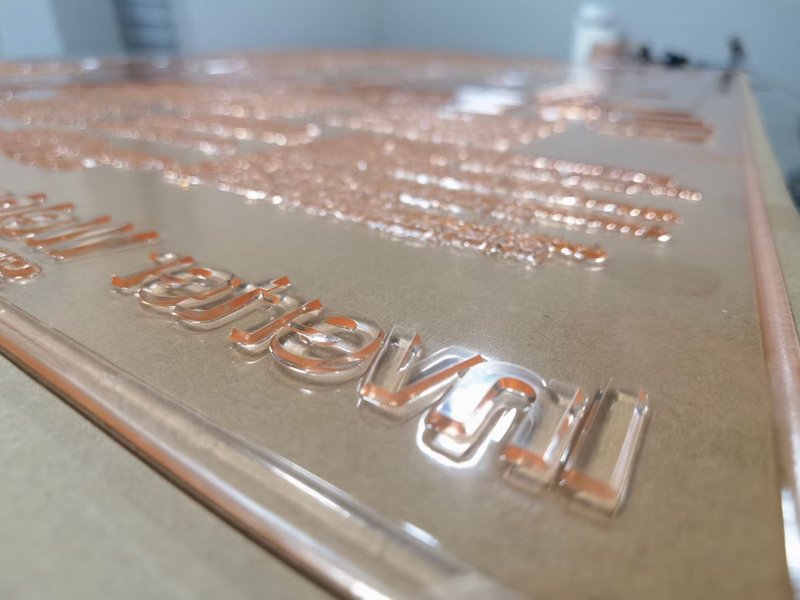
Flexo plates are the printing plates used in flexographic printing, where a raised image on a soft plate transfers ink through an anilox roller onto the substrate. Most modern flexo plates are photopolymer: a UV-sensitive resin bonded to a polyester backing. UV exposure hardens the image areas; the unexposed resin is washed away, leaving the raised printing surface with its shoulder profile.
Flexo serves markets where offset cannot reach economically: self-adhesive labels, flexible film packaging, paper bags, corrugated board and tissue printing. Plate quality decides how fine a screen you can hold, how stable the colour runs and how long the plate survives on press.
Analog vs digital flexo plates
We manufacture both imaging routes:
| Grade | Imaging | Best for |
|---|---|---|
| Analog photopolymer plate | UV exposure through film negative | Film-based plate rooms, corrugated postprint, budget-sensitive work |
| Digital photopolymer plate | Laser-ablation mask (LAMS), no film | Labels, flexible packaging, fine screens and process colour |
The analog grade is exposed through a film negative. It remains the workhorse for corrugated postprint and shops with an existing film department.
The digital grade (LAMS) carries a thin black mask on the resin surface. A laser inside the imager removes the mask where the image should print, then UV exposure hardens those areas. Digital imaging removes film cost and registration error, and produces rounder, more stable dots with smoother shoulders — the difference shows immediately in process colour and highlight detail on film and label work.
Processing options: solvent, water-wash and thermal
The washout step defines the plate’s environmental profile and workflow cost. We manufacture grades for all three routes:
- Solvent processing: the established standard. Washes out with solvent-based developer, suits solvent ink systems, and runs on the installed base of flexo processors worldwide.
- Water-wash: develops with water-based solution, cutting solvent handling, ventilation and disposal. Popular where environmental rules are strict.
- Thermal: melts unexposed resin away with heat in a thermal processor — no liquid developer at all, minimal waste, compact plate room.
All three are imaging-independent: analog and digital grades exist for each processing route. Tell us which processors you run and we supply the matching plate. For corrugated post-print, see corrugated flexo plates; for processing units see flexo plate processors, and for gauges the flexo plate thickness guide.
Thickness, hardness and applications
Flexo plate gauge is chosen by application, and each gauge pairs with a typical Shore A hardness:
| Thickness | Typical application |
|---|---|
| 1.14 mm | Labels, flexible packaging, narrow web |
| 1.70 mm | Flexible packaging, wide web film |
| 2.84 mm | Paper bags, folding carton, preprint liner |
| 3.94 mm – 6.35 mm | Corrugated postprint |
Within each gauge we hold standard durometer levels; the TDS states Shore A hardness and relief depth per grade. If you print on rough recycled liner or high-stack corrugated, tell us — harder or thicker gauges hold up better under the higher impression pressure.
How to choose a flexo plate
- Analog or digital? If you run a LAMS imager (digital flexo CTP), choose the digital grade. If you expose through film, choose the analog grade. Never mix the two — the plate must match the imaging route.
- Which washout do you run? Solvent, water-wash or thermal — we supply the matching resin grade for your processor.
- What do you print, and with which ink? Solvent ink on film, UV ink on labels, or water-based ink on paper each stress the polymer differently. Some inks swell certain resins — see our plate swelling guide for the compatibility tables.
- Which gauge? Use the table above as a starting point, then confirm with your cylinder or sleeve dimensions and tape system.
A common assumption is that a flexo plate is just a piece of photopolymer and one is much like another. In practice the imaging method, the shoulder profile and the processing control decide whether you hold a 1% dot on film or watch it fill in after ten thousand metres. That is why we always start new customers with a free sample plate imaged and processed to their own workflow.
MOQ, samples, lead time and packaging
- Minimum order: confirmed per gauge and size in the quotation.
- Trial plates: available from current production; buyer covers freight. Ask for a trial in the gauge you actually run.
- Lead time: confirmed per order, based on quantity.
- Packaging: plates packed flat, interleaved and boxed in export cartons on pallets. Photopolymer is light-sensitive before exposure — we pack it in light-safe material, and it should be stored away from direct daylight after arrival.
Flexo plate price factors
Flexo plate is quoted per gauge, size, grade (analog or digital) and monthly volume. Digital LAMS plate costs more per square metre than analog because of the mask layer, but removes film cost from your workflow. For a like-for-like comparison, estimate cost per finished plate with our plate cost calculator, then send your size list and monthly usage for a firm price.
FAQ
What are flexo plates made of?
Flexo plates are made of photopolymer — a UV-sensitive resin on a polyester backing. Exposure to UV light hardens the image areas; the unexposed resin is washed away to form the raised printing surface.
What is the difference between analog and digital flexo plates?
Analog flexo plate is exposed through a film negative. Digital flexo plate carries a black laser-ablation mask (LAMS): a laser removes the mask where the image should print, then UV exposure hardens those areas. Digital gives finer dots, smoother shoulders and no film cost.
How thick is a flexo plate?
Flexo plates come in several gauges by application: about 1.14 mm for labels and flexible packaging, 1.70 mm for general flexible packaging, 2.84 mm for paper bags and folding cartons, and 3.94 to 6.35 mm for corrugated postprint.
How long does a flexo plate last?
A well-processed photopolymer plate typically lasts for hundreds of thousands of impressions and can be stored and reused. Actual life depends on ink system, anilox pressure, substrate and handling. We state expected life per grade in the TDS.
What is the difference between solvent, water-wash and thermal flexo plates?
These are three washout methods. Solvent processing is the long-established standard and suits solvent inks. Water-wash uses water-based developer with lower environmental load. Thermal processing melts away unexposed resin with heat and no liquid developer. All three are available in our range.
Can flexo plates be used for corrugated printing?
Yes. For corrugated postprint we supply the thick gauges (3.94 mm to 6.35 mm); for preprint liner, 2.84 mm is common. Tell us your press type (direct print or preprint) and we recommend the grade.
Which ink systems work with photopolymer flexo plates?
Water-based, solvent-based and UV ink systems all run on photopolymer, but our water-wash plates are not suitable for UV inks. The key is matching the resin to the ink chemistry so the plate does not swell or soften — check the compatibility notes in our TDS or the swelling guide linked above.
Ready to test a flexo plate? Request free samples or request a quote — tell us your imager or film workflow, ink system and plate gauge, and we will send a matched sample with the TDS.
Explore the range in detail: digital flexo plates, analog flexo plates and the flexo CTP machine.
Disclaimer: figures such as MOQ, lead time, thickness ranges and plate life are typical values for reference; confirm exact specifications in the TDS or quotation for your order.